The Fragmentation of AI Tooling
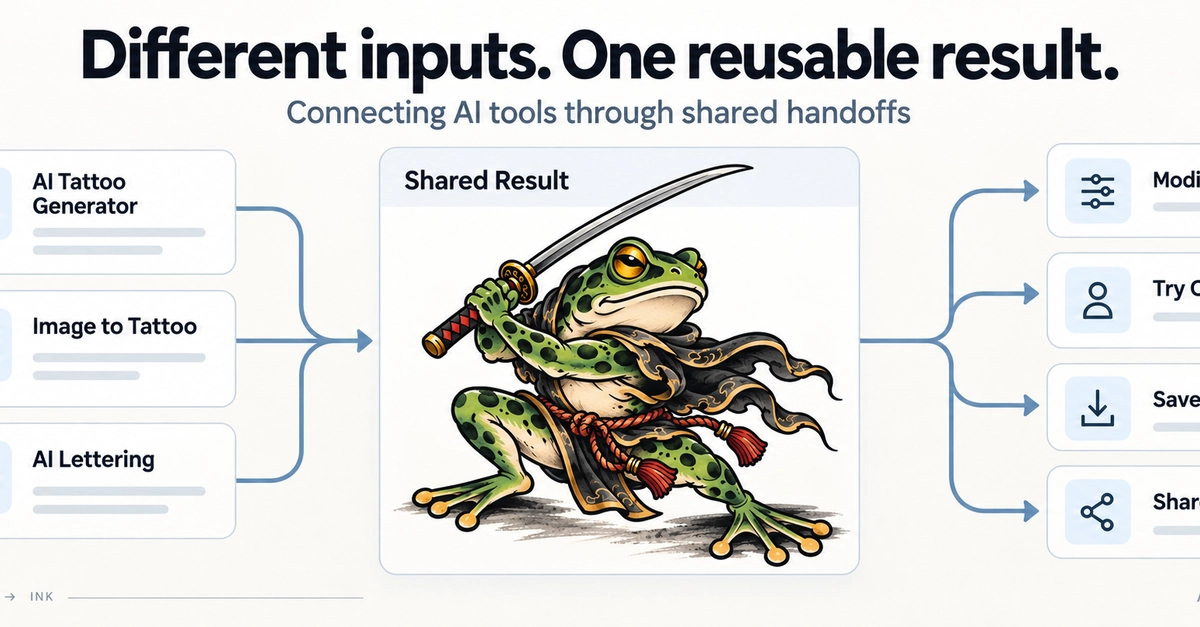
The proliferation of specialized AI tools, from text-to-image generators to image manipulation and font previewers, has created a vibrant ecosystem of individual capabilities. However, the real challenge, as highlighted by developer Warren Shi, isn't in building these discrete AI features but in making them work together. Shi's experience with a suite of tattoo design tools illustrates a common problem: each tool functions in isolation, producing an output that serves as a dead end for subsequent steps in a user's workflow. This fragmentation becomes increasingly problematic as users expect seamless transitions and common actions like "modify," "save," "download," "share," and "try on" to be available after nearly every AI-generated result.
The core issue lies in a flawed mental model where each AI tool is treated as an atomic unit, responsible for its own output and nothing more. This perspective leads to a product architecture where the output of one AI model cannot easily feed into another, or be acted upon by downstream processes. Shi realized that he wasn't building separate tools; he was building different pathways to produce a singular, usable outcome – a tattoo design that the rest of the product ecosystem could continue to iterate on.
Rethinking the Output: A Universal Data Model
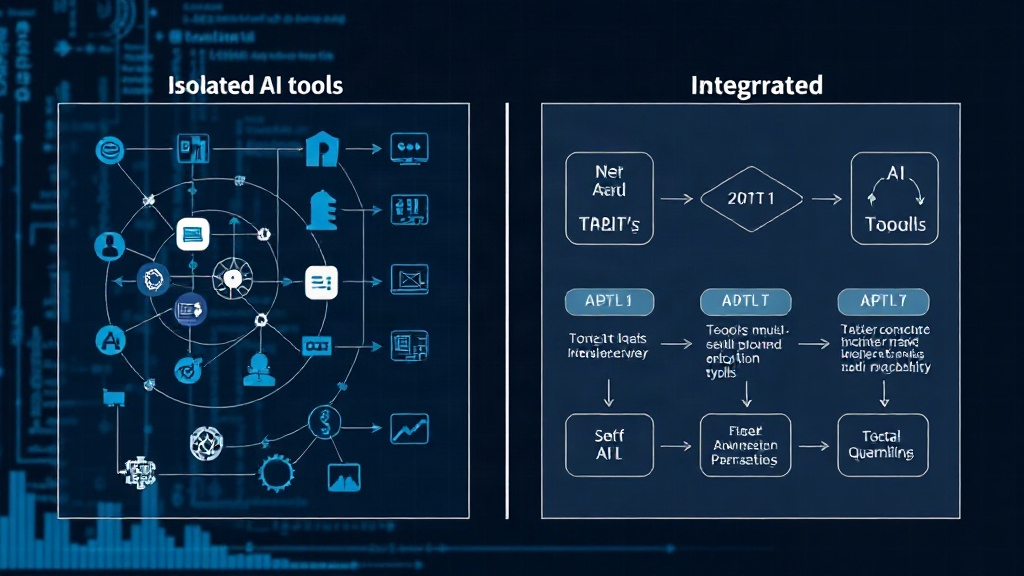
The critical insight is that the tool should not "own" the result. Instead, the product should own the result, with various AI tools acting as contributors or transformers. This requires a shift from a tool-centric to a data-centric or workflow-centric approach. In Shi's tattoo example, the output of the text-to-image generator, the lettering tool, or the font previewer should all conform to a common format that represents a "tattoo design" in a state that can be further manipulated. This universal data model acts as a lingua franca, allowing different AI modules and user interface elements to interact with the design data without needing to understand the specifics of how each piece of data was generated.
Consider the implications for a broader AI application. If a product uses an AI to summarize documents, then another AI to translate the summary, and a third AI to generate an audio version, each step must seamlessly pass its output to the next. Without a common output structure, developers face the Sisyphean task of building custom connectors for every pair of AI modules. This leads to brittle integrations, increased development time, and a poor user experience where users might have to manually export and re-import data between different AI-powered features.
The Interoperability Layer: Bridging the AI Gap
The solution lies in building an interoperability layer, or a robust data pipeline, that manages the flow and transformation of data between AI components. This layer is responsible for ensuring that the output of one AI service is correctly formatted and validated before being passed to the next. It abstracts away the complexities of individual AI models, allowing developers to focus on the end-to-end user experience and the overall product logic.
This interoperability layer can be thought of as a universal adapter. Just as USB ports allow diverse devices to connect to computers, a well-designed output management system allows different AI models and services to connect to each other. When a text-to-image AI generates an image, this layer captures the output, perhaps in a standardized JSON format that includes the image itself, the prompt used, seed values, and metadata. This structured data can then be passed to a "tattoo try-on" tool, which might render the image onto a user's skin, or to an "image editor" that allows for further modifications using different AI or traditional image processing techniques. The key is that the "tattoo design" object is the central entity, and the AI tools are simply services that can create, modify, or consume it.
Broader Implications for AI Product Development
This challenge extends far beyond niche applications like tattoo design. For any product that aims to integrate multiple AI capabilities—whether it's content creation platforms, customer service bots, data analysis tools, or even autonomous systems—the ability to connect AI outputs is paramount. The current trend of building standalone, highly capable AI models is only half the battle. The true value will be unlocked when these models can collaborate effectively within a larger system.
Companies investing heavily in AI development need to prioritize this connective tissue. This means developing internal standards for data representation, investing in workflow orchestration tools, and designing APIs that are not just about invoking a model, but about managing the entire lifecycle of its output. The success of future AI-powered products will hinge less on the raw intelligence of individual models and more on the seamlessness with which they can be orchestrated and integrated into coherent user experiences. The hard part, it turns out, isn't just building smarter AI; it's building smarter AI *systems* where the sum is truly greater than its parts.
What remains to be seen is whether companies will adopt open standards for AI output interoperability, or if this will become another fragmented landscape of proprietary connectors and custom integrations, slowing down innovation across the board.