
The Limits of Traditional Feature Flags
Every team knows how to toggle a feature on or off with a boolean flag. This works for conventional software because its primary failure mode is simple: it's broken. But AI-powered features introduce a new layer of complexity. The real challenge isn't just whether the feature is enabled, but which specific AI model is being used, what prompt is being fed to it, and how much control it has before requiring human intervention. A single true/false switch fails to address these nuanced failure points.
Consider a scenario where the AI provider experiences degradation. Your response shouldn't be to turn the entire feature off. Instead, you might want to switch to a different, perhaps less capable but more reliable, model. If a prompt change unexpectedly degrades output quality, you need to revert to the previous prompt—a change that doesn't require a code deploy. What if a specific customer's data triggers consistently bad output? You need the ability to disable the feature for that user or segment, while keeping it active for everyone else. And when AI spending starts to outpace forecasts, you might need to enforce the use of a cheaper model or a degraded, less resource-intensive path, rather than risking an outage or a budget crisis. A simple boolean flag can't handle this granular, multi-faceted control.
Beyond Booleans: Granular AI Feature Controls
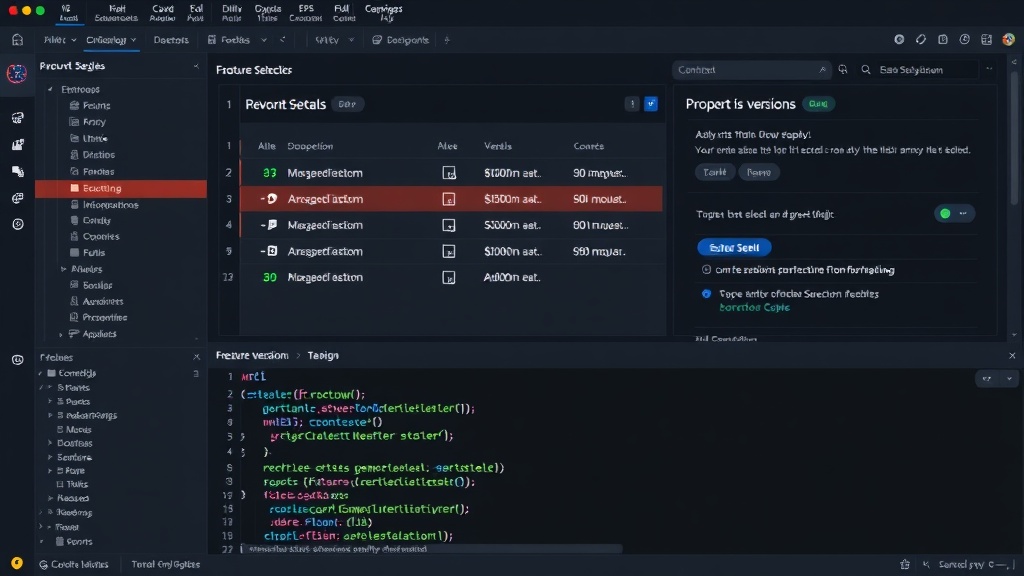
Shipping an AI feature effectively requires a more sophisticated flagging system. Think of it less like a light switch and more like a sophisticated control panel for a complex machine. Instead of just on/off, you need attributes that control specific AI behaviors:
- Model Selection: The ability to dynamically switch between different AI models (e.g., GPT-4, GPT-3.5 Turbo, Claude 2, Llama 2) based on performance, cost, or availability. This could be tied to specific user segments, request types, or even real-time system load.
- Prompt Management: Versioning and dynamic selection of prompts. This allows for A/B testing of prompt effectiveness, quick rollbacks if a prompt change causes issues, and tailoring prompts for different use cases or user contexts without code deployments.
- Output Guardrails: Flags that limit the AI's autonomy. This includes setting thresholds for confidence scores before an output is presented, enforcing content moderation filters, or requiring human review for certain types of outputs.
- Cost Controls: Dynamic limits on token usage per request or per user session. This prevents runaway costs and allows for tiered access based on subscription levels or budget constraints.
- Data-Specific Overrides: The capability to disable or modify AI behavior for specific users, customer accounts, or data subsets that are known to cause problems.
When to Deploy AI Features with Advanced Flags
The decision to ship an AI feature behind an advanced flag system hinges on several factors, primarily driven by the inherent volatility and resource intensifiability of AI models:
- High Cost Potential: If the AI model's API calls can quickly escalate costs (e.g., large language models, high-resolution image generation), robust cost controls are essential. This prevents unexpected budget overruns and allows for experimentation without financial risk.
- Performance Variability: AI models can exhibit inconsistent performance, sometimes due to external factors or subtle changes in input data. The ability to quickly switch models or prompts mitigates the impact of such variability on user experience.
- Quality Sensitivity: For features where output quality is paramount (e.g., content generation, summarization, code completion), the ability to test and iterate on prompts and models is crucial. Advanced flags allow for staged rollouts and rapid feedback incorporation.
- User-Specific Issues: If there's a risk that certain user data or interaction patterns might lead to problematic AI outputs, per-user or per-segment flags are necessary to isolate and manage these issues without affecting the broader user base.
- Regulatory or Compliance Concerns: When AI outputs need to adhere to specific regulations or internal policies, flags can enforce these guardrails, ensuring that AI behavior remains within acceptable bounds.
- Experimental Nature: Any AI feature that is new, unproven, or relies on rapidly evolving models should be deployed behind flags. This allows for controlled testing, data collection, and iteration before a full public release.
The Operational Shift for Engineering Teams
This shift to AI feature flagging represents a significant operational change for engineering teams. It moves beyond traditional DevOps concerns of uptime and bugs into a realm that requires closer collaboration with product managers, data scientists, and even finance departments. The team responsible for an AI feature must now monitor not just code performance, but also model performance, prompt efficacy, and API costs. This necessitates new tooling and expertise. Debugging might involve analyzing not just logs, but also the specific prompts and model responses that led to an issue. Rollbacks might mean selecting a previous prompt version or a different model endpoint, rather than redeploying code.
What nobody has fully addressed yet is the long-term maintenance burden of managing these complex, multi-dimensional feature flags. As AI models and their applications proliferate, so too will the complexity of their control systems. Building a robust, scalable, and user-friendly system for managing these AI-specific flags will become a critical differentiator for companies leveraging AI at scale.
Competitors and Users
For competitors, this signals that AI feature development is not just about model selection, but about robust operational tooling. Companies that master granular AI feature control will be able to iterate faster, manage risk more effectively, and deploy AI features with greater confidence. For users, this means more reliable, cost-effective, and tailored AI experiences. They will benefit from features that are less prone to sudden quality degradation, less likely to incur unexpected costs, and more adaptable to their specific needs.