AI-Powered Reconnaissance and Surveillance
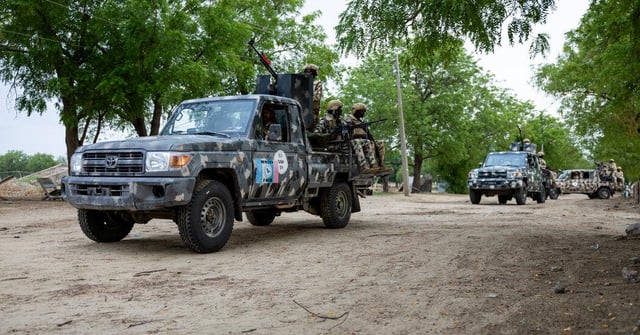
Terrorist organizations are increasingly leveraging Artificial Intelligence (AI) for sophisticated reconnaissance and surveillance operations, significantly enhancing their situational awareness and operational planning. These groups are employing AI-powered tools to analyze vast amounts of data, including satellite imagery, social media feeds, and intercepted communications, to identify targets, map enemy positions, and anticipate troop movements. The ability of AI to process and correlate information far exceeds human capacity, allowing for the identification of patterns and anomalies that would otherwise go unnoticed.
For instance, AI algorithms can be trained to detect specific types of military vehicles or infrastructure from aerial or satellite imagery, even when camouflaged or in complex urban environments. This capability allows groups to pinpoint vulnerable targets and plan attacks with greater precision. Furthermore, AI can be used to monitor open-source intelligence, sifting through public social media posts, news articles, and online forums to gauge public sentiment, identify key influencers, and track the activities of government forces or opposing factions. This constant stream of analyzed information provides a dynamic battlefield picture, enabling rapid adaptation to changing circumstances.
The use of AI in this domain is not limited to passive observation. Terrorist groups are exploring the integration of AI with unmanned aerial vehicles (UAVs), commonly known as drones. These drones, often commercially available and modified, can be equipped with AI-powered computer vision systems that enable autonomous navigation, target identification, and even precision strikes. This not only reduces the risk to operatives on the ground but also increases the effectiveness and reach of their operations. The development of swarm drone technology, where multiple AI-enabled drones coordinate their actions, presents a particularly concerning future threat, capable of overwhelming traditional defenses.
Propaganda and Psychological Operations
Beyond the battlefield, AI is proving to be a potent tool for terrorist groups in the realm of propaganda and psychological operations. These organizations are using AI to generate highly convincing fake news, deepfake videos, and tailored messaging designed to radicalize individuals, recruit new members, and sow discord within targeted populations. AI can analyze demographic data and online behavior to identify individuals who are most susceptible to extremist ideologies, allowing for highly personalized and effective propaganda campaigns.
The creation of deepfake videos, which can convincingly portray political leaders or military officials saying or doing things they never did, is a particularly insidious application. These fabricated videos can be used to discredit opponents, incite violence, or create false narratives that serve the group's agenda. AI-powered text generation tools can also produce large volumes of propaganda material in multiple languages, rapidly disseminating their message across various online platforms. This sophisticated use of AI in information warfare makes it increasingly difficult for authorities to counter their narrative and for individuals to discern truth from falsehood.
The speed and scale at which AI can generate and distribute this content pose a significant challenge. Traditional fact-checking and content moderation efforts struggle to keep pace with the sheer volume of AI-generated misinformation. Moreover, AI can be used to optimize the dissemination of this content, identifying the best times and platforms to reach specific audiences for maximum impact. This strategic use of AI in psychological operations aims to destabilize societies and undermine public trust in institutions.
Potential for Autonomous Operations and Future Threats
The most concerning aspect of AI's integration into terrorist group operations lies in the potential for increasingly autonomous systems. While current applications often involve human oversight, the trajectory points towards AI systems capable of making independent decisions on the battlefield. This could range from autonomous weapons systems that can select and engage targets without human intervention to AI-driven logistical networks that manage supply chains and resource allocation for terrorist cells.
The development of AI that can learn and adapt in real-time presents a formidable challenge. If terrorist groups can deploy AI systems that continuously improve their tactics based on battlefield feedback, they could develop highly adaptive and resilient operational capabilities. This raises profound ethical and security questions about the control and proliferation of such technologies. The sophistication of AI could allow these groups to operate with greater stealth, efficiency, and lethality than ever before.
The accessibility of AI tools is another critical factor. As AI technology becomes more widespread and user-friendly, it lowers the barrier to entry for non-state actors. What once required significant technical expertise and resources may soon be achievable with off-the-shelf AI software and readily available hardware. This democratization of advanced technology means that the threat posed by AI in the hands of terrorist groups is not a distant possibility but a present and evolving danger that requires immediate and sustained attention from global security forces and policymakers.
The implications are far-reaching. AI can be used to optimize improvised explosive devices (IEDs), making them more potent and harder to detect. It can also aid in cyber warfare, enabling attacks on critical infrastructure or communication networks. The combination of AI with existing terrorist methodologies creates a multiplier effect, amplifying their destructive potential. Addressing this threat requires a multi-faceted approach, including enhanced intelligence gathering, robust cybersecurity measures, and international cooperation to monitor and restrict the proliferation of AI technologies to malicious actors.