
Beyond the Coastal Elites: A Decentralized AI Future
America's ambition to lead the artificial intelligence revolution faces a critical bottleneck: an over-reliance on a few coastal tech hubs. While Silicon Valley, Boston, and Seattle have historically driven technological progress, this concentration of talent and capital risks overlooking the immense potential residing in America's diverse local communities. A more robust and sustainable path to AI dominance, argues a recent analysis, lies in democratizing AI development and deployment across the nation.
This perspective challenges the prevailing narrative that AI leadership is solely a function of massive federal investment or the sheer density of venture capital in established tech enclaves. Instead, it posits that a truly dominant AI ecosystem requires broad-based engagement, tapping into the unique strengths, industries, and workforce capabilities present in cities and towns nationwide. The argument is not against innovation in existing hubs, but rather a call to actively cultivate new centers of AI expertise and application.
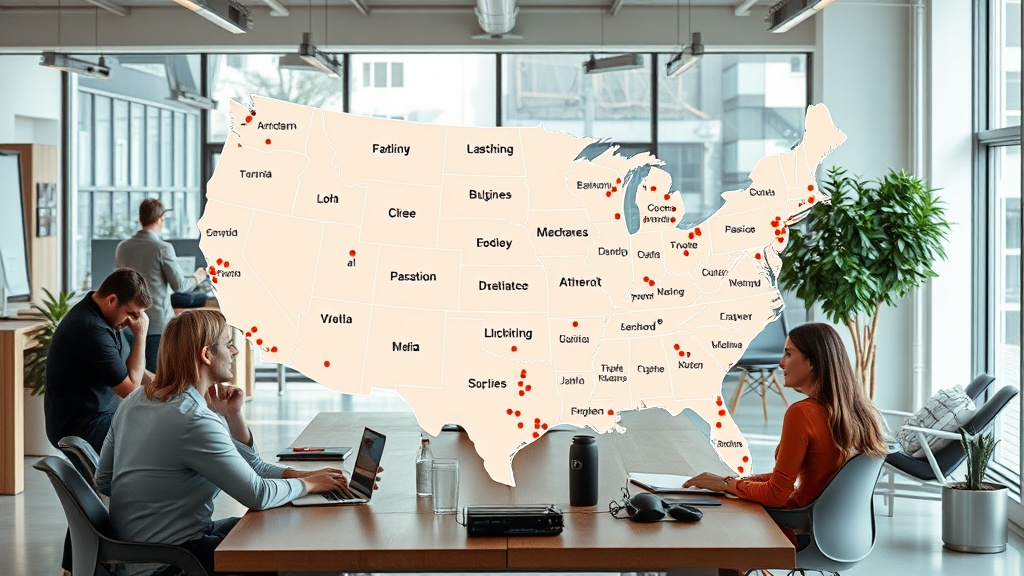
The Economic and Social Imperative for Distributed AI
The economic implications of a concentrated AI industry are stark. When AI innovation and its benefits are confined to a few metropolitan areas, the rest of the country risks being left behind, exacerbating regional inequalities. This not only creates social friction but also limits the breadth of AI applications, as solutions are primarily developed with the needs of a narrow demographic in mind. By contrast, fostering AI development in local communities can lead to AI solutions tailored to specific regional challenges – from agricultural optimization in the Midwest to healthcare advancements in underserved rural areas.
Furthermore, a decentralized approach can help mitigate some of the ethical and societal concerns surrounding AI. When AI development is a closed-door affair among a select group of elites, it can lead to a lack of public understanding and trust. Engaging local communities in the AI development process—through education, workforce training, and participatory design—can build broader societal buy-in and ensure that AI technologies are developed and deployed responsibly, reflecting a wider range of values and priorities. This is not merely about economic fairness; it's about building AI that serves the entire nation.
From Data Centers to Community Labs: Reimagining AI Infrastructure
Shifting towards a distributed AI model requires a rethinking of infrastructure. Instead of solely focusing on massive, centralized data centers, the focus must expand to include smaller, more accessible computing resources and AI training facilities embedded within local educational institutions, community colleges, and even public libraries. This would involve leveraging existing community assets and creating new, localized digital infrastructure that supports AI research, development, and entrepreneurship.
The talent pipeline is another critical area. While top-tier universities will continue to play a vital role, a distributed strategy necessitates investment in regional educational programs that equip local workforces with AI-relevant skills. This could involve apprenticeships, vocational training, and specialized courses designed in partnership with local industries. Such initiatives would not only create a more robust national AI talent pool but also provide new economic opportunities for individuals in communities that might otherwise be excluded from the AI economy. Think of it less like a national lottery where only a few win big, and more like a nationwide community garden, where every town can cultivate its own AI crop.
Policy Levers for Cultivating Local AI Ecosystems
Achieving this vision requires deliberate policy interventions. Federal and state governments can play a crucial role by offering grants and incentives for establishing AI hubs and innovation centers in non-traditional locations. This could include funding for regional AI research consortia, tax credits for companies that invest in AI talent and infrastructure outside of major tech hubs, and support for public-private partnerships focused on local AI development.
Moreover, policy should encourage the use of AI for public good at the local level. This could involve funding pilot projects that demonstrate AI's ability to solve specific community problems, from traffic management to environmental monitoring. By showcasing tangible benefits and fostering local champions, these initiatives can build momentum and demonstrate the value of AI beyond the confines of corporate boardrooms and academic ivory towers. The challenge is to move beyond abstract national goals and ground AI development in the concrete realities and needs of communities across America.
The Unanswered Question: Scalability and Standardization
While the vision of a decentralized AI future is compelling, a significant question remains: how can these distributed AI efforts be effectively scaled and standardized to contribute to a cohesive national AI strategy? Ensuring interoperability between diverse local AI projects, maintaining data security and privacy across a fragmented infrastructure, and establishing common benchmarks for AI performance and ethics will be monumental tasks. Without clear strategies for integration and standardization, the risk is that these local initiatives, while valuable, might remain siloed and fail to achieve the collective impact needed for true national dominance.
Conclusion: A More Resilient AI Future
Ultimately, the argument for a community-centric approach to AI development is an argument for a more resilient, equitable, and broadly beneficial AI ecosystem. By distributing the opportunities and responsibilities of AI innovation, the United States can not only strengthen its position on the global stage but also ensure that the transformative power of artificial intelligence serves the needs of all its citizens, not just a select few. This requires a conscious shift in focus, moving beyond the familiar centers of power to unlock the latent innovation potential within every American community.