
The Shifting Sands of AI Development Bottlenecks
For years, the intricate process of writing and optimizing code has been perceived as the primary bottleneck in artificial intelligence development. The sheer complexity of algorithms, the need for specialized libraries, and the constant evolution of frameworks presented a formidable challenge for even the most seasoned engineers. However, a growing sentiment suggests this paradigm is shifting. The focus is migrating from the elegance and efficiency of code itself to the resources required to train and deploy increasingly sophisticated AI models: data and computational power.
The initial premise, often shared in developer communities, posits a counterintuitive idea: perhaps the act of writing code, the very foundation of software engineering, is no longer the most significant hurdle in AI advancement. This isn't to say coding is trivial; it remains essential. But the nature of the challenge has evolved. Large language models (LLMs) and other generative AI systems, while requiring extensive codebases, are increasingly benefiting from pre-trained models, sophisticated APIs, and highly optimized libraries. This abstraction layer means that the core logic for many advanced AI tasks can be leveraged without needing to reinvent the wheel from scratch. Developers can now focus more on integrating, fine-tuning, and orchestrating these powerful components rather than solely on the foundational coding efforts.
Consider the analogy of building a skyscraper. In the past, the primary challenge might have been designing the structural integrity of the steel beams and concrete mixtures – the fundamental 'code' of construction. Today, while structural engineering is still vital, the limiting factors are more likely to be the availability of specialized cranes, the logistical coordination of materials delivery, and the sheer energy consumption of the construction site. Similarly, in AI, the 'building blocks' (pre-trained models, efficient libraries) are becoming more accessible, but the 'construction site' – the infrastructure for training and deployment – is demanding unprecedented resources.
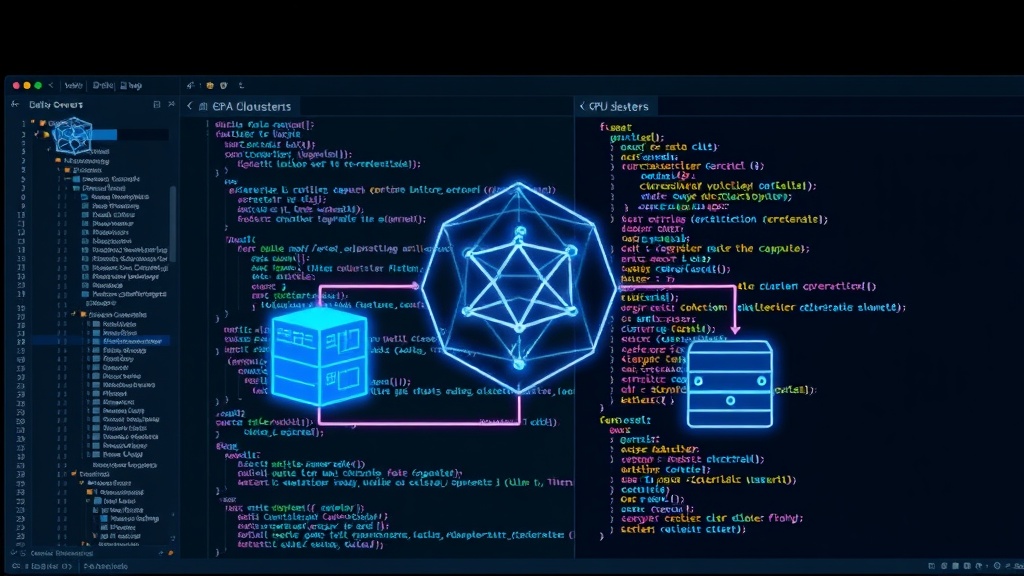
The Ascendancy of Data and Compute
The explosion in the scale and capability of AI models directly correlates with the availability of massive datasets and the exponential growth in computational power. Training models like GPT-4, Imagen, or Claude requires processing petabytes of data and consuming thousands of GPU-hours, often translating to millions of dollars in cloud computing costs. This reality has fundamentally altered the development lifecycle. Teams are now dedicating significant effort to data acquisition, cleaning, annotation, and augmentation. The quality and quantity of data are often more critical determinants of model performance than minor optimizations in the underlying code.
Furthermore, the hardware race for AI is intensifying. Companies are investing heavily in custom AI accelerators, optimizing data center infrastructure, and exploring novel computing paradigms. The ability to access and efficiently utilize this compute power is becoming a key differentiator. For many organizations, the challenge is no longer about writing a more efficient training loop, but about securing access to enough GPUs or TPUs to complete training within a reasonable timeframe and budget. This has led to a bifurcation in the AI development landscape: those with access to vast compute resources can push the boundaries of model scale and capability, while others must rely on smaller, more efficient models or leverage pre-trained giants through APIs.
The implications are far-reaching. Research labs and startups that were once able to compete by developing novel algorithms and efficient code now face a higher barrier to entry if they lack substantial capital for compute. This could inadvertently stifle innovation by concentrating AI development power in the hands of well-funded entities. The focus shifts from algorithmic ingenuity to resource acquisition and management. This is a stark departure from earlier eras of AI research where theoretical breakthroughs and clever coding were often sufficient to achieve state-of-the-art results.
What Lies Ahead: A New Frontier of Challenges
As the AI field matures, the bottlenecks will continue to evolve. While data and compute are currently dominant, other challenges are emerging. The ethical implications of AI, the interpretability of complex models, and the development of robust AI safety mechanisms are becoming increasingly critical. These are not strictly coding problems, nor are they purely data or compute issues. They represent a new class of challenges that require interdisciplinary expertise, robust governance, and a fundamental rethinking of how we design, deploy, and interact with intelligent systems.
The question for developers is no longer just 'Can I write the code to do this?' but rather 'Do I have the data to train it, the compute to run it, and the understanding to deploy it safely and ethically?' This multifaceted challenge requires a broader skill set than ever before. The successful AI engineer of tomorrow will likely be a polymath, adept not only at coding but also at data science, distributed systems, and an understanding of the societal impact of their creations.
What nobody has addressed yet is what happens to the thousands of developers who built their careers on mastering the nuances of algorithmic coding for AI. Will they need to pivot significantly, acquiring new skills in data engineering and MLOps, or will their foundational coding expertise remain a valuable, albeit less dominant, asset in the rapidly evolving AI landscape? The answer will shape the next generation of AI talent and influence the trajectory of innovation in the field.