The Limitations of Binary AI Database Interaction
Current AI database agents often operate with a simplistic binary choice: provide an answer or fail. This model fundamentally misunderstands the inherent complexities and uncertainties present in real-world workflows. A metric definition might be ambiguous, a tenant filter could be missing, or a query might be safe to prepare but not yet safe to execute. In these scenarios, the AI model may have sufficient evidence to suggest an answer but lacks the authority or certainty to act autonomously.
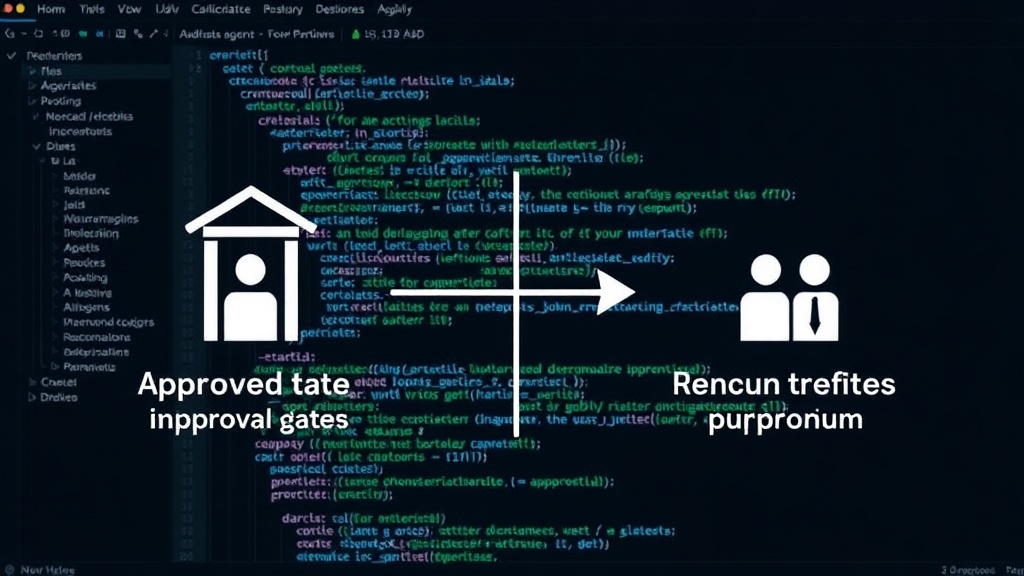
This is precisely where human review queues become indispensable. While approval gates are designed to answer the question, “Can this prepared action proceed?”, review queues address a more nuanced problem: “What should happen when the system is not sure yet?” The distinction is critical. The former implies a go/no-go decision on a fully formed plan, while the latter acknowledges the system's partial understanding and seeks guidance to refine or validate its proposed course of action.
The absence of such intermediate steps forces AI agents into an all-or-nothing paradigm, leading to either incorrect autonomous actions or an frustrating user experience characterized by constant, low-value interruptions. Developers and data professionals need systems that can gracefully handle ambiguity, not systems that break when faced with it.
Designing Effective Review Items
For a review queue to be effective, the items it presents to human reviewers must be rich with context. A useful review item should include several key pieces of information to enable informed decision-making. At a minimum, this includes:
- The original question: The user's initial prompt or query.
- User/workspace/tenant scope: Context about who is asking and within what environment.
- Proposed interpretation: How the AI understood the request.
- Tool call or query attempt: The specific SQL query or API call the AI intends to make.
- Schema/context version: The state of the database schema or relevant context at the time of the proposed action. This is crucial for reproducibility and understanding potential drift.
- Policy reason: Why this action is being considered, especially if it deviates from standard procedures or involves sensitive data.
- Result evidence: Any data or intermediate results that support the AI's proposed interpretation or action.
- Safe next actions: A clear set of options for the human reviewer, which should extend beyond simple approve/reject. These might include:
- Approve: The proposed action is safe and correct.
- Narrow: The AI should refine its interpretation or query based on feedback.
- Reject: The proposed action is incorrect or unsafe.
- Reroute: The request should be passed to a different agent or human expert.
- Turn into an approved view: The AI's interpretation or a derived query could be useful as a persistent, pre-approved view for future use.
This structured approach allows for granular control and continuous learning. It transforms the review process from a bottleneck into a valuable feedback loop.
Feeding the Product Loop: Learning from Review
The review queue should not be a dead end for information. Instead, it must actively feed back into the AI's learning and the product's development. When a human reviewer intervenes, it signifies an area where the AI's confidence was low or its interpretation was imperfect. This data is invaluable.
By analyzing the patterns in review items—what types of questions lead to ambiguity, which interpretations are frequently corrected, what scope leads to errors—product teams can identify critical areas for improvement. This could involve:
- Retraining the AI model: Using the reviewed queries and corrected interpretations to fine-tune the underlying language or reasoning models.
- Improving prompt engineering: Adjusting the system prompts to guide the AI towards more accurate interpretations in ambiguous situations.
- Enhancing schema understanding: Providing the AI with better access to or understanding of database metadata, data dictionaries, or business logic.
- Refining policy enforcement: Identifying edge cases in data access policies or security rules that need clearer definition.
- Developing new features: The data might reveal a need for new tools, query types, or data visualizations that the AI could eventually leverage.
This iterative process, where human oversight directly informs AI improvement, is essential for building trustworthy and capable AI database agents. Without it, these agents remain brittle, prone to failure in the nuanced reality of data management.
The Unanswered Question of Scalability
While the need for review queues is clear, what remains unaddressed is how to scale this human oversight effectively. As AI agents interact with more users and more complex datasets, the volume of review items could quickly overwhelm human capacity. The challenge lies in developing intelligent routing mechanisms within the review queue itself—prioritizing items based on risk, complexity, or frequency, and perhaps even using secondary AI models to pre-filter or summarize review items for human analysts. The true test of these systems will be their ability to maintain accuracy and safety without becoming a significant operational burden.
Beyond Simple Approval: Building Trust
The evolution of AI database agents from simple query generators to sophisticated assistants hinges on their ability to handle uncertainty. Simply providing an “approve” button for every AI-generated query is akin to giving a junior analyst full rein without any checks. It invites risk and erodes trust.
A review queue, on the other hand, acts as a sophisticated governor. It allows the AI to propose actions, leverage its pattern-matching capabilities, and suggest interpretations, while ensuring that critical decisions, especially those involving data modification, access, or complex analysis, are validated by human judgment. This is not about slowing down progress; it's about ensuring that progress is accurate, safe, and aligned with business objectives. For developers building these systems, implementing robust review mechanisms is not an optional feature but a foundational requirement for creating AI agents that users can rely on.