The Shifting Landscape: Why Traditional Roles Are Obsolete
The tech industry's rapid evolution, particularly with AI, has fundamentally altered the value proposition of traditional engineering roles. By 2026, the lines between technical execution and strategic planning will blur entirely. AI models are rapidly commoditizing basic coding syntax, routine data entry, and the generation of standard user interfaces. If your career's core value rests on performing predictable engineering tasks, you are now in direct competition with automated agents that operate at near-zero marginal cost. This seismic shift means that the roles commanding premium compensation will be those of the 'Orchestrators' – the sophisticated systems architects who can manage fleets of autonomous agents, secure complex data pipelines, and design robust, resilient infrastructure.
Fortunately, the knowledge and tools required to thrive in this new paradigm are not locked behind expensive tuition fees. The entire production-grade curriculum for mastering the modern AI and Data ecosystem is being openly shared and developed daily by world-class engineers. For those with the discipline to learn and build, a zero-dollar path to acquiring these in-demand skills is readily available. This syllabus outlines a comprehensive, open-source curriculum designed to equip you for the future of AI and data engineering.
Core Pillars: Data Architecture and Orchestration
The foundation of modern AI and data systems lies in robust data architecture and intelligent orchestration. Aspiring AI Orchestrators must first understand how to structure, manage, and secure the data that fuels these systems. This involves not just traditional database knowledge but a deep dive into modern data warehousing, data lakes, and lakehouses, with a keen eye on scalability, cost-efficiency, and governance.
Data Architecture Fundamentals
Begin with the bedrock of any data-driven system: understanding how data is structured, stored, and accessed. This includes:
- Relational Databases: SQL mastery, advanced querying, indexing, and performance tuning.
- NoSQL Databases: Understanding document stores (MongoDB), key-value stores (Redis), wide-column stores (Cassandra), and graph databases (Neo4j) for different use cases.
- Data Warehousing: Concepts like dimensional modeling, ETL/ELT processes, and tools like Snowflake, BigQuery, and Redshift.
- Data Lakes: Designing and managing data lakes using technologies like Apache Hadoop, S3, ADLS, and Delta Lake for raw data storage.
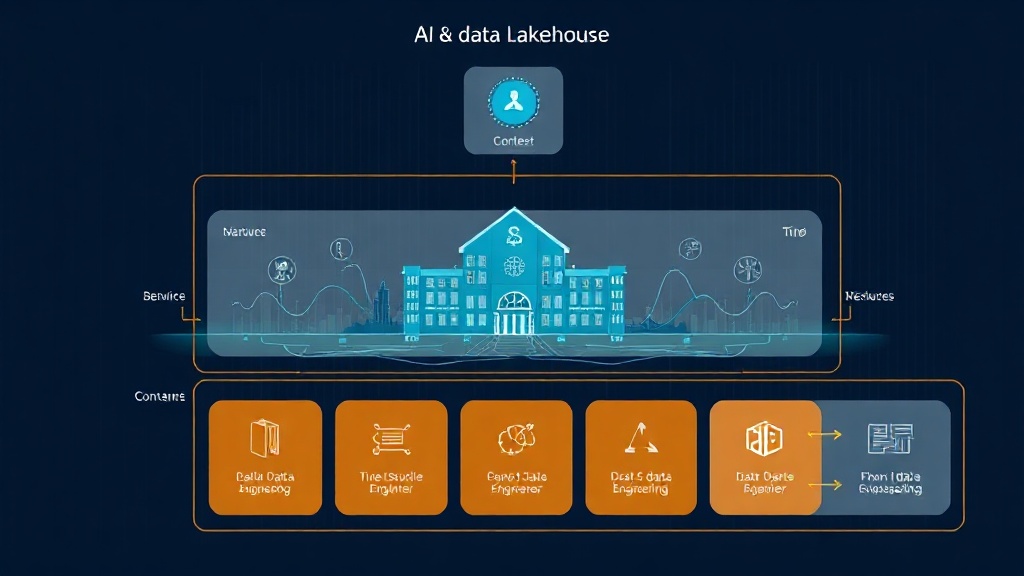
- Lakehouses: The convergence of data lakes and data warehouses, enabling ACID transactions and schema enforcement on data lake storage, with platforms like Databricks.
- Data Governance and Security: Implementing policies for data quality, privacy (GDPR, CCPA), access control, and encryption.
Orchestration and Workflow Management
Once data is structured, the next critical step is managing the flow of data and the execution of AI tasks. This is where the 'Orchestrator' role truly shines. Key areas include:
- Workflow Orchestration Tools: Mastering Apache Airflow, Prefect, or Dagster for defining, scheduling, and monitoring complex data pipelines and ML workflows.
- Containerization: Docker for packaging applications and their dependencies, ensuring consistent environments across development, testing, and production.
- Container Orchestration: Kubernetes (K8s) for automating the deployment, scaling, and management of containerized applications, crucial for managing fleets of AI agents.
- Infrastructure as Code (IaC): Tools like Terraform or Pulumi to define and provision infrastructure programmatically, enabling reproducible and scalable deployments.
- CI/CD Pipelines: Implementing continuous integration and continuous deployment practices using tools like Jenkins, GitHub Actions, or GitLab CI for automated testing and deployment of AI models and data pipelines.
AI Model Management and Deployment
Beyond infrastructure and data, a core competency for the modern AI professional is managing the lifecycle of AI models themselves. This includes not only training but also deploying, monitoring, and updating models in production environments.
Machine Learning Operations (MLOps)
MLOps bridges the gap between ML development and operations, ensuring models are reliable and scalable. Essential skills include:
- Model Training Frameworks: Deep understanding of TensorFlow, PyTorch, and scikit-learn.
- Experiment Tracking: Using tools like MLflow or Weights & Biases to log hyperparameters, metrics, and model artifacts for reproducibility.
- Model Serving: Deploying models using frameworks like TensorFlow Serving, TorchServe, FastAPI, or cloud-specific solutions (SageMaker, Vertex AI) for low-latency inference.
- Model Monitoring: Implementing systems to track model performance in production, detect drift (data drift, concept drift), and trigger retraining.
- Feature Stores: Utilizing platforms like Feast or Tecton to manage and serve ML features consistently across training and inference.
Agent-Based Systems and LLM Orchestration
The next frontier involves orchestrating multiple AI agents, particularly Large Language Models (LLMs), to perform complex tasks. This requires understanding:
- LLM Frameworks: LangChain and LlamaIndex for building applications powered by LLMs, chaining prompts, and connecting to data sources.
- Agent Frameworks: Developing autonomous agents that can reason, plan, and execute tasks using tools and APIs.
- Prompt Engineering: Advanced techniques for crafting effective prompts to elicit desired behaviors from LLMs.
- Vector Databases: Understanding and utilizing vector databases like Pinecone, Weaviate, or ChromaDB for efficient similarity search and retrieval-augmented generation (RAG).
Security and Observability in AI Systems
As AI systems become more integrated into critical infrastructure, security and observability are paramount. The Orchestrator must ensure these complex systems are not only functional but also secure and transparent.
Cloud Security Best Practices
A strong understanding of cloud security is non-negotiable. This includes:
- Identity and Access Management (IAM): Securely managing user access and permissions across cloud platforms.
- Network Security: Configuring virtual private clouds (VPCs), firewalls, and security groups.
- Data Encryption: Implementing encryption at rest and in transit.
- Security Auditing and Compliance: Regularly auditing systems for vulnerabilities and adhering to industry compliance standards.
Observability for AI Pipelines
Observability goes beyond traditional monitoring, providing deep insights into system behavior. For AI systems, this means:
- Logging: Centralized logging for all components of the AI pipeline.
- Metrics: Collecting performance metrics for infrastructure, data pipelines, and ML models.
- Tracing: Implementing distributed tracing to understand request flows across microservices and agent interactions.
- Anomaly Detection: Using AI/ML techniques to automatically detect unusual patterns in system behavior or model performance.
Building Your Portfolio: The Zero-Dollar Approach
The most effective way to learn and demonstrate proficiency is by building. The open-source community provides abundant opportunities:
- Contribute to Open Source Projects: Identify projects in areas like Airflow, Kubernetes, MLflow, LangChain, or specific AI libraries.
- Replicate Production Systems: Choose a common AI application (e.g., a recommendation engine, a chatbot with RAG) and build it end-to-end using open-source tools, deploying it on a free-tier cloud provider.
- Develop Custom Agents: Build a multi-agent system to solve a specific problem, demonstrating orchestration and LLM integration.
- Document Your Work: Maintain a detailed GitHub repository with clear READMEs, architectural diagrams, and explanations of your choices. Write blog posts on Dev.to or your personal site detailing your learning process and project outcomes.
This syllabus represents a commitment to continuous learning and hands-on building. By leveraging the vast resources of the open-source community, you can acquire the advanced skills necessary to become a sought-after AI Orchestrator without incurring significant debt. The future belongs to those who can architect, manage, and secure complex AI systems – and that future is accessible to everyone with the drive to learn.