
The Accelerating Obsolescence of AI Hardware
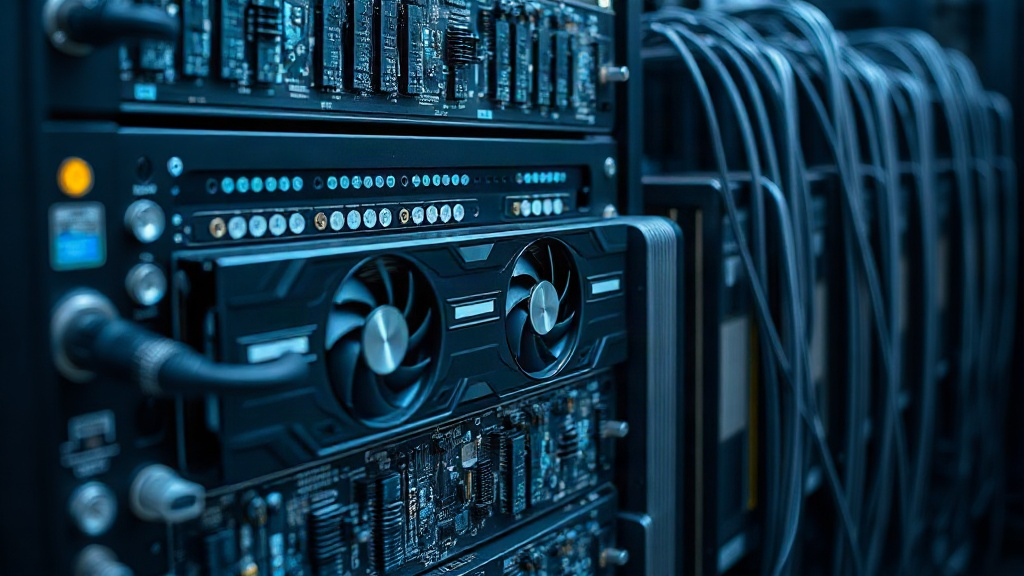
The current gold rush in artificial intelligence is fueled by an insatiable demand for computational power, primarily driven by high-end GPUs. Companies have poured hundreds of billions of dollars into building vast data centers packed with the latest silicon. However, this massive expenditure hinges on hardware with a surprisingly short effective lifespan. Unlike traditional IT infrastructure where components like storage drives are routinely replaced after a few years, the core of AI processing—the GPUs—represent a far more significant and costly upgrade challenge.
The rapid pace of AI development means that the cutting-edge GPUs installed today could be considered obsolete in as little as two to five years. This creates a looming financial cliff edge for companies operating at AI's forefront. The question isn't just about whether these chips will physically fail, but whether they will remain performant enough to justify their operational costs and meet the ever-increasing demands of AI model training and inference. The current trajectory suggests a perpetual cycle of massive capital expenditure, potentially burning through billions every few years just to maintain parity, let alone advance.
Consider the scale: replacing a few thousand hard drives in a cloud data center is a manageable operational expense. Replacing thousands of the most expensive components in an AI data center—the GPUs—represents a capital investment on a scale that could dwarf current operational budgets. This raises fundamental questions about the long-term financial logic underpinning the current AI build-out. While Nvidia and other chip manufacturers are clear beneficiaries, the ongoing operational cost structure for AI companies appears unsustainable without a significant shift in hardware economics or strategy.
The Financial Logic: A Perpetual Upgrade Cycle?
The financial model for AI infrastructure appears to be one of continuous, high-stakes reinvestment. Unlike many other technology sectors where hardware depreciation is a known factor but often manageable through incremental upgrades or extended lifecycles, AI hardware is facing an accelerated obsolescence curve. The performance gains offered by successive generations of GPUs are so substantial that older models quickly become uneconomical for cutting-edge tasks. This forces a choice: either accept a significant performance deficit and potentially lose competitive advantage, or undertake another massive capital outlay to acquire the latest hardware.
This dynamic creates a peculiar market where the primary suppliers of AI compute hardware—predominantly Nvidia—benefit from a built-in upgrade cycle that is far shorter than in most other computing domains. The billions invested today will likely need to be re-invested, perhaps at an even higher rate, within a few years. This model is less about amortizing an asset over a decade and more about maintaining a constant, state-of-the-art operational capability. The financial strain this puts on companies, especially those not backed by the deep pockets of hyperscalers or sovereign wealth funds, could be immense.
What remains unclear is whether this hardware refresh cycle is factored into the long-term strategic planning of AI companies. Are they building financial models that account for a complete GPU refresh every three to five years? Or are they operating under the assumption that the current hardware will suffice for longer, or that future cost reductions will offset the need for such frequent, large-scale replacements? The current approach seems to favor rapid deployment and scaling, with the long-term cost implications potentially being a secondary concern, or one that will be addressed when it becomes an unavoidable crisis.
Exploring Alternative Hardware Solutions
The unsustainable nature of the current GPU-centric hardware refresh cycle is beginning to spur innovation in alternative hardware approaches. Companies are exploring specialized chips and novel architectures to reduce reliance on the most expensive and rapidly obsolescing components. One such area is the development of custom silicon, designed from the ground up for specific AI workloads, which could offer better performance per watt and per dollar, and potentially a longer useful life before requiring a full architectural overhaul.
Emerging technologies in display and photonics are also showing promise for data center applications. Morphotonics, a deeptech company, recently raised €40 million to expand its display technology into data centers. While the specifics of their application are still unfolding, such innovations could point towards more energy-efficient, potentially more durable, or even reconfigurable hardware solutions that could alleviate the pressure of constant GPU upgrades. The idea is to move away from a purely iterative silicon upgrade path towards architectures that might offer a more stable, long-term investment. This could involve optical interconnects, novel cooling solutions, or entirely new processing paradigms that are less sensitive to the rapid cadence of semiconductor manufacturing advancements.
The challenge for these alternative solutions is to prove their viability, scalability, and cost-effectiveness against the established, albeit expensive, GPU ecosystem. However, the sheer financial pressure of the current hardware replacement cycle provides a strong incentive for data center operators and AI companies to seriously consider and invest in these nascent technologies. If successful, these innovations could fundamentally alter the economics of AI infrastructure, moving away from a perpetual upgrade treadmill towards a more sustainable operational model.
The Broader Implications for AI's Future
The hardware refresh problem is not merely a financial inconvenience; it has profound implications for the future trajectory of AI development and deployment. If the cost of maintaining state-of-the-art AI compute continues to escalate at the current pace, it could lead to a consolidation of AI capabilities within a few dominant players—the hyperscalers and large enterprises with the capital reserves to withstand such enormous and frequent expenditures. This could stifle innovation from smaller startups and research institutions that cannot afford to keep pace with the hardware arms race.
Furthermore, the environmental impact of constantly manufacturing and discarding high-value, energy-intensive hardware is significant. The push for more sustainable computing often focuses on energy efficiency during operation, but the lifecycle cost, including manufacturing and disposal, is a critical component of the overall environmental footprint. A data center hardware refresh cycle measured in years, not decades, exacerbates this issue.
The long-term financial logic of AI hinges on finding a more sustainable model. This could involve a combination of more efficient hardware architectures, advancements in chip longevity, novel cooling and power management techniques, and perhaps even a shift in how AI models are designed and deployed to be less reliant on bleeding-edge, power-hungry hardware. Without addressing the accelerating obsolescence of data center hardware, the current AI boom risks becoming an unsustainable economic and environmental burden.