
The Imminent AI-Hardware Symbiosis
The conversation around Artificial Intelligence often focuses on its software capabilities – the models, the algorithms, and the applications. However, at TechCrunch Disrupt 2026, Anna Goldie and Azalia Mirhoseini, co-founders of Ricursive Intelligence, are set to shift the spotlight to a more fundamental layer: hardware. Their upcoming session on the Disrupt Stage promises to tackle a question that is rapidly moving from science fiction to engineering reality: when will Artificial Intelligence begin designing its own hardware?
This isn't merely a theoretical discussion. The rapid advancements in AI, particularly in areas like generative models and reinforcement learning, are creating a feedback loop. As AI models become more complex and demanding, the need for specialized, efficient hardware intensifies. Conversely, the development of more powerful hardware enables the training and deployment of even more sophisticated AI. Goldie and Mirhoseini’s work at Ricursive Intelligence is at the nexus of this burgeoning field, aiming to bridge the gap between AI development and the silicon that powers it.
The implications of AI designing its own hardware are profound. It suggests a future where the pace of technological innovation could accelerate dramatically. Instead of human engineers painstakingly designing chips for specific AI tasks, AI systems could theoretically optimize architectures for their own computational needs, leading to chips that are orders of magnitude more efficient and powerful than current designs. This could unlock new frontiers in AI capabilities, from more nuanced natural language understanding to complex scientific discovery and highly adaptive robotic systems.
Think of it less like a human architect designing a building from scratch, and more like an AI being given a set of functional requirements and access to a vast library of materials and construction techniques, then autonomously optimizing the entire design for maximum efficiency and resilience. This is the paradigm shift Goldie and Mirhoseini are poised to discuss.
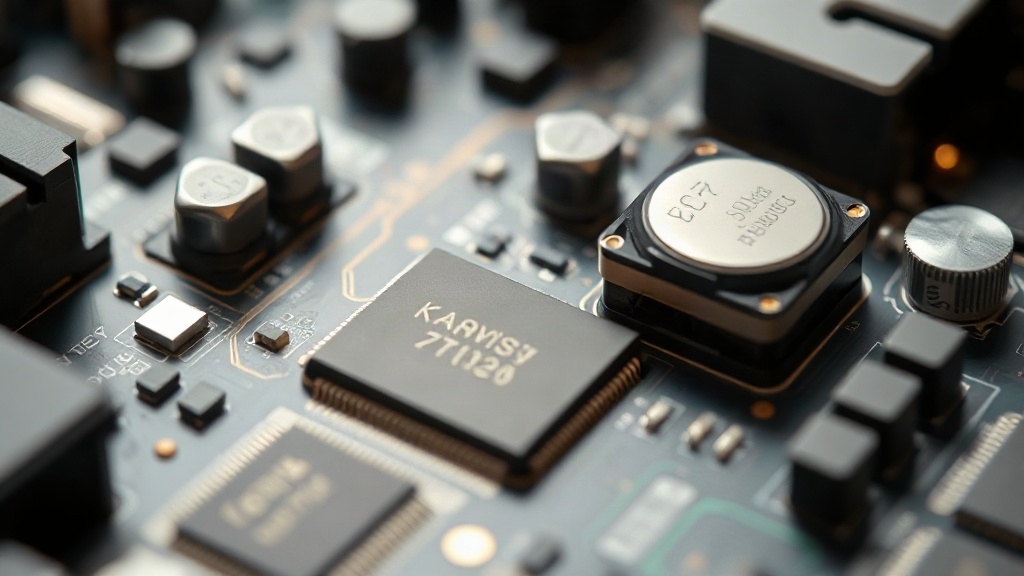
Closing the Loop: From AI Needs to Silicon Reality
The current process of chip design is a lengthy, iterative, and resource-intensive endeavor. It involves teams of highly skilled engineers who translate the abstract requirements of AI algorithms into physical silicon layouts. This process can take years and involves significant capital investment. AI's involvement in this design cycle could dramatically shorten these timelines and optimize for performance in ways that human intuition might miss.
Goldie and Mirhoseini are likely to elaborate on the specific AI techniques that are enabling this shift. Generative adversarial networks (GANs) and reinforcement learning agents, for instance, are already being explored for tasks like circuit design automation and optimizing chip layouts. The challenge lies in training these AI systems with the right objectives and constraints, ensuring that the generated hardware is not only performant but also manufacturable, power-efficient, and cost-effective.
The session at Disrupt 2026 will likely delve into the practical aspects of this convergence. What are the key technical hurdles that need to be overcome? What kind of data is required to train AI models for hardware design? And perhaps most importantly, what are the timelines we can expect for seeing AI-designed hardware move from research labs into production environments?
The co-founders' expertise at Ricursive Intelligence, a company focused on AI-driven innovation, positions them perfectly to offer insights into this transformative area. Their discussion will not just be about the potential, but also about the concrete steps being taken to realize this future. They will address how AI can be leveraged to optimize everything from the microarchitecture of processors to the physical placement of transistors on a chip, ensuring that hardware evolves in lockstep with AI’s ever-increasing demands.
Broader Implications for the Tech Landscape
This convergence of AI and hardware design has far-reaching implications for the entire technology industry. For AI researchers and developers, it promises access to more powerful and tailored computational resources, potentially accelerating breakthroughs in fields like drug discovery, climate modeling, and advanced materials science. For hardware manufacturers, it presents an opportunity to innovate at an unprecedented pace, creating next-generation chips that redefine performance benchmarks.
The session is also timely given the broader discussions happening at TechCrunch Disrupt 2026. With multiple sessions dedicated to AI safety, the future of robotics, and the strategies behind breakout startups, the conversation around AI-designed hardware fits squarely within the event's focus on the cutting edge of technology. It raises questions about the future of engineering talent, the economics of chip manufacturing, and the potential for AI to democratize access to advanced computing power.
What nobody has addressed yet, however, is the potential for an AI arms race driven by hardware design. If one entity or nation gains a significant advantage in AI-driven chip design, the geopolitical and economic ramifications could be immense. This underscores the critical importance of the AI safety discussions also featured at Disrupt, ensuring that such powerful advancements are guided by ethical considerations and human oversight.
Goldie and Mirhoseini’s presence at TechCrunch Disrupt 2026 is a clear signal that the future of AI is not just about smarter software, but also about the intelligent evolution of the very machines that enable it. Their insights will be invaluable for anyone looking to understand the next wave of technological innovation, from founders seeking to build the next generation of AI companies to investors looking to identify the most promising areas of future growth.