
The Accidental Context Problem
Most AI coding assistants operate on an implicit assumption: more context is always better. Developers often dump files, stack traces, and directory structures into the context window without much thought, leading to degraded model performance. This isn't a model failure; it's a resource management failure. The context window, whether in models like Claude, Gemini, or OpenAI's offerings, is not an infinite void. It's a finite resource, akin to a budget, and treating it like a junk drawer leads to inefficiency and missed potential.
The common workflow involves opening files, pasting output, and asking the AI to inspect more and more. As the conversation grows, the model starts to miss earlier instructions or fundamental pieces of information. This isn't because the AI 'got weird,' but because the effective budget of its attention has been exceeded. This haphazard approach means developers aren't leveraging AI tools to their full capabilities, often blaming the model for issues that stem from poor input management.
Introducing a Context Engineering Framework
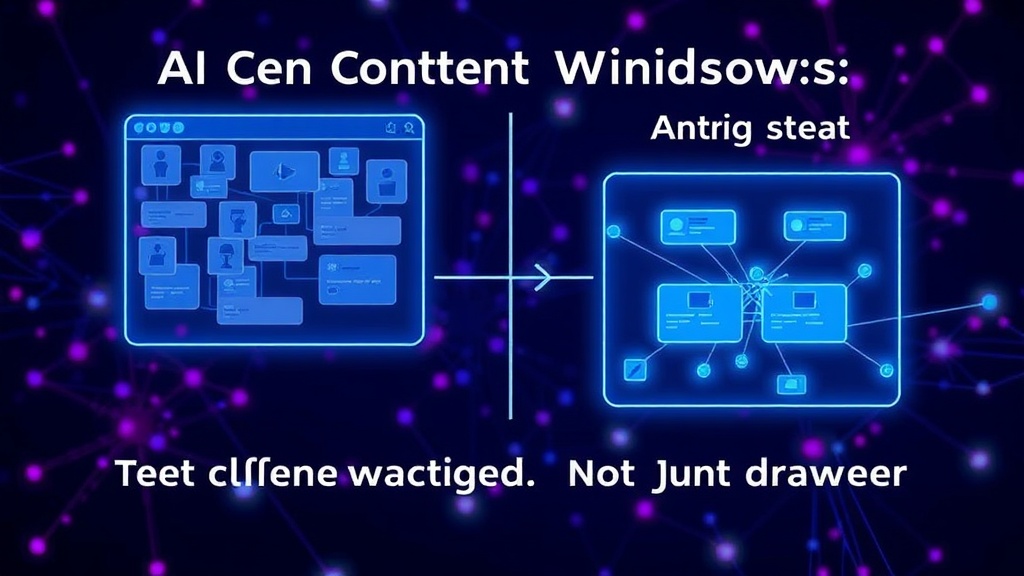
To combat this, a new approach is emerging: treating the context window as a budget. This isn't just a philosophical shift; it's a practical engineering challenge. The core idea is to move from accidental context accumulation to intentional context management. This involves defining a clear set of agents, skills, and rules that govern what information is relevant and how it's presented to the AI.
One such effort, originating from the ai-assistant-dot-files repository, proposes a Context Engineering Framework. This framework aims to provide a canonical set of agents and skills that can be projected across various AI coding tools. The goal is to enable consistent and effective context management regardless of the specific AI assistant being used, whether it's Claude Code, Cursor, Windsurf, GitHub Copilot, Gemini, or OpenAI Codex.
The framework structures these AI coding tools by defining explicit inter-agent contracts and platform targets. Currently, the repository encompasses 24 agents, 53 skills, and 13 inter-agent contracts. This structured approach ensures that before an agent performs significant work, another agent has already curated and validated the necessary context. This is a departure from the 'throw it all in and see what sticks' mentality.
Budgeting the Context Window: Key Principles
The fundamental principle is that context is a finite resource. Every token fed into the context window has a computational cost and an impact on the model's ability to recall and process information. Therefore, each piece of information should be justified and prioritized, much like allocating funds in a financial budget.
This involves several key practices:
- Prioritization: Not all information is equally important. The most critical data, instructions, and relevant code snippets should occupy the most valuable 'slots' in the context window. Less critical information might be summarized or omitted.
- Summarization: Instead of pasting entire files or lengthy logs, developers can use AI agents to summarize key sections or extract only the relevant data points. This distilled information is more potent within the limited context.
- Structured Input: Providing context in a structured format, such as JSON or a well-defined delimited format, helps the AI parse and understand the information more effectively. This is like providing line-item details in a budget rather than a lump sum.
- Iterative Refinement: The process of building context should be iterative. Start with the essential information, get a response, and then strategically add more context only if necessary, rather than starting with an exhaustive dump.
- Agent Specialization: Different AI agents can be tasked with specific roles: one agent might be responsible for gathering and pre-processing code files, another for analyzing stack traces, and a third for synthesizing information for the primary task. This division of labor mirrors how specialized roles manage different aspects of a budget.
The Impact on AI Coding Workflows
By adopting a budget-like approach to context, developers can achieve several significant improvements in their AI-assisted coding workflows:
- Improved Accuracy and Relevance: When the AI receives focused, prioritized context, its responses are more likely to be accurate and relevant to the task at hand. It's less likely to get 'confused' or miss critical details.
- Reduced Latency: Smaller, more focused context windows generally lead to faster response times from AI models. Processing fewer tokens is computationally cheaper and quicker.
- Cost Efficiency: For models that charge per token or have usage limits, managing context as a budget directly translates to cost savings.
- Enhanced Controllability: A structured context approach gives developers finer-grained control over the AI's behavior and output. They can steer the AI more precisely by carefully curating what it 'sees.'
- Scalability: This methodology scales better than simply increasing the context window size indefinitely. It provides a sustainable way to work with increasingly complex projects and codebases.
The Unanswered Question: Long-Term Memory and State
While treating the context window as a budget significantly improves immediate task performance, a larger question remains about how AI assistants will manage long-term memory and persistent state across multiple, disconnected sessions. If each interaction is a new budget, how does the AI 'remember' previous projects or evolving user preferences without re-ingesting vast amounts of data each time? The current budget-centric approach optimizes within a single session, but the challenge of building robust, long-term AI memory is a frontier yet to be fully conquered.
This shift in perspective—from context as a junk drawer to context as a budget—is crucial for anyone serious about leveraging AI coding tools effectively. It requires a more deliberate, engineering-focused mindset, but the rewards in accuracy, efficiency, and control are substantial.