
The Onboarding Nightmare: AI Tools Don't Talk to Each Other
The promise of AI-assisted workflows is rapidly colliding with a frustrating reality: context fragmentation. As professionals increasingly rely on a suite of specialized AI tools for writing, coding, research, and more, the inability of these tools to share information creates a persistent bottleneck. This isn't a minor inconvenience; it’s a fundamental workflow impediment that forces users into a cycle of repetitive explanation and onboarding, akin to hiring a new contractor daily.
Consider the typical scenario: a developer might use Claude for drafting documentation, Cursor for code completion and debugging, ChatGPT for brainstorming, and Perplexity for initial research. Each tool operates in its own silo. Claude doesn't know what code you just debugged. Cursor has no memory of the research findings from Perplexity. ChatGPT forgets the nuances of the documentation you're writing.
This lack of interoperability means that every time a user switches between these powerful tools, they must re-establish the project's history, their role, the specific problem they're trying to solve, and the decisions already made. The time spent on this manual context re-injection is substantial, directly eroding the productivity gains AI is supposed to deliver.
The core of the problem lies in how current AI models and platforms are designed. They typically operate on a session-based memory model. Once a session ends, or when data is passed from one application to another via copy-paste or manual input, the intricate web of context – the specific prompts, the intermediate outputs, the user's implied goals – is lost. This is not just a user interface issue; it's a deep architectural challenge.
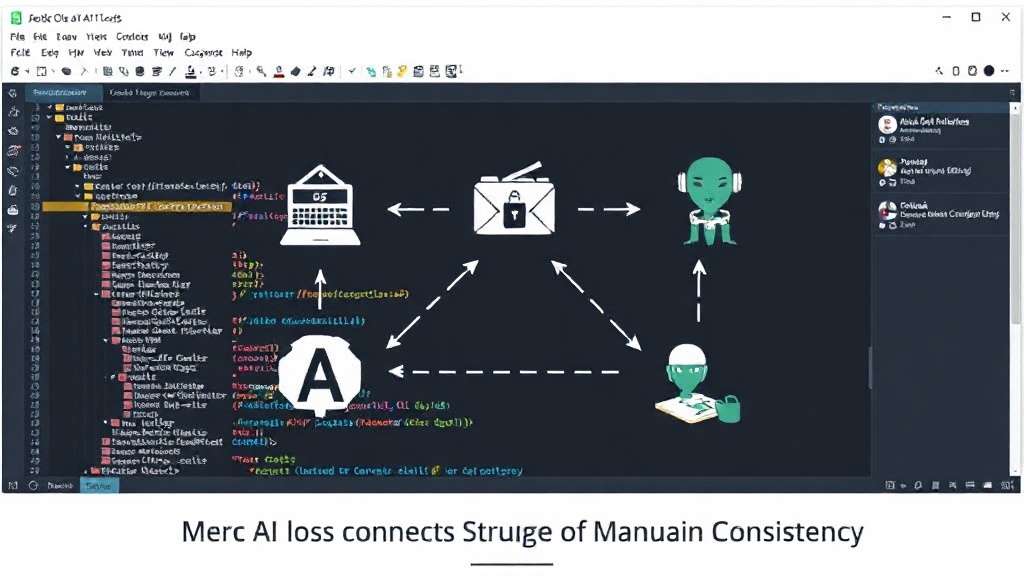
The Cost of Context Loss
The impact of this context loss is multifaceted. For developers, it means re-explaining codebases, debugging history, and project requirements every time they switch from a research tool to a coding assistant, or from a code editor to a documentation generator. This constant mental context-switching is mentally taxing and prone to errors. A subtle detail missed during re-explanation can lead to incorrect code, flawed documentation, or wasted development cycles.
Creators face similar hurdles. A writer using one AI for initial drafting, another for summarizing research, and a third for refining tone and style will find themselves repeatedly feeding the same core information into each system. The AI's ability to understand narrative arcs, character development, or thematic consistency across different parts of a project is severely hampered. It’s like trying to write a novel by dictating each chapter to a different, amnesiac scribe.
For researchers, the problem is compounded. While tools like Perplexity offer excellent information retrieval, integrating those findings into a coherent analysis or report often requires manual transfer to a writing AI. The AI tasked with synthesis or analysis has no inherent understanding of the search queries that led to the retrieved information, the source credibility assessments made during research, or the specific constraints of the analysis being performed.
Potential Solutions and Workarounds
While a truly integrated AI ecosystem remains elusive, users are experimenting with various workarounds. Some are developing extensive personal knowledge bases or prompt libraries, meticulously documenting project context and key decisions that can be quickly copied and pasted. This approach, however, is labor-intensive and requires significant organizational discipline.
Others are exploring custom scripting or middleware. This might involve using APIs to chain tools together, feeding the output of one AI directly into the input of another. This requires significant technical expertise and is often fragile, breaking with minor updates to the underlying AI services. For instance, a developer might write a script to summarize a research paper using an LLM API and then feed that summary into another LLM API for initial report drafting.
Another strategy involves designating a primary