
The Two-Layer Reality for AI Content Provenance
The EU AI Act's Article 50 transparency rules, enforceable since August 2, 2026, mandate machine-readable markings on generative AI output for EU users. A common, yet flawed, approach is to simply attach a C2PA manifest and consider the job done. However, this method proves brittle and fails when confronted with the realities of production environments. What actually works requires a more robust, multi-layered strategy.
Article 50(2) specifies that markings must be effective, interoperable, robust, and reliable. The EU Code of Practice for AI, interpreting these requirements, mandates at least two layers: signed metadata (like C2PA) and imperceptible watermarking (such as Microsoft's SynthID or equivalent technologies). A third layer, content fingerprinting, is considered optional.
The necessity for these multiple layers is not an arbitrary bureaucratic demand; it's a practical response to how digital content is handled. Consider a simple screenshot. C2PA manifests, for instance, are embedded within JUMBF metadata boxes. However, platforms that strip metadata upon upload, content delivery networks (CDNs) that optimize images, or even a user taking a screenshot, can all obliterate this information. Microsoft's February 2026 Media Integrity report openly acknowledged this vulnerability, noting that preventing every potential attack vector on metadata is a significant challenge.
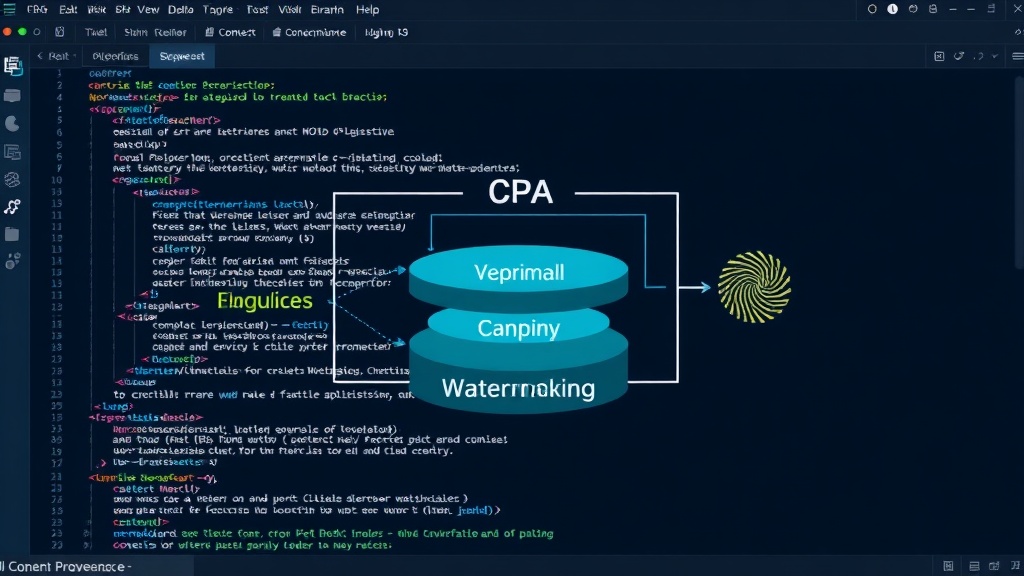
Why C2PA Alone Isn't Enough
C2PA (Coalition for Content Provenance and Authenticity) provides a standardized framework for embedding provenance data into digital assets. It allows creators to attach tamper-evident metadata detailing how content was generated, edited, and by whom. This is invaluable for establishing trust and accountability.
The critical failure point for C2PA in production, particularly for AI-generated content, is its reliance on embedded metadata. When content is re-shared, reformatted, or transformed, this metadata can be lost or corrupted. For AI-generated images or videos, platforms often re-encode the output, which can strip out or alter the C2PA manifest. Social media platforms, image editors, and even simple file conversions can render C2PA data useless. Therefore, while C2PA is a crucial component, it cannot stand alone as the sole mechanism for AI content provenance under Article 50.
The Role of Watermarking
Imperceptible watermarking offers a vital second layer of defense. Technologies like Microsoft's SynthID embed information directly into the pixels of an image or video in a way that is not visible to the human eye. This watermark survives common manipulations such as compression, resizing, and even some forms of cropping.
The key advantage of watermarking for AI content is its resilience. Even if the C2PA manifest is stripped, the watermark remains embedded within the content itself. This allows for verification of the AI origin, even after the content has passed through multiple intermediaries or undergone transformations. For instance, a platform receiving an AI-generated image could run a watermarking detection algorithm to confirm its origin and integrity, fulfilling the 'robust and reliable' requirement of the AI Act.
When building your system, consider the trade-offs. SynthID, for example, offers a balance between detectability and robustness. Other solutions may offer different levels of imperceptibility or resilience to specific types of manipulation. The goal is to choose a watermarking technology that complements C2PA, ensuring that provenance information persists through common production workflows.
Implementing a Robust Solution
Shipping a compliant AI content provenance system requires integrating these layers effectively. The workflow should look something like this:
- AI Generation: When your generative AI model produces content (text, image, audio, video), initiate the provenance process.
- Metadata Generation: Create a C2PA manifest. This manifest should include details such as the model used, parameters, timestamp, and any human input or editing steps. Crucially, it should also reference the embedded watermark.
- Watermark Embedding: Apply an imperceptible watermark to the generated content. This watermark should ideally encode a unique identifier that can be cross-referenced with the C2PA manifest.
- Content Output: Package the content with both the C2PA manifest and the watermarked data.
For developers building these systems, this means architecting your AI pipelines to accommodate these dual requirements. This isn't just about calling a library; it's about ensuring the output format and subsequent processing steps preserve both the metadata and the embedded watermark.
The Optional Third Layer: Fingerprinting
Content fingerprinting is an additional technique that can further enhance provenance. This involves creating a unique digital signature or hash of the content. While not strictly required by Article 50's core mandate, it can serve as an extra verification step.
Fingerprinting is useful for detecting exact duplicates or near-duplicates of content. If a piece of content is altered slightly, its fingerprint will change. This can help track the lineage of content, especially in scenarios where multiple versions or derivatives exist. However, fingerprinting alone does not provide the rich metadata of C2PA or the embedded resilience of watermarking. It is best employed as a supplementary tool within a broader provenance strategy.
What This Means for Production
For any organization shipping generative AI features that might reach EU users, understanding and implementing this two-layer (or three-layer) approach is no longer optional. The days of relying solely on embedded metadata are over. You must ensure that your AI content is marked in a way that withstands the unpredictable transformations of real-world production environments.
This requires careful consideration of your entire content pipeline, from generation to distribution. Developers need to integrate C2PA manifest generation and watermark embedding into their core AI workflows. Operations teams need to ensure that distribution channels and user-facing platforms do not strip this critical provenance information. The EU AI Act is pushing the industry towards a higher standard of transparency and accountability for AI-generated content, and a robust, layered approach is the only way to meet it effectively.
The surprising detail here is not the existence of the EU AI Act, but the explicit acknowledgement from major tech players like Microsoft that simple metadata solutions are insufficient. The industry is being forced to confront the practical challenges of content provenance in production, moving beyond theoretical standards to implement resilient, multi-layered solutions.