The Keyhole View: AI's Limited Understanding of Code
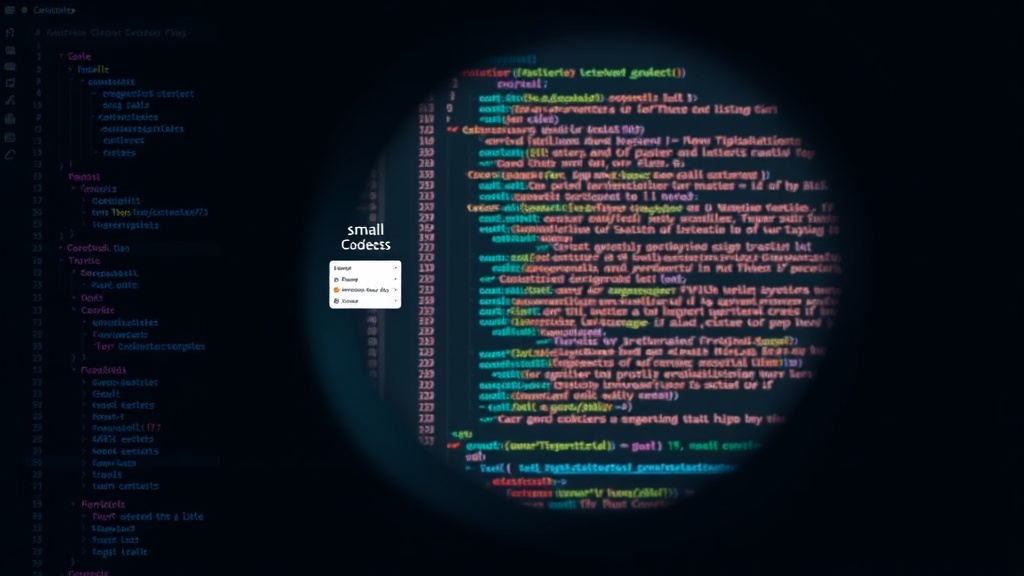
AI coding assistants are powerful tools, capable of generating code, suggesting fixes, and even writing tests. However, their effectiveness plummets when dealing with large, complex code repositories. The core issue lies in their inherent statelessness. These agents operate with a limited context window, akin to looking at a vast codebase through a keyhole. They only perceive what is immediately visible within their current session, lacking any persistent memory of the project's overall structure, dependencies, or historical changes.
This limited perspective leads to a common and frustrating problem: AI fixes one issue only to break several others. Imagine an AI agent tasked with refactoring a specific function. Without understanding how that function is used across dozens or hundreds of other modules, the AI might change a return type or modify a parameter in a way that invalidates calls from unrelated parts of the system. Modern codebases are intricate webs of interconnected components, architectural layers, and downstream effects. As these repositories grow, the number of potential dependencies and interactions explodes, making it increasingly difficult for a stateless agent to maintain a comprehensive grasp of the project's state.
The Dependency Graph Dilemma
The problem is exacerbated by the sheer complexity of dependency management in large projects. A single change in a core library or a widely used utility function can have ripple effects throughout the entire application. For an AI agent to operate effectively on such codebases, it would need a complete, up-to-date dependency map. This map would not only detail which modules import or depend on a given piece of code but also understand the *implications* of any changes made to it. For instance, if an AI modifies a method's return signature, it needs to know which other modules are affected, what their current expectations are, and how those modules might subsequently fail.
Developers often encounter this when using AI for tasks like code review or feature implementation. The AI might suggest a seemingly elegant solution or a quick fix, but without the holistic understanding of the project's architecture, it fails to anticipate the unintended consequences. This leads to a cycle of AI-suggested changes, followed by manual debugging by developers to fix the new issues introduced by the AI. The current paradigm forces developers to act as the AI's memory and context provider, painstakingly explaining the project's intricacies for each task, which negates much of the efficiency gains the AI was supposed to offer.
The Search for Stateful Context
The fundamental challenge is bridging the gap between stateless AI models and the stateful nature of software development. While current models excel at understanding local code patterns and syntax, they falter when tasked with reasoning about the global state of a complex system. This is not an insurmountable problem, but it requires a shift in how AI interacts with code repositories. Future AI coding agents will likely need to incorporate mechanisms for building and maintaining a dynamic, project-wide understanding of dependencies and code relationships.
One potential approach involves developing AI agents that can actively build a knowledge graph of the codebase. This graph would represent files, functions, classes, variables, and their interconnections. When an AI is asked to perform a task, it would first query this graph to understand the scope of its potential impact. For example, before modifying a function, the AI could identify all call sites and dependent modules, allowing it to generate more robust and context-aware changes. This proactive dependency analysis is crucial for moving beyond simple code generation to intelligent code comprehension and modification.
The frustration developers feel is a clear signal that the current tools, while impressive in isolation, are not yet equipped for the realities of large-scale software engineering. The promise of AI-assisted development hinges on its ability to understand and navigate the complex, interconnected nature of modern codebases. Until AI agents can overcome their stateless context problem, their utility in large repositories will remain fundamentally limited, requiring significant human oversight and correction.