
The Productivity Paradox: Faster Coding, Slower Learning?
Before AI coding assistants, software development was a deliberate, often slow, process. Debugging, wrestling with unfamiliar documentation, testing hypotheses, and discovering dead ends were not just hurdles; they were the crucibles where skills were forged. This grinding reality, while frustrating, was also the primary engine for learning and deep understanding. Now, tools like Cursor promise a radical departure, dramatically cutting development time by generating code, explaining complex sections, tracing errors, writing tests, and facilitating seamless transitions across different parts of a tech stack.
For solo developers, this efficiency gain is undeniably attractive. Cursor can automate away much of the drudgery: boilerplate code, repetitive patterns, obscure syntax, basic test cases, configuration files, and even initial documentation drafts. The time saved from these tasks is substantial. However, a critical question emerges: are we simply becoming more proficient users of a powerful tool, or are we genuinely becoming better, more capable developers?
The concern is that by offloading cognitive heavy lifting to AI, developers might bypass the very processes that build deep expertise. When an AI can instantly explain an unfamiliar codebase, trace a bug, or suggest a test, the developer doesn't necessarily have to grapple with the underlying logic themselves. This can feel like a shortcut, but it risks becoming a crutch, preventing the development of crucial problem-solving muscles and a nuanced understanding of software architecture and failure modes.
Navigating the AI-Assisted Workflow
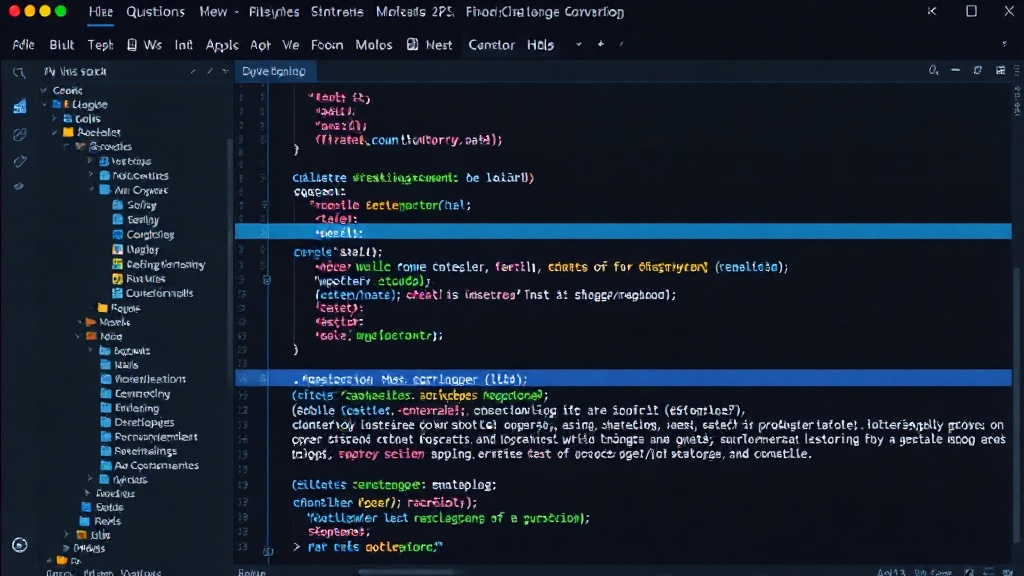
Cursor's capabilities extend beyond simple code generation. It can act as an interactive tutor, answering questions about specific code snippets or entire projects. This feature is particularly valuable for onboarding new team members or when diving into legacy systems. The ability to ask, "What does this function do?" or "Why is this error occurring?" and receive a context-aware explanation can drastically reduce the time spent deciphering complex logic.
The tool also streamlines the process of writing tests. Instead of manually crafting unit tests for every function, developers can prompt Cursor to generate them, ensuring a baseline level of test coverage with minimal effort. Similarly, configuration files for deployment, infrastructure, or build processes—often a source of significant friction—can be generated with AI assistance. This frees up developers to focus on higher-level architectural decisions and business logic.
However, this efficiency comes at a potential cost. When Cursor writes tests, does the developer truly understand the edge cases and failure modes it might have missed? When it explains code, are they internalizing the concepts, or just accepting the AI's output? The danger lies in a superficial engagement with the codebase, where developers become adept at directing the AI but less skilled at independent analysis and critical thinking.
The Deep Learning Trade-off
The core of the debate centers on the nature of learning in software development. Traditionally, learning involved struggle, iteration, and failure. Debugging a complex issue often forces a developer to understand the system at a granular level, tracing the flow of data and execution step by step. Reading documentation meticulously, even the parts that seem irrelevant at first, builds a broader mental model of a technology or framework. Writing tests manually instills discipline and a deep appreciation for potential failure points.
AI coding assistants like Cursor can short-circuit these learning pathways. While they provide correct answers and functional code, they don't necessarily provide the *process* that leads to deep understanding. Imagine learning to cook: a recipe app that tells you exactly what to do and when, versus a cookbook that also explains the chemistry of baking. The former gets you a cake faster, but the latter helps you understand *why* the cake rises. Similarly, Cursor can generate the code for a complex algorithm, but if the developer doesn't understand the algorithm's principles, they won't be able to adapt or debug it effectively when the AI's solution falls short.
This raises an important question for the future of software engineering education and professional development: how do we ensure that developers continue to build foundational skills in an era of increasingly powerful AI assistance? If junior developers primarily learn by prompting an AI, will they ever develop the intuition and deep problem-solving abilities of their predecessors? The surprising detail here is not how much faster AI makes us, but how much of the *learning* process it might be abstracting away.
The Path Forward: Augmentation, Not Replacement
The goal, then, should not be to abandon these powerful tools, but to use them mindfully. Developers must consciously choose to engage with the AI's output, questioning its suggestions, probing its reasoning, and using its explanations as a starting point for deeper learning rather than an endpoint. This means actively seeking to understand *why* the AI generated a particular piece of code or explanation, rather than just accepting it.
For experienced developers, this might mean using Cursor to accelerate tasks they already understand well, freeing up cognitive load for more challenging problems. For junior developers, it's crucial to balance AI assistance with dedicated time for fundamental learning—reading source code, debugging manually, and understanding core computer science principles. This hybrid approach ensures that the speed gains offered by AI are built upon a solid foundation of genuine skill and understanding, rather than replacing it.
Ultimately, the value of tools like Cursor lies in their potential to augment human capabilities, not replace them. The responsibility falls on the developer to remain an active participant in their own learning and skill development, ensuring that increased productivity translates into genuine growth as an engineer.