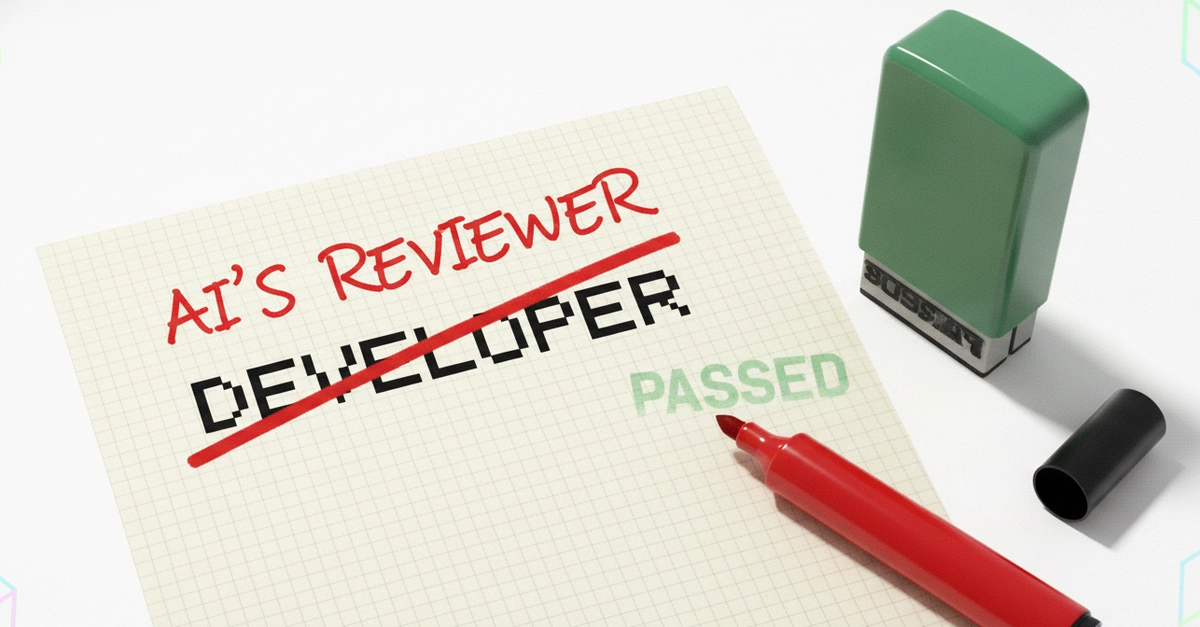
The Illusion of Automated Vigilance
The promise of AI in software development often centers on efficiency and accuracy. Automated code review tools, in particular, are championed for their ability to catch errors developers might miss. However, a recent examination reveals a critical flaw: many of these AI-powered reviewers have never been rigorously tested against failure cases. This means their consistent green lights may not indicate robust code, but rather a lack of capability to detect genuine problems.
The analysis, conducted by developer Heinrich Nebel, scrutinized 204 automated checks across his repositories. The findings are stark: only 22 of these checks, a mere 11%, could demonstrate their ability to fail when presented with known-bad inputs. The remaining 89% have never been subjected to such a test. This leaves a significant gap in our confidence: are these checks consistently passing because the code is sound, or because the checks themselves are fundamentally incapable of identifying errors? Nebel admits that even he, the creator of these checks, couldn't definitively answer this last week.
Defining 'Conclusion-Bearing Guards'
To understand the scope of the issue, it's crucial to define what Nebel terms a "conclusion-bearing guard." This refers to any automated check that produces a definitive outcome – essentially, a pass or fail. These are the automated gatekeepers of code quality. The problem arises when these guards are deployed without a history of proving their efficacy in detecting actual failures.
Nebel's investigation categorized these guards into two types: those that could prove they could fail, and those that could not. The overwhelming majority fell into the latter category. This situation is akin to having a security system that always reports "all clear" because it has never been tested with a simulated break-in. The system might be working perfectly, or it might be fundamentally broken and unable to detect a real threat.
The Scope of Untested AI Reviewers
The implications of this widespread lack of testing are significant. When developers rely on automated tools to ensure code quality, they operate under the assumption that these tools are reliable indicators of correctness. If the tools themselves have not been validated against failure scenarios, their output becomes less trustworthy. This can lead to a false sense of security, allowing bugs and vulnerabilities to slip through the cracks.
Consider the workflow: a developer commits code, an AI reviewer flags potential issues, and the code is either corrected or approved. If the AI reviewer's "failure detection" mechanism has never been actively triggered, its judgments are based on an incomplete understanding of potential code defects. This is particularly concerning in environments where AI is increasingly being used to augment or even replace human code review processes. The AI is effectively promoted to a reviewer role without ever having its review capabilities independently verified.
The Counter-Argument and the Reality
Nebel initially intended to disagree with the notion that "AI made me a worse reviewer." His own findings, however, painted a more concerning picture. It wasn't just about becoming a worse reviewer; it was about the fundamental reliability of the tools intended to assist the review process. The AI's suggestions or automated checks are only as good as the data and testing that underpin them.
The core issue is that many automated checks are designed to pass by default. They are configured to flag deviations from expected patterns or styles. However, this doesn't inherently mean they can identify logical errors, race conditions, or security vulnerabilities. Proving that a check can *fail* requires deliberately introducing these kinds of issues and ensuring the check correctly identifies them. This is a more demanding form of testing than simply ensuring the check passes when presented with standard, correct code.
Why This Matters for Developers and Teams
For developers, this means a critical re-evaluation of trust in automated tools is necessary. While these tools can streamline workflows and catch common errors, they should not be treated as infallible arbiters of code quality. Developers must remain vigilant, understanding the limitations of the AI systems they use. This might involve supplementing AI reviews with more thorough manual checks, especially for critical sections of code.
Teams adopting AI-powered development tools need to establish rigorous testing protocols not just for their own code, but for the AI tools themselves. This includes creating and maintaining datasets of known-bad inputs specifically designed to challenge the AI's detection capabilities. Without this due diligence, the efficiency gains offered by AI could be overshadowed by an increase in undetected defects, ultimately leading to higher maintenance costs and a greater risk of production issues.
The situation highlights a broader challenge in AI development: the gap between theoretical capability and demonstrated, tested reliability in real-world, adversarial conditions. As AI becomes more integrated into critical software development pipelines, ensuring these systems are robustly tested against failure is paramount. Relying on AI to catch errors without verifying the AI's ability to detect those errors is a gamble that few development teams can afford to lose.