The AI Code Generation Mirage
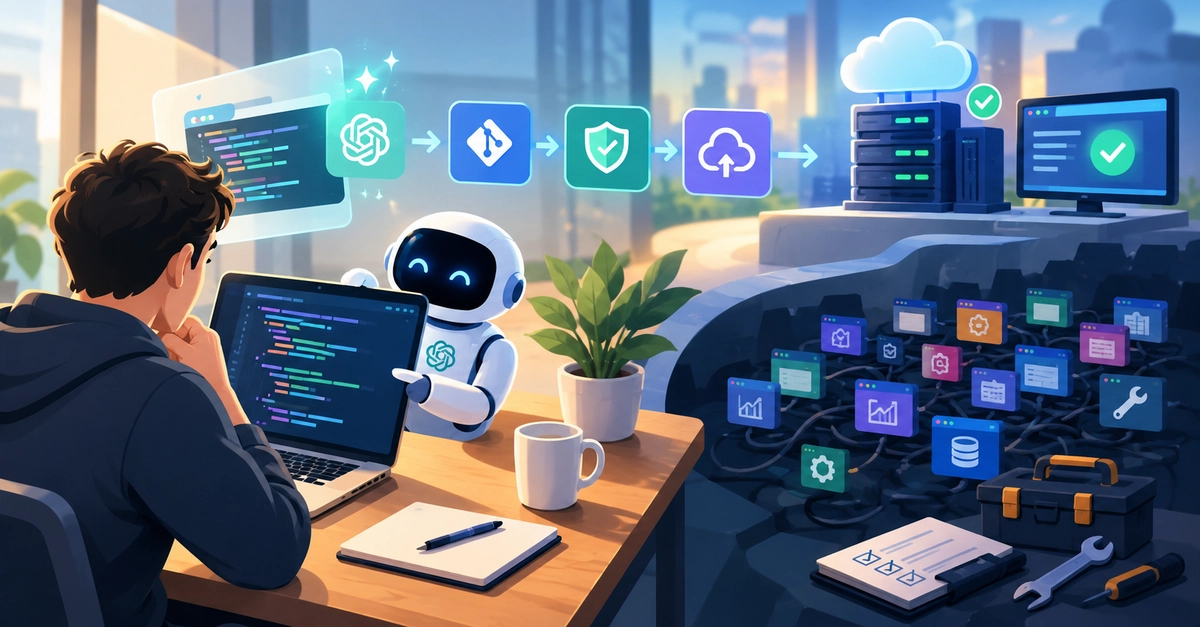
The allure of AI-generated code is potent. Tools like GitHub Copilot, ChatGPT, and others promise to accelerate development, democratize coding, and slash costs. The narrative often centers on the speed at which AI can produce code snippets, leading to a seductive question: Can we really ship software built entirely with AI? The answer, for now, is a resounding 'not yet,' and the gap between generating code and shipping robust, maintainable software is vast.
Vibe coding, as some call it, is undeniably changing the economics of software development. Writing code becomes faster, cheaper, and more accessible. For simple scripts, prototypes, or repetitive tasks, AI can be an extraordinary assistant. It can draft boilerplate, suggest solutions, and even debug basic errors. This accessibility lowers the barrier to entry, enabling individuals without formal software engineering backgrounds to create functional applications.
However, there's a critical distinction between generating code and shipping software. Shipping software is a complex, multi-faceted discipline that extends far beyond the act of writing code. It encompasses a rigorous lifecycle of planning, design, implementation, testing, deployment, security, maintenance, and long-term ownership. AI, in its current form, excels at the implementation phase but falters significantly in the surrounding critical processes.
Beyond the Code: The Unaddressed Challenges
Consider the non-developer who uses AI to build an application. The result might appear better, faster, and cheaper than what a traditional team could deliver initially. This scenario sparks a critical discussion within companies: what happens when AI-driven development bypasses established engineering workflows? The immediate challenges are not just about the code itself. We still need robust systems for:
- Source Control: How do AI-generated codebases get versioned, branched, and merged effectively? Who is responsible for the commit history and the narrative of changes?
- Dependencies and Licensing: AI models are trained on vast datasets. Ensuring that generated code does not inadvertently incorporate proprietary or restrictively licensed components is a significant legal and technical hurdle. Tracking and managing these dependencies is crucial.
- Cybersecurity: AI-generated code can introduce subtle vulnerabilities. Without expert review, these can become significant security risks. AI models themselves can be susceptible to adversarial attacks, potentially leading to the generation of malicious code.
- Deployment and Infrastructure: Packaging, deploying, and managing applications requires infrastructure knowledge, CI/CD pipelines, and an understanding of cloud or on-premises environments. AI can assist in writing deployment scripts, but the strategic orchestration remains a human domain.
- Testing and Quality Assurance: Writing comprehensive unit, integration, and end-to-end tests is paramount. While AI can generate test cases, ensuring their completeness, accuracy, and coverage requires a deep understanding of the application's requirements and potential failure points. Automated testing frameworks need careful setup and maintenance.
- Maintenance and Long-Term Ownership: Software is a living entity. Bugs will be discovered, requirements will evolve, and systems will need updates. Who owns the AI-generated codebase? Who is responsible for debugging issues that arise months or years later, especially if the original AI prompts are lost or the AI model itself is updated or retired? The concept of 'ownership' becomes blurred when the creator is an algorithm.
- Scalability and Performance: AI might generate functional code, but it may not be optimized for performance or scalability. Identifying and refactoring bottlenecks requires experienced engineers.
The Fragmentation Risk
There's another significant risk associated with widespread AI code generation, especially for non-developers. If everyone can easily build small, functional tools using AI, we may end up with a proliferation of applications. Each of these applications, however small, will require maintenance, support, and updates. This could lead to a fragmented ecosystem where valuable resources are spread thin across dozens, if not hundreds, of disparate, potentially low-quality, AI-generated tools. The cumulative burden of maintaining this sprawl could outweigh the initial cost savings.
Think of it less like a carpenter building a custom house and more like a homeowner using a magic wand to assemble furniture from a catalog. The furniture might appear instantly, but if a leg breaks, or if you want to add a new shelf, or if the warranty expires, who do you call? The magic wand doesn't offer support. You're left with a piece of furniture that might be functional but is difficult to repair or modify.
The Real Question: Augmentation, Not Automation
So, perhaps the real question is not “Can AI build the software?” but rather, “How can AI augment human developers to build better software, faster and more reliably?” AI is a powerful co-pilot, an incredibly sophisticated autocomplete, and a tireless assistant for certain tasks. It can significantly boost the productivity of skilled engineers by handling repetitive coding, generating documentation, and suggesting architectural patterns. The human element remains indispensable for critical thinking, architectural design, complex problem-solving, ethical considerations, and the overarching responsibility of delivering a secure, maintainable, and valuable product.
The future of software development likely involves a symbiotic relationship between human ingenuity and AI capabilities. Developers will leverage AI to accelerate their workflows, but the ultimate responsibility for the software's quality, security, and longevity will rest with human teams. Shipping software is an engineering discipline, not just a code generation exercise. Until AI can autonomously manage the entire lifecycle—from requirements gathering and architectural integrity to long-term maintenance and security patching—fully AI-built software remains a distant prospect.