
The AI Productivity Paradox
The software development landscape has been transformed by a wave of AI tools. GitHub Copilot, Cursor, Claude Code, Gemini CLI, and OpenAI Codex have dramatically boosted developer productivity. Code generation speeds have accelerated, allowing teams to build faster than ever before. However, this rapid advancement has introduced a subtle yet significant problem: the erosion of code clarity and maintainability.
After days or weeks of development, teams often find themselves unable to answer fundamental questions about their codebase. Why does a specific rule exist? Was a particular behavior a deliberate requirement or an emergent property of AI-generated code? Can a function be altered without unintended consequences elsewhere? Where are these crucial decisions documented?
The reality is that many projects are becoming vast collections of prompts. This approach creates a significant challenge because prompts are inherently difficult to version, review, and maintain effectively. Unlike well-defined code specifications or requirements documents, prompts are often ephemeral, context-dependent, and lack the structured rigor needed for robust software engineering practices.
The next leap in software engineering won't be about writing more code with AI. It will be about teaching AI precisely what to build. This means shifting from reactive prompting to proactive specification. We need a paradigm shift that treats AI-generated code with the same engineering discipline as human-written code.
The Shift from Prompts to Specifications
The current model of interacting with AI code assistants often resembles a conversation where the developer provides instructions (prompts) and the AI generates code. While this is effective for rapid prototyping and generating boilerplate, it breaks down as projects grow in complexity. The resulting code lacks a clear lineage of intent, making it hard to debug, update, or audit.
Consider the analogy of building a house. A prompt-based approach is like telling a construction worker, "Build me a room." The worker might build something functional, but without detailed blueprints, you don't know the exact dimensions, materials, or structural integrity. If you later want to add a second story, you're working blind. A specification-based approach, however, is like providing a complete architectural plan. It details every beam, pipe, and electrical line, ensuring that the final structure is precisely what was intended and can be modified predictably.
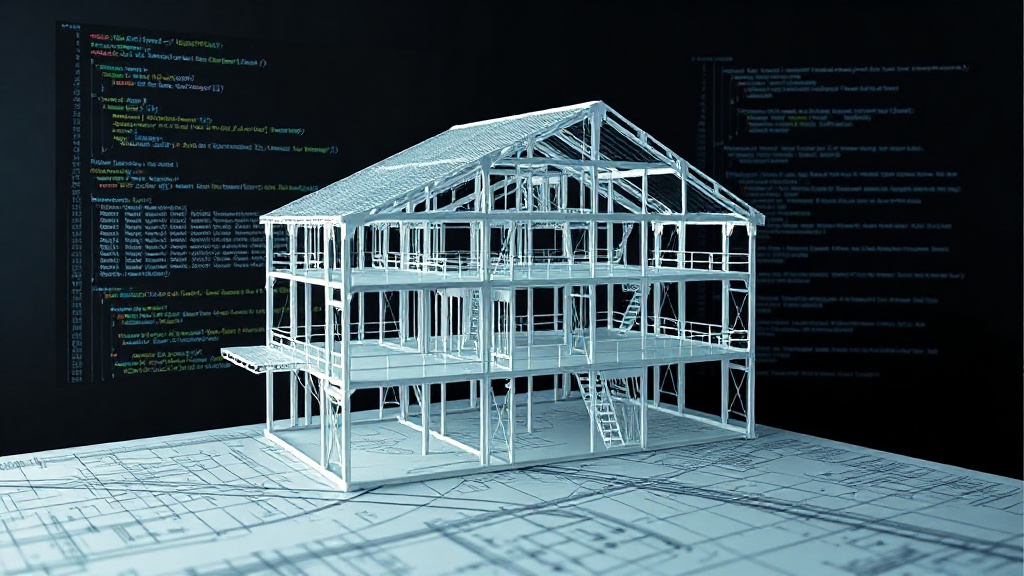
The core issue is that prompts are not sufficient as a record of intent. They are instructions for generation, not specifications for an artifact. A specification, by contrast, defines the desired outcome, constraints, and quality attributes of the software component. It serves as a contract between the developer and the AI, and crucially, between team members and future maintainers.
This shift requires a new set of tools and practices. We need systems that can:
- Formalize AI-generated code intent: Capture the reasoning and requirements behind code generated by AI.
- Version control specifications: Treat software specifications with the same rigor as code, enabling history tracking and rollback.
- Facilitate code review for intent: Allow engineers to review not just the code, but the underlying specifications that guided its creation.
- Enable AI-driven auditing and validation: Use AI to verify that generated code adheres to its documented specifications.
The Future: Specification-Driven AI Development
The ultimate goal is to move towards a model where developers define high-level specifications, and AI agents are responsible for translating those specifications into robust, well-documented, and maintainable code. This doesn't mean developers will stop writing code, but their primary focus will shift from low-level implementation details to higher-level design and intent definition.
This evolution will demand new roles and skills. Developers will need to become adept at crafting precise, comprehensive specifications. They will need to understand how to leverage AI not just for code generation, but for validating adherence to these specifications. Teams will need to establish clear processes for managing and reviewing these specifications, integrating them into their existing CI/CD pipelines and quality assurance workflows.
The current reliance on prompt engineering for complex software development is a temporary phase. As AI capabilities mature, the emphasis will naturally gravitate towards structured specification, ensuring that the code produced by AI is not just functional, but also understandable, auditable, and sustainable. This is the true path to scaling AI-assisted software engineering without sacrificing quality or maintainability.
The question for development teams today is not whether they are using AI to write code, but how they are ensuring that the AI's output is a product of clear intent and rigorous specification, rather than an unmanageable collection of prompt-driven artifacts.