The Problem with Unsupervised AI Agents
Running multiple AI command-line interfaces (CLIs) overnight for complex tasks is a common developer workflow. However, these runs are notoriously fragile. The core issues boil down to two primary failure points: individual agents quitting unexpectedly, often due to network glitches or internal timeouts, and sub-agents submitting corrupted or incomplete reports when handing off work. Existing tools offer visibility into these agents, allowing developers to observe their activity, but they lack a mechanism to assign responsibility or actively manage their execution. This leaves developers facing the frustrating reality of incomplete or failed overnight jobs, requiring manual intervention and restarts.
The author, facing this exact problem with agents like Claude Code, Codex, and Qwen, sought a solution that wouldn't just provide a dashboard but would actively ensure task completion. The goal was to create a system where one AI agent could oversee, coordinate, and recover from failures among its peers.
Introducing Polter: The AI CLI Supervisor
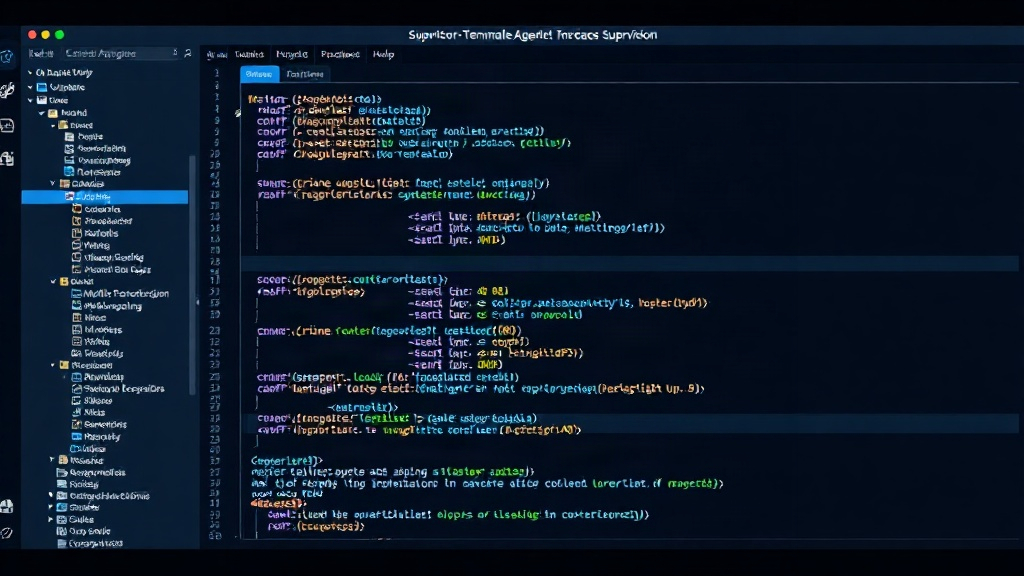
Polter emerges as a solution to this persistent problem. It's not an entirely new tool but a fork of the Ghostty terminal emulator, augmented with a Master Control Program (MCP) layer. This MCP layer is the key innovation, enabling any MCP-capable CLI to act as a supervisor for other agents. The supervisor’s role is multifaceted: it can initiate and manage tabs, start other CLIs, send commands into their terminals, and crucially, read their screen output. This allows for real-time monitoring of each agent’s status and progress.
Workers, or the supervised agents, report their status and progress into a shared group chat and a centralized task list. This creates a clear audit trail and a single source of truth for the overall job status. When a worker agent’s screen becomes inactive, indicating a potential freeze or crash, the supervisor is alerted. Conversely, if the supervisor itself goes silent, Polter, the terminal application, intervenes to ensure the oversight process remains active. This layered approach to monitoring and intervention is designed to drastically improve the reliability of long-running AI agent workflows.
Technical Architecture and Functionality
At its core, Polter leverages Ghostty’s robust terminal emulation capabilities. The added MCP layer acts as the orchestration engine. When a supervisor agent is designated, Polter opens the necessary terminal tabs and manages the lifecycle of each CLI process. Input and output streams are intercepted and processed by the supervisor. This means the supervisor can receive updates, diagnose issues by analyzing terminal output, and even send corrective commands back to the worker agents.
The reporting mechanism is designed for clarity and resilience. Agents communicate their state—whether they are processing, completed a sub-task, or encountered an error—via a designated group chat interface within the terminal. Simultaneously, a shared task list is updated, providing a high-level view of progress. This dual reporting system ensures that even if one communication channel experiences a temporary disruption, the other can still convey critical information.
The supervisor’s awareness of worker states is critical. If a worker’s terminal output stops changing for a defined period, it’s flagged as potentially stalled or crashed. The supervisor is then prompted to investigate, which could involve restarting the agent, attempting to debug the issue based on logs, or reassigning the task. The self-monitoring aspect of Polter also ensures that the supervisor itself doesn’t become a single point of failure. If the supervisor’s own process or communication channels go quiet, Polter will attempt to re-establish connectivity or alert the human operator.
Comparison to Existing Tools
Current tools in the AI agent space often focus on enabling individual agent capabilities or providing a platform for agent interaction. Tools like Auto-GPT, BabyAGI, or various agent frameworks allow users to define goals and let AI agents autonomously pursue them. They often feature multi-agent coordination, but the robustness of these systems against agent failures is frequently limited. Many rely on simple error handling or manual intervention when an agent crashes or produces bad output.
Polter distinguishes itself by introducing a dedicated supervisory layer. Unlike tools that merely display agent activities, Polter assigns a primary agent the responsibility of monitoring and managing the entire cohort. This is akin to having a project manager for a team of autonomous workers, rather than just a dashboard showing what each worker is doing. The MCP layer provides a structured way for agents to report status, and for a designated supervisor to act upon that information. This proactive management of agent health and task progression is a significant step beyond passive observation, aiming to make long-running, multi-agent jobs reliably complete.
Implications for AI Agent Development and Deployment
The development of Polter addresses a critical bottleneck in the practical application of sophisticated AI agent systems. For developers and researchers building complex AI workflows that require extended execution times—such as large-scale code generation, data analysis, or intricate simulation tasks—reliability is paramount. The ability for these systems to self-supervise and recover from inevitable failures dramatically reduces the need for constant human oversight, making AI agents more practical for production environments.
This approach could pave the way for more autonomous and resilient AI systems. By abstracting the supervision logic into a dedicated layer, developers can focus on the core intelligence of their agents while relying on Polter or similar systems to handle the operational complexities. The MCP standard itself, if adopted more widely, could foster an ecosystem of interoperable supervisor and worker agents, promoting modularity and easier integration of new AI tools into existing workflows.
Ultimately, tools like Polter move AI agents from being experimental novelties to potentially dependable components of automated workflows. The ability to ensure that overnight runs actually finish, without manual intervention, is not just a convenience; it's a fundamental requirement for leveraging AI agents in real-world, demanding applications.
The Unanswered Question: Scalability and Complexity
While Polter promises enhanced reliability for multi-agent systems, a key question remains: how well does this supervisory model scale with an increasing number of agents and the complexity of their interdependencies? Managing a dozen flaky agents is one challenge; coordinating and supervising hundreds, or even thousands, of agents in highly dynamic environments introduces significant overhead in terms of communication, state management, and supervisor processing power. The current MCP layer and reporting structure are designed for a manageable cohort, but the architectural considerations for truly large-scale, distributed AI agent supervision are yet to be fully explored.