A New Twist on Conversational AI: The 'Drunk' Chatbot
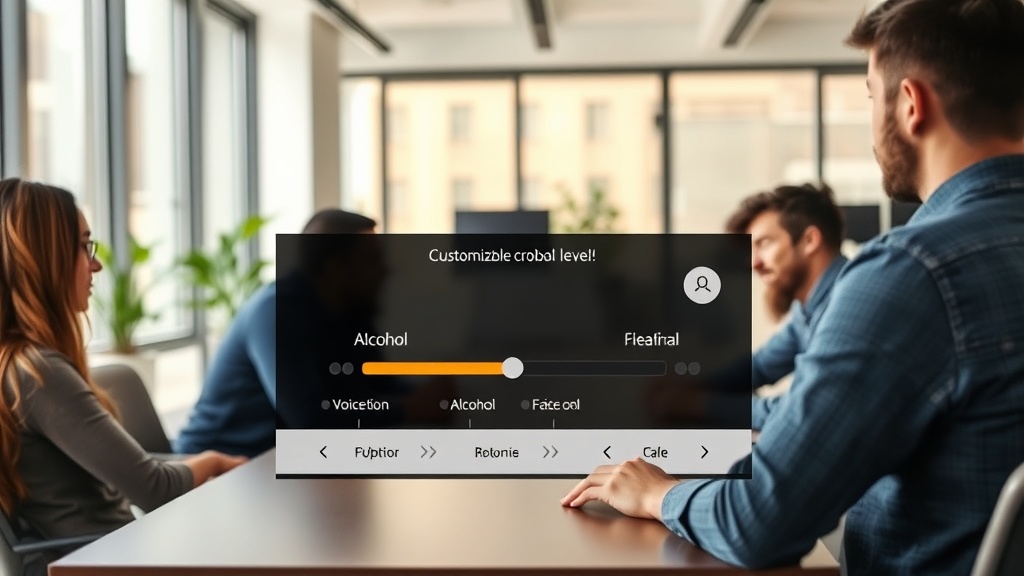
Andrew0_0, a developer on Reddit's r/artificial community, has unveiled a novel AI chatbot that goes beyond standard conversational capabilities by simulating the effects of alcohol. Dubbed 'Aint Labs', this AI offers a unique feature: a customizable 'alcohol level' that directly impacts its response style and even its synthesized voice. The goal is to provide a humorous and engaging experience, allowing users to explore how a language model might behave when 'intoxicated'.
The concept is straightforward yet intriguing. Users can access the chatbot via a web interface at aints.labs.seniqs.no. At the bottom right of the interface, a speaker icon not only enables voice output but also serves as a control for the AI's simulated state of inebriation. By adjusting this 'alcohol level', users can observe a spectrum of changes in the chatbot's output. At lower levels, the AI might offer slightly more whimsical or poetic answers. As the 'alcohol level' increases, the responses become more nonsensical, slurred, and characteristic of someone who has had too much to drink. This includes not only the text output but also the synthesized voice, which degrades in clarity and coherence, mimicking the physical effects of intoxication.
This project taps into the growing interest in making AI more relatable and entertaining. While many AI chatbots focus on utility, information retrieval, or task completion, Aint Labs explores the intersection of AI and humor, specifically through the lens of a universally understood human experience: getting drunk. The developer is actively soliciting feedback, particularly on the effectiveness and amusement factor of the 'drunk' voice and response generation.
Technical Underpinnings and Design Choices
While the exact underlying language model and voice synthesis technology are not detailed by the developer, the concept likely involves prompt engineering and fine-tuning to achieve the desired effects. To simulate 'drunkenness', the AI could be instructed to:
-
Alter Sentence Structure: Introduce more grammatical errors, fragmented sentences, and run-on sentences. This mimics the difficulty in coherent thought and speech associated with intoxication.
-
Modify Vocabulary: Use simpler words, repeat phrases, or introduce nonsensical interjections. The 'poetic' aspect suggests a potential for exaggerated metaphors or overly dramatic language, common in some forms of inebriation.
-
Influence Tone: Shift towards a more informal, overly friendly, or even rambling tone, deviating from a neutral or professional demeanor.
-
Introduce Delays and Stumbles: In speech synthesis, this could involve adding pauses, stutters, or changes in pitch and speed to simulate slurred speech.
The 'customizable alcohol level' suggests a quantifiable parameter that maps to these behavioral changes. This could be a numerical slider (e.g., 0-100%) that influences the probability of certain response patterns or the intensity of voice modulation. For instance, a level of 0% would be a standard, sober AI, while 100% would represent extreme intoxication, resulting in nearly incomprehensible output.
The decision to integrate voice output that also degrades is a key differentiator. Many text-based chatbots can be programmed to sound 'drunk' through their writing style, but the auditory component adds another layer of immersion and humor. This requires a sophisticated text-to-speech (TTS) engine capable of being dynamically manipulated to introduce imperfections and characteristic slurring.
The Broader Landscape of AI Personalities
Aint Labs is not the first AI to adopt a distinct personality, but it is one of the few to gamify a specific human state like intoxication. Projects like Character.ai allow users to create and interact with AI personas, ranging from historical figures to fictional characters. However, these typically focus on simulating personality traits rather than physiological states. Other applications have explored AI for mental health support, often aiming for calm, empathetic, and coherent interactions. Aint Labs, by contrast, deliberately injects chaos and humor into the AI's behavior.
This approach raises interesting questions about the future of human-AI interaction. As AI becomes more integrated into daily life, the demand for diverse AI personalities will likely grow. Some users may prefer highly efficient, task-oriented AI, while others might seek companions for entertainment, creative brainstorming, or simply a laugh. The ability to 'tune' an AI's personality, even to simulate something as complex and nuanced as intoxication, could become a valuable feature for specific use cases. It allows for a playful exploration of AI capabilities and limitations, pushing the boundaries of what we expect from conversational agents.
The developer's call for feedback highlights the iterative nature of AI development, especially for experimental projects. Understanding how users perceive the 'drunkenness' – whether it's genuinely funny, annoying, or surprisingly accurate – is crucial for refining the model and its parameters. The success of Aint Labs will likely depend on its ability to strike a balance between being humorously inebriated and remaining somewhat comprehensible, offering an experience that is engaging without being entirely frustrating.
Potential Applications and User Experience
While the primary appeal of Aint Labs appears to be entertainment, the underlying technology could have broader implications. Imagine AI assistants that can adapt their communication style based on context. For instance, an AI tutor might adopt a more energetic tone for younger students or a more patient, slower pace for those struggling with a concept. In creative writing, an AI could simulate different character voices, including those under duress or altered states, providing inspiration for authors.
For the average user, however, the current iteration offers a novel way to interact with AI. It's a departure from the often sterile or overly formal interactions with current chatbots. The ability to make the AI 'drunk' provides a shared cultural reference point, making the interaction more accessible and relatable. The surprise element is key: users might expect a standard AI response, but instead receive a poetic, slurred, and humorous take on their query. This unexpectedness is what makes the experience memorable.
The developer's request for feedback is particularly important for the voice aspect. Achieving a convincing, yet humorously imperfect, drunk voice requires careful tuning of TTS parameters. Is it too subtle? Too over-the-top? Does it sound like a specific type of intoxication, or a generic approximation? These are the nuances that will determine whether the feature lands as intended.
As AI continues to evolve, projects like Aint Labs demonstrate that the future isn't just about more powerful or more intelligent systems, but also about more diverse, expressive, and even playful ones. This chatbot, with its customizable alcohol level, offers a unique glimpse into that future, proving that AI can be both functional and fun.