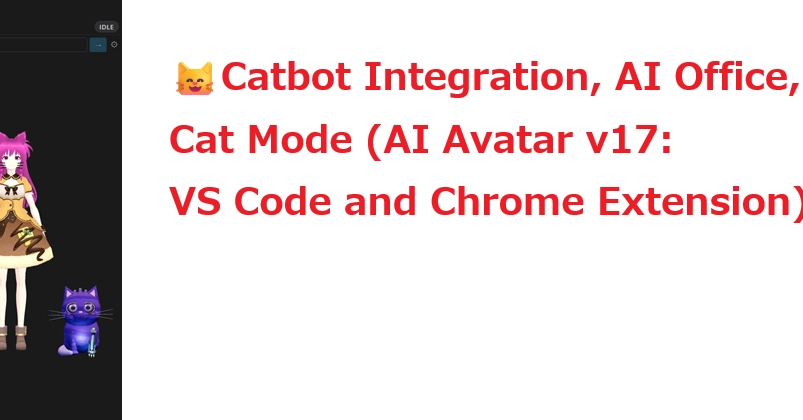
Introducing AI Avatar v17: More Than Just a Cheering Companion
AI Avatar, a free application designed to bring your VRoid (VRM) avatar to life with enthusiastic cheers, has released version 17. This update introduces three significant new features: Catbot Integration, AI Office, and Cat Mode. These enhancements aim to deepen the interaction between users and their digital companions, making them more responsive and integrated into daily workflows within development and browsing environments.
The core of AI Avatar remains its ability to have your avatar cheer you on. Previously, these avatars would react to coding assistants like Claude Code and GitHub Copilot in the VS Code sidebar, or to ChatGPT and Claude in the browser side panel. Version 17 expands on this by introducing more dynamic and varied interaction modes.
Catbot Integration: Bridging Avatars and AI Assistants
Catbot Integration represents a significant step in making AI Avatars more context-aware and interactive. This feature allows the avatar to not just passively cheer, but to actively respond to the outputs of AI coding assistants. For developers using tools like GitHub Copilot or Claude Code within VS Code, the avatar will now exhibit more nuanced reactions. These reactions are designed to be more than just generic animations; they aim to reflect the nature of the AI's output, whether it's a code suggestion, a bug fix, or a snippet of generated text. The animations and speech bubbles are still pre-programmed, ensuring they run efficiently without heavy AI processing for each reaction, but the triggers are now more sophisticated.
This integration means that as you code and interact with AI tools, your avatar in the VS Code sidebar will visibly react. This could manifest as excited jumping for a successful code completion, a thoughtful pose for a complex problem, or even a concerned look if the AI output seems problematic. The goal is to provide subtle, non-intrusive encouragement and feedback, turning the often solitary act of coding with AI assistants into a more engaging experience. The precise nature of these reactions is still being refined, but the promise is a more dynamic and personalized digital companion.
AI Office: A Virtual Workspace Companion
The AI Office feature extends the AI Avatar's utility beyond just coding assistance. This new mode positions the avatar within a simulated office environment accessible through the browser's side panel. When interacting with web-based AI tools like ChatGPT, the avatar will be present in this virtual space, offering a different kind of engagement. Think of it less like a direct coding assistant and more like a digital officemate who’s always there, offering moral support and a visual presence.
This feature is particularly interesting for users who spend significant time in browser-based chat interfaces. The AI Office provides a consistent visual anchor. While the avatar’s animations and speech bubbles are pre-programmed, their deployment within the AI Office context aims to create a sense of shared workspace. This could be beneficial for combating the isolation that can sometimes accompany extensive screen time or remote work. The avatar's cheers and reactions are tailored to the general context of using AI for tasks, whether that's brainstorming, writing, or research. It’s an attempt to inject a bit more personality and human-like interaction into digital productivity tools.
Cat Mode: A Playful and Expressive Interaction Style
Cat Mode is perhaps the most distinct new feature in v17, offering a specific personality and interaction style for the AI Avatar. This mode reimagines the avatar's behavior through a feline lens. Instead of generic cheers, the avatar adopts cat-like mannerisms, sounds, and reactions. This could include purring, meowing, playful pounces, or curious head tilts, all triggered by user actions or AI assistant interactions.
The inspiration behind Cat Mode is to provide a more playful and perhaps even whimsical companion. For users who find the standard cheering enthusiastic but perhaps a bit too generic, Cat Mode offers a specialized persona. This is especially relevant for creators or individuals who simply enjoy more lighthearted digital interactions. The avatar might 'chase' a successful code compilation or 'nap' during periods of inactivity. The key here is the thematic consistency; the avatar's actions and speech bubbles are all curated to fit the cat persona, adding a layer of character-driven engagement that was previously absent.
The underlying technology for these modes remains consistent: pre-programmed animations and speech bubbles triggered by specific events or states detected from the AI assistants or browser activity. This approach ensures performance remains high. The challenge, and the innovation in v17, lies in the sophistication of the triggers and the thematic design of the reactions, particularly in Cat Mode. It’s an interesting experiment in how digital companions can adapt their personalities to user preference, moving beyond a one-size-fits-all approach.
The Future of Interactive Avatars
With AI Avatar v17, the application moves beyond simple cheering to offer integrated, context-aware, and personality-driven digital companions. The Catbot Integration, AI Office, and Cat Mode features demonstrate a clear direction towards making these avatars more embedded in the user's digital life. The surprising detail here is not the addition of new modes, but the level of thematic detail in Cat Mode, which suggests a future where avatars can adopt highly specific, even quirky, personalities. What remains to be seen is how deeply these avatars will eventually integrate with the AI models themselves, moving from pre-programmed reactions to truly dynamic, AI-driven behaviors.