The Pervasive Problem of Repetitive Tasks
In today's business landscape, many organizations grapple with an invisible drain on productivity: repetitive manual tasks. These aren't complex strategic challenges; they are the mundane, time-consuming activities that chip away at employee focus and efficiency. Think about the hours lost each week to tasks like meticulously reading through lengthy email threads to extract key information, manually copying and pasting data between disparate software systems, updating endless spreadsheets with new figures, or sending out routine notifications to teams or clients. Even processing documents, a core function for many industries, often involves significant manual effort. These tasks, while not intellectually demanding, are the primary culprits behind wasted work hours, directly impacting a company's bottom line and its ability to focus on innovation and growth.
The core issue is not a lack of AI potential, but rather the application of AI to solve the most immediate and impactful problem: reducing the sheer volume of repetitive work. Many businesses are eager to adopt cutting-edge AI solutions, but often overlook the foundational need to streamline existing operations. The frustration stems from knowing that these hours could be better spent on strategic initiatives, creative problem-solving, or customer engagement, rather than on tasks that a machine could perform reliably and at scale.
Architecting an Efficient AI Automation Pipeline
To combat this widespread inefficiency, a robust and adaptable automation pipeline is essential. The typical architecture I've deployed and refined involves a series of interconnected components, each playing a crucial role in transforming manual workflows into automated processes. It begins with a trigger event, which initiates the automation sequence. This trigger could be anything from receiving a new email to a specific time of day, or a change in a database entry.
Following the trigger, an n8n workflow takes center stage. n8n is an open-source workflow automation tool that excels at visually designing and managing complex automation sequences. It acts as the central orchestrator, connecting various services and defining the logic for data flow and conditional execution. This visual approach makes it easier to understand, modify, and debug the automation, even for those without deep coding expertise.
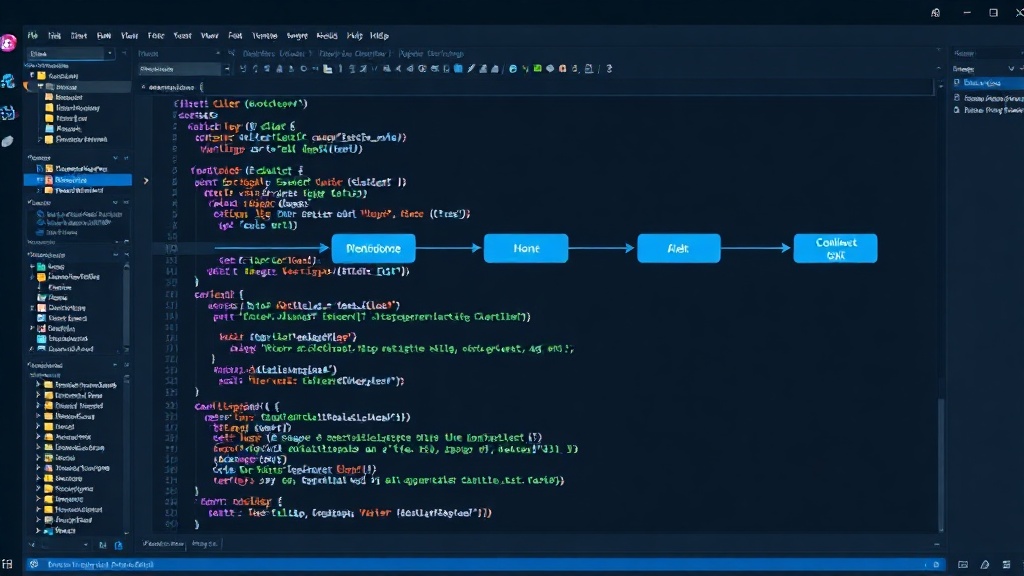
The heart of the processing often lies within custom Python services, frequently built using the FastAPI framework. FastAPI is chosen for its speed, ease of use, and asynchronous capabilities, making it ideal for handling multiple requests efficiently. These services are responsible for executing the core business logic that cannot be handled by n8n alone. This might involve complex data manipulation, API integrations with legacy systems, or preparing data for AI processing.
Once data is prepared, it's fed into Large Language Model (LLM) processing. This is where the AI truly shines, enabling the automation of tasks that require understanding, interpretation, or generation of human-like text. LLMs can summarize lengthy documents, extract specific entities from unstructured text, classify emails, generate reports, or even draft responses. The key is to feed the LLM precisely what it needs, in a structured format, to perform its task effectively.
After the LLM has processed the information, the results are typically stored in a database. This could be a relational database like PostgreSQL or a NoSQL solution, depending on the nature of the data and the application's requirements. Having a centralized, structured repository of processed information is critical for reporting, further analysis, and maintaining a historical record of automated activities.
Finally, the pipeline concludes by sending out notifications. This ensures that relevant stakeholders are informed about the completion of automated tasks, any exceptions encountered, or key insights derived from the process. These notifications can be delivered through various channels, including Slack for real-time team alerts, Telegram for broader communication, or email for more formal updates.
Key Components and Their Roles
Each element in this pipeline is selected for its specific strengths. Python, with its extensive libraries, provides the flexibility to build custom logic and integrate with virtually any system. FastAPI offers a modern, high-performance web framework that allows these Python services to be exposed as robust APIs, easily consumable by n8n or other applications. This separation of concerns—n8n for orchestration, Python/FastAPI for custom logic, and LLMs for intelligent processing—creates a modular and scalable system.
The choice of LLM is paramount and depends on the specific task. For general text summarization or extraction, models like GPT-3.5 or GPT-4 are powerful. For more specialized tasks, fine-tuned models or open-source alternatives might be more suitable. The critical factor is understanding the LLM's capabilities and limitations, and designing the surrounding pipeline to provide it with high-quality, relevant input and to handle its output appropriately.
n8n's role as the visual workflow builder cannot be overstated. It democratizes automation, allowing individuals with less coding experience to contribute to building and maintaining these systems. Its extensive library of nodes for interacting with various services—from databases and APIs to email clients and messaging platforms—streamlines the integration process significantly. If you're looking to build automations, consider n8n as your visual canvas; it significantly reduces the friction in connecting different services.
Real-World Impact and Future Considerations
The impact of such a pipeline is immediate and substantial. Businesses can reclaim dozens, if not hundreds, of hours per week that were previously lost to manual data entry, email sorting, and report generation. This translates directly into cost savings and increased employee satisfaction, as staff can focus on more engaging and value-added work. The ability to process information faster and more accurately also leads to better decision-making and quicker response times to market changes or customer needs.
What nobody has addressed yet is the long-term maintenance strategy for these increasingly complex, AI-driven pipelines. As LLM APIs evolve and underlying services update, keeping these automations running smoothly requires ongoing vigilance and adaptation. The initial build is only part of the equation; a robust plan for monitoring, updating, and retraining components is crucial for sustained success. This is less about the initial build and more about operationalizing AI automation for the long haul.
For founders and development teams, this architecture represents a practical, achievable path to significant productivity gains. It leverages readily available tools and technologies, focusing on solving tangible business problems rather than chasing abstract AI capabilities. The key takeaway is that effective automation doesn't require reinventing the wheel; it requires understanding the workflow, identifying the bottlenecks, and strategically applying the right tools, including powerful LLMs, to create a seamless, efficient process.