
The Allure and The Abyss of AI Automation
The promise of artificial intelligence is often painted with broad strokes of effortless efficiency. We imagine algorithms handling mundane tasks, freeing up human intellect for higher-level pursuits. Yet, the reality, as shared by a community of users and developers on Reddit, often diverges sharply from this utopian vision. Many have aggressively pursued AI-driven automation, only to retreat to familiar, manual processes because the AI’s output was demonstrably worse, slower, or simply failed to capture the nuanced requirements of the task. This isn't a condemnation of AI, but a vital recalibration of expectations, highlighting the current limitations and the enduring strengths of human-centric workflows.
One of the most common themes emerging from these discussions is the gap between AI's ability to generate content or process data and its capacity to understand context, maintain accountability, or align with complex, personal workflows. The initial enthusiasm for AI, particularly Large Language Models (LLMs), to tackle organizational and planning tasks, is palpable. However, the subsequent disappointment often stems from the AI’s inability to grasp the subtle, subjective elements that make manual methods effective for certain individuals. These aren't necessarily tasks that are computationally intensive, but rather those that require a deep, personal understanding of one's own habits, priorities, and the physical or mental environment in which the task is performed.
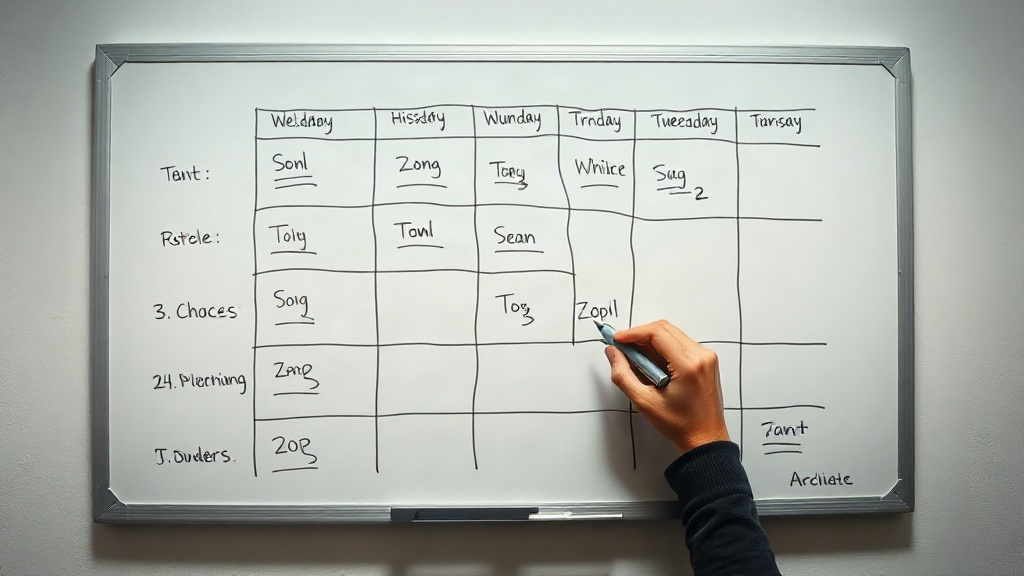
Consider the example of organizing a weekly schedule and meal prep. The allure of an AI generating a perfectly optimized plan, factoring in dietary needs, available ingredients, and personal preferences, is strong. Yet, the practical outcome can be frustrating. An LLM might propose a meal that requires an ingredient the user doesn't have, or suggest a schedule that, while seemingly efficient on paper, fails to account for the user's actual energy levels at different times of the day. The very act of manually creating a schedule, perhaps by writing it on a whiteboard, involves a cognitive process that reinforces commitment and accountability. The physical act of writing, or the visual presence of a whiteboard, serves as a constant, tangible reminder of one's intentions. This is a form of embodied cognition that current AI, operating purely in the digital realm, struggles to replicate. The AI might produce a plan, but it doesn't inherently *own* the plan in the way a human does when they physically construct it.
The Pitfalls of Generative AI for Personal Organization
The struggle with AI-generated schedules and meal plans is a microcosm of a broader challenge. LLMs are adept at pattern recognition and text generation, making them seem like perfect candidates for tasks involving lists, plans, and structured information. However, they lack genuine understanding and agency. When an LLM suggests a meal, it’s not making a choice based on hunger or available pantry items; it’s predicting the most statistically probable sequence of words that constitute a plausible meal suggestion given the prompt. This disconnect can lead to outputs that are superficially correct but practically useless or even detrimental to the user's goals.
One user recounted trying to automate the process of summarizing lengthy technical documents. The AI could produce summaries, but they often missed crucial nuances, misinterpreted complex jargon, or failed to highlight the most critical findings from a specific user's perspective. The manual approach, involving careful reading, note-taking, and synthesis, while time-consuming, ensured a deep comprehension that the AI-generated summary could not match. The risk of relying on a flawed AI summary for critical decision-making – whether in research, engineering, or business – is too high. This is akin to using a blurry photocopy of a map when you need to navigate treacherous terrain; the general outline might be there, but the critical details for safe passage are lost.
Another common area of frustration is the automation of creative tasks that require subjective judgment. For instance, trying to use AI to generate social media posts or marketing copy. While AI can churn out numerous variations, the human touch – the authentic voice, the understanding of a specific audience's current sentiment, the subtle humor or emotional resonance – is often missing. The AI might produce grammatically correct and contextually relevant text, but it frequently lacks the spark of originality or the genuine connection that resonates with people. The effort to fine-tune the AI, to prompt it correctly, and to edit its output often becomes more laborious than simply writing the post manually. The AI becomes a collaborator that requires constant supervision and correction, rather than an autonomous assistant.
When 'Good Enough' Isn't
The core issue is that many tasks, even those that appear repetitive or data-driven, are deeply intertwined with human judgment, context, and personal experience. AI, in its current form, often excels at tasks where the objective is clear, the data is structured, and the desired outcome is predictable. It falters when the task requires:
- Subjective Judgment: Evaluating aesthetic quality, humor, or emotional impact.
- Deep Contextual Understanding: Grasping the unstated assumptions, personal history, or long-term goals relevant to a task.
- Accountability and Embodied Action: The physical or mental act of performing a task that reinforces commitment.
- Nuanced Decision-Making: Weighing multiple, often conflicting, subjective factors.
For example, a developer might try to automate code review suggestions using an AI. While AI can spot common syntax errors or potential performance bottlenecks, it often struggles with architectural coherence, adherence to specific project idioms, or the subtle trade-offs involved in different implementation choices. A human reviewer, with an understanding of the project's history and goals, can provide feedback that is far more valuable. The AI's suggestions might be numerous but trivial, or worse, misguided, leading to a net increase in the developer's workload as they sift through irrelevant or incorrect advice.
Similarly, attempts to automate customer support with AI can backfire. While chatbots can handle simple FAQs, they often fail when faced with complex, emotionally charged, or highly specific customer issues. The 'old way' – a direct conversation with a human agent who can empathize, understand the unique situation, and offer a tailored solution – often provides a superior customer experience. The frustration of navigating a rigid AI chatbot that cannot grasp the user's problem is a well-documented phenomenon, leading many to seek out human interaction, even if it means longer wait times.
The surprising detail here is not that AI fails, but *why* it fails in these specific, common scenarios. It's not a lack of processing power or data, but a fundamental difference in how AI and humans approach problem-solving. AI is a powerful tool for optimization within defined parameters, but human intelligence remains indispensable for tasks that demand creativity, empathy, and nuanced understanding of the world and ourselves. The desire to automate is strong, but the wisdom to know when the manual approach is truly superior is an equally critical skill.
The Enduring Value of Manual Processes
The recurring narrative is that the