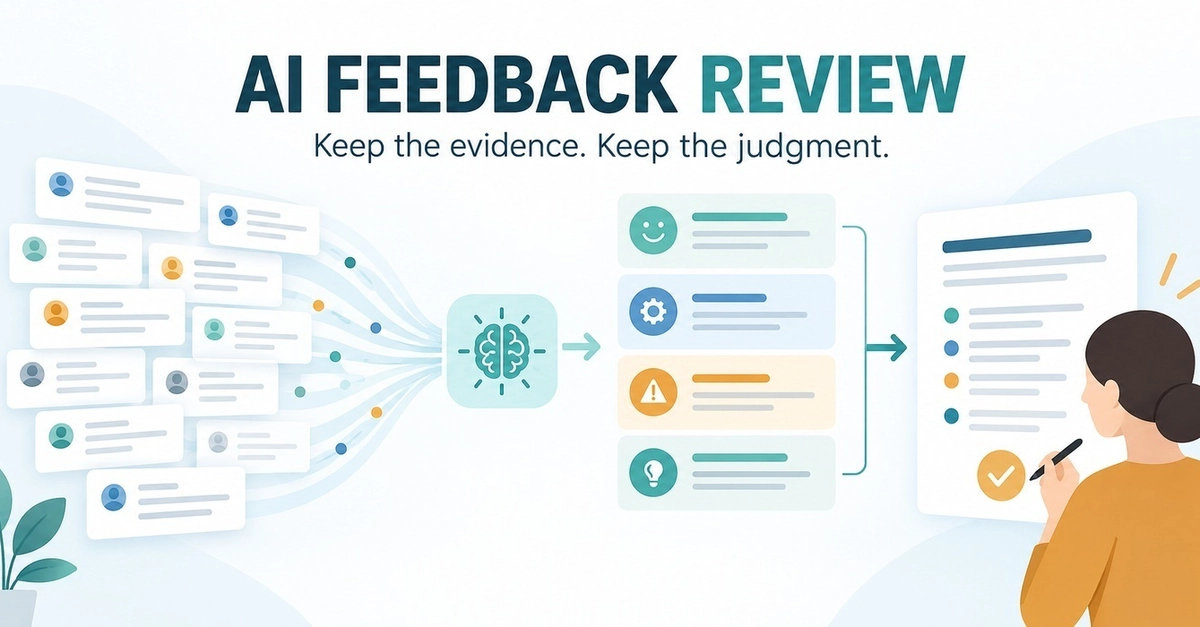
The Challenge of Customer Feedback Volume
Customer feedback is a goldmine for product improvement and business strategy, yet it rarely arrives in a structured, manageable format. It floods in through a multitude of channels: support tickets, app store reviews, survey responses, social media mentions, and direct conversations with sales and customer service teams. The nature of this feedback also varies wildly. Some customers provide detailed, multi-paragraph analyses of their experiences, while others offer terse, one-word sentiments. Crucially, different customers may describe the same underlying problem using entirely different language, making pattern recognition a significant hurdle.
As this volume grows, teams face a difficult choice. They can resort to reading a small, potentially unrepresentative sample of feedback, risking a skewed understanding of user sentiment and needs. Alternatively, they can lean on AI tools for quick summaries, but this approach carries its own risks. AI, while powerful for processing large datasets, can smooth over nuance, miss edge cases, and inadvertently present a synthesized interpretation as objective truth. The danger lies in treating an AI’s summary as definitive, potentially obscuring critical insights or misrepresenting user intent.
The real value lies in finding a middle ground: leveraging AI for efficiency without sacrificing the depth and accuracy that human judgment provides. This means using AI agents not as a replacement for human analysis, but as a powerful assistant to augment it. The goal is to maintain a clear line of sight to the original source evidence, ensuring that conclusions drawn are directly supported by customer input and that the critical decision-making remains firmly in human hands.
Leveraging AI Agents for Initial Triage
AI agents excel at the initial, high-volume tasks associated with customer feedback. They can be programmed to ingest data from all the disparate sources mentioned – support tickets, app reviews, social media, surveys – and perform a rapid initial sort. This triage process can involve several key functions:
- Categorization: Assigning feedback to predefined categories (e.g., bug reports, feature requests, usability issues, pricing concerns). This can be done using natural language processing (NLP) models trained on historical data or through keyword-based rules.
- Sentiment Analysis: Determining the emotional tone of the feedback (positive, negative, neutral). While often a starting point, it’s crucial to remember that sentiment can be complex and context-dependent. Sarcasm or nuanced complaints can be misclassified by basic sentiment analyzers.
- Topic Modeling: Identifying recurring themes and topics within the feedback corpus, even when users employ different terminology. This helps uncover emerging trends or widespread issues that might be missed by manual review.
- Urgency Scoring: Flagging feedback that indicates critical issues, such as major bugs or security concerns, that require immediate attention.
Think of an AI agent in this phase as an extremely efficient, tireless intern. It can read through thousands of comments, tag them, and flag potential issues far faster than any human team could. This frees up human analysts to focus on higher-level tasks, such as understanding the 'why' behind the feedback and formulating strategic responses.
The Indispensable Role of Human Judgment
Despite the capabilities of AI agents, the human element remains non-negotiable. AI summaries can be deceptively smooth. A well-crafted AI report might make a problem seem less severe or more universally experienced than it is. The agent doesn't inherently understand context, user frustration, or the subtle implications of a particular piece of feedback in the way a human does. This is where human judgment steps in to refine and validate the AI's output.
Consider the following critical human roles:
- Contextual Understanding: Humans can interpret feedback within the broader context of the product roadmap, market landscape, and individual user history. An AI might flag a feature request, but a human understands if it aligns with strategic goals or if it's a niche demand.
- Identifying Nuance and Ambiguity: AI struggles with sarcasm, cultural nuances, and highly specific technical jargon that might be critical to understanding a bug report. Humans can discern these subtleties.
- Validating AI Output: Human reviewers must cross-reference the AI’s summaries and categorizations with the original source data. This is not about re-reading everything, but about spot-checking and deep-diving into flagged items or areas where the AI’s confidence score is low. A clear review process keeps the source evidence close to the conclusion.
- Prioritization and Strategic Decision-Making: While AI can score urgency, the final decision on resource allocation, feature prioritization, and strategic pivots rests with humans. This involves weighing feedback against business objectives, technical feasibility, and potential ROI.
- Detecting Novelty: AI is trained on existing patterns. It may miss entirely new types of issues or unexpected use cases that haven't appeared in its training data. Human intuition is vital for spotting these outliers.
The danger of over-reliance on AI is creating a 'black box' where insights are generated without understanding the underlying data. This can lead to decisions based on statistically significant trends that don't reflect the most critical user pain points, or worse, misinterpretations that steer product development in the wrong direction.
Implementing a Hybrid Approach
A practical workflow integrates AI agents and human reviewers effectively. The AI acts as the first filter, processing the bulk of the feedback and surfacing key themes, sentiments, and urgent issues. Human analysts then engage with this AI-generated summary, using it as a guide for deeper investigation.
This hybrid approach might look like this:
- AI Ingestion and Triage: The AI agent collects and categorizes all incoming feedback, performing initial sentiment analysis and topic modeling.
- AI Summary Generation: The agent produces a concise summary of key findings, highlighting the most frequent themes, dominant sentiments, and critical issues.
- Human Review and Deep Dive: Human analysts review the AI summary. They don't just accept it; they use it to guide their investigation. They might click through to the original feedback items flagged by the AI, investigate low-confidence AI classifications, or explore themes the AI identified as minor but which seem qualitatively important.
- Contextualization and Decision: Based on the AI's surfaced insights and their own deeper dives, human reviewers add context, interpret the findings, and make strategic decisions. They document their conclusions, explicitly linking them back to the source feedback where possible.
This structured process ensures that the speed and scale of AI are harnessed, while the critical thinking, contextual awareness, and nuanced understanding of human judgment are preserved. It’s about augmenting human capabilities, not replacing them, ensuring that customer feedback genuinely informs product evolution without losing its essential meaning.