
The Shifting Landscape of Personal AI Use
The narrative around Artificial Intelligence is rapidly evolving. What began as a realm of abstract possibilities and futuristic speculation is now firmly rooted in tangible, everyday applications. For many, the past week marked a significant turning point, moving beyond the novelty of AI chatbots to a genuine realization of their potential for personal productivity. This shift is driven by individuals leveraging AI tools to tackle specific, time-consuming tasks, automating processes that were previously manual and often tedious.
The advent of sophisticated AI models, accessible through simple browser interfaces, is democratizing advanced capabilities. These tools are no longer confined to developers or large corporations; they are empowering individuals to enhance their professional lives, academic pursuits, and even personal learning journeys. The key is not just the existence of these AI models, but the practical, results-oriented ways in which people are integrating them into their routines.
Automating the Job Search and Application Process
One of the most immediate and impactful areas where AI is demonstrating its personal utility is in the job market. For individuals navigating the complexities of finding new employment, the process can be incredibly demanding. It involves sifting through countless job boards, identifying roles that match specific criteria, tailoring resumes and cover letters, and meticulously tracking applications and subsequent communications.
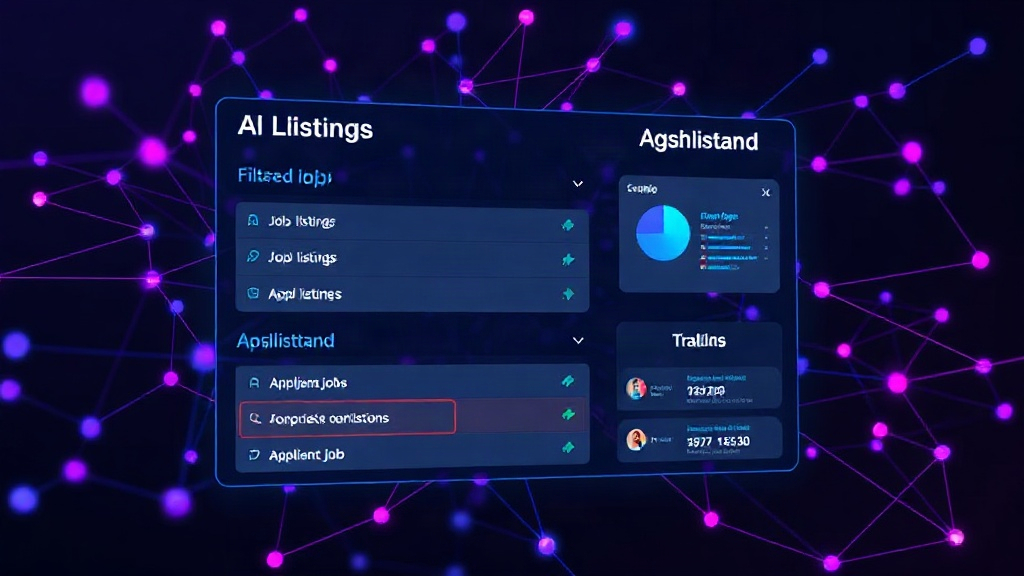
Tools like Claude, accessible via a web browser, are now being used to automate significant portions of this workflow. Users can configure AI assistants to actively search job boards, filtering opportunities based on predefined parameters such as required skills, experience level, location, and industry. This proactive search capability alone saves hours of manual browsing. Beyond discovery, AI can assist in organizing the application pipeline. It can track submitted applications, log correspondence from recruiters or hiring managers, and even flag follow-up opportunities, transforming a chaotic process into a structured, manageable system.
AI as a Research and Learning Partner
The academic and research spheres are also witnessing a profound impact. Students and researchers often grapple with vast amounts of information, the need for rigorous source verification, and the challenge of synthesizing complex data. AI is proving to be an invaluable ally in these endeavors.
Consider the task of writing a college essay. Beyond simply generating text, AI can function as an intelligent research assistant. For instance, an AI model can review feedback from other AI tools (like Gemini) regarding potential academic sources. It can then autonomously scan institutional digital libraries to confirm the existence and accessibility of these sources, verify their relevance to the chosen topic, and even check for potential paywalls or institutional access restrictions. This level of automated verification and relevance assessment is a significant leap from traditional research methods, accelerating the foundational stages of academic work and ensuring a higher quality of sourced material.
Furthermore, AI is proving to be an effective tool for self-directed learning. The ability to ask complex questions and receive detailed, synthesized answers, coupled with the capacity to verify information, makes AI a powerful companion for mastering new subjects. This is akin to having a dedicated research assistant available 24/7, capable of performing the most tedious aspects of information gathering and preliminary analysis.
Democratizing Technical Skills: API Documentation and Beyond
The potential of AI extends to the acquisition of technical skills. For developers and technical writers, creating clear, comprehensive API documentation is crucial but can be a laborious task. AI tools are emerging that can assist in this process, helping to generate initial drafts, identify missing information, and even ensure adherence to documentation standards.
This capability democratizes a specialized skill. Instead of requiring extensive prior experience or manual effort, aspiring technical writers and developers can use AI as a scaffold to learn and produce high-quality documentation. This lowers the barrier to entry for critical software development tasks and improves the overall quality of technical communication.
Looking ahead, the integration of AI into specialized applications promises even more personalized utility. The upcoming rollout of AI updates within platforms like Cronometer, leveraging ChatGPT for nutritional tracking and analysis, exemplifies this trend. Such integrations move AI from a general-purpose tool to a domain-specific assistant, offering tailored insights and functionalities that directly address user needs within specific contexts.
The current wave of personal AI adoption is characterized by a pragmatic embrace of tools that demonstrably save time, enhance accuracy, and reduce the friction associated with complex tasks. As these capabilities mature and become more integrated into everyday workflows, the distinction between AI as a novelty and AI as an indispensable personal assistant will continue to blur, ushering in an era of augmented human capability.