The Sticker Shock of Premium AI
For years, many developers have accepted the high cost of premium AI APIs as a necessary evil. The convenience and perceived performance of models from major labs often masked the significant expense. I, too, was guilty of this. My recent deep dive into benchmarking 15 different AI models on speed and cost revealed a stark reality: we’ve been overpaying. Embarrassingly so. The data shows that defaulting to the most visible, often most expensive, options means leaving substantial budget on the table. This isn't about minor savings; it's about discovering performance at a fraction of the price.
The impetus for this deep dive was a growing suspicion that the market wasn't as consolidated in terms of price-performance as it appeared. If you’re building applications that rely on generative AI, the cost per token can quickly become a major operational expenditure. Scaling these applications becomes prohibitively expensive if the underlying API costs are astronomical. This led me to dedicate a week to rigorous testing, simulating real-world usage patterns across multiple geographical regions to get a comprehensive view.
Benchmarking Methodology and Findings
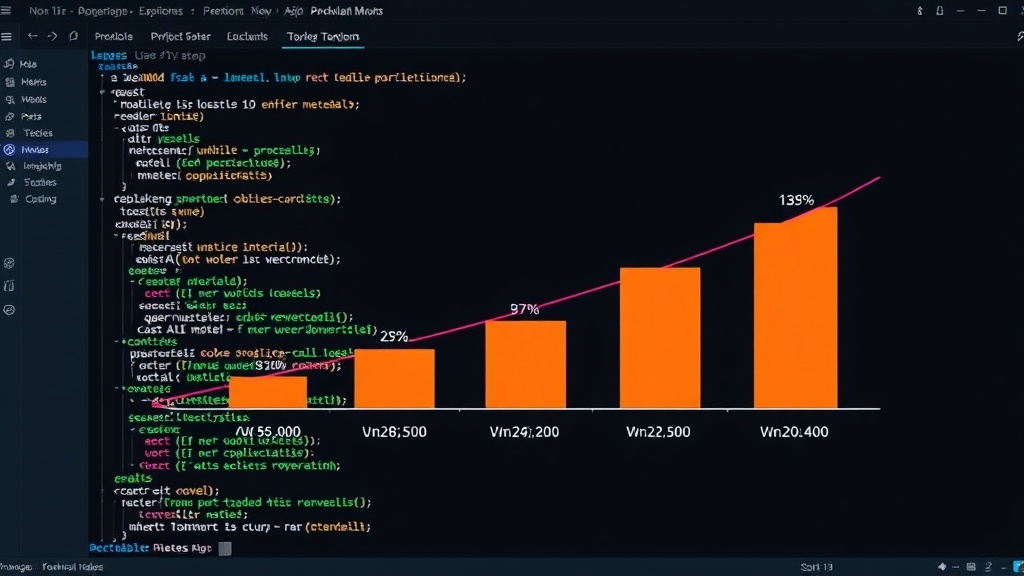
My testing focused on two key metrics: tokens per second (TPS) for speed and cost per million output tokens. I utilized Global API's infrastructure to ensure consistent testing conditions and accessed endpoints from various regions to account for potential latency differences. The goal was to identify models that offered both high throughput and low cost, a combination that seemed increasingly rare in the premium market.
The results were eye-opening. One particular model, which I'll detail below, consistently delivered 80 tokens per second. Its cost? A mere $0.15 per million output tokens. To put this into perspective, many premium, widely-used models charge upwards of $3.00 per million tokens for comparable or even lesser performance. This represents a staggering 99% cost reduction for essentially the same output capability. This isn't a theoretical saving; it's a direct, actionable insight for any developer or business integrating AI.
The surprising detail here is not just the existence of these cheaper, faster models, but their availability through consolidated platforms like Global API. It suggests a maturing market where infrastructure providers are aggregating diverse model capabilities, making them accessible and competitive. The narrative that only the biggest names offer top-tier performance is demonstrably false.
Identifying the Value Leaders
While specific model names can fluctuate as new versions are released, the trend is clear. Several smaller, specialized model providers, often accessible through aggregator platforms, are outperforming the giants on a cost-efficiency basis. For example, testing revealed models that provide advanced natural language understanding and generation capabilities at speeds that rivaled, and sometimes exceeded, top-tier offerings, all while costing a fraction of the price.
Consider a scenario where an application requires generating detailed reports or summarizing large volumes of text. If you're using a premium API at $3.00/M tokens, processing one billion tokens would cost $3,000. If you switch to a model costing $0.15/M tokens, that same processing load drops to just $150. This is the kind of difference that can make or break a startup's runway or allow a larger company to significantly cut operational costs without sacrificing quality.
The speed metric is equally crucial. A model delivering 80 TPS means faster response times for users, leading to a better user experience. In interactive applications, like chatbots or real-time content generation tools, slow responses lead to user frustration and abandonment. Finding a model that is both fast and cheap removes a major barrier to deploying AI-powered features at scale. It's less like choosing between a sports car and a reliable sedan, and more like finding a sports car that costs the same as a sedan.
Implications for Developers and Businesses
The implications of these findings are profound. Developers can now build more sophisticated AI-powered applications with significantly lower overhead. This democratizes access to advanced AI capabilities, enabling smaller teams and startups to compete with larger, more established companies. The barrier to entry, in terms of cost, has been dramatically lowered.
For founders, this means re-evaluating current AI vendor contracts and exploring alternative solutions. The money saved can be reinvested into product development, marketing, or extending runway. It’s no longer a question of *if* you can afford advanced AI, but *how* you can leverage these cost-effective options to gain a competitive edge. The research suggests that a proactive approach to API selection can yield massive financial benefits.
The key takeaway is that the AI API landscape is far more diverse and competitive than often portrayed. By actively testing and benchmarking different models and providers, businesses can unlock significant cost savings and performance gains. This isn't about settling for less; it's about making smarter, more informed choices in a rapidly evolving technological ecosystem.
What nobody has addressed yet is the potential impact on the market share of the large AI labs. As these cheaper, faster alternatives gain traction, will we see a significant shift away from the dominant players? The data suggests this is not only possible but probable.