The Complexity of Multi-Model AI Applications
As AI applications evolve beyond simple single-model integrations, they increasingly leverage a diverse array of specialized models. A product might employ GPT for customer support chatbots, Claude for complex reasoning tasks, Gemini for multimodal inputs, DeepSeek for cost-optimized workflows, and specific models like Qwen or Kimi for coding assistance or specialized language support. This multi-model architecture, while powerful, introduces significant operational challenges. Without granular visibility into each model interaction, developers and operators face a daunting task when troubleshooting issues. They might know an AI feature failed, but pinpointing the exact cause—whether it was a specific model misbehaving, an incorrect prompt, or a data formatting error—becomes a complex detective game.
Why Detailed Request Logs Are Non-Negotiable
The core value of AI API request logs lies in their ability to provide a historical record of every model interaction. These logs are not just for debugging; they are essential for understanding the operational lifecycle of an AI application. A truly useful log should answer critical questions about each API call. This includes identifying which model was invoked, what specific input parameters were sent, the exact prompt or query that was processed, any intermediate steps or chain-of-thought reasoning employed by the model, and the precise output or response received. Furthermore, logs should capture metadata such as latency, token usage, cost implications, and any error codes or messages generated during the request. This comprehensive data allows teams to move beyond simply knowing that a request failed to understanding precisely why it failed and how to prevent it in the future.
Key Information Captured in Effective Logs
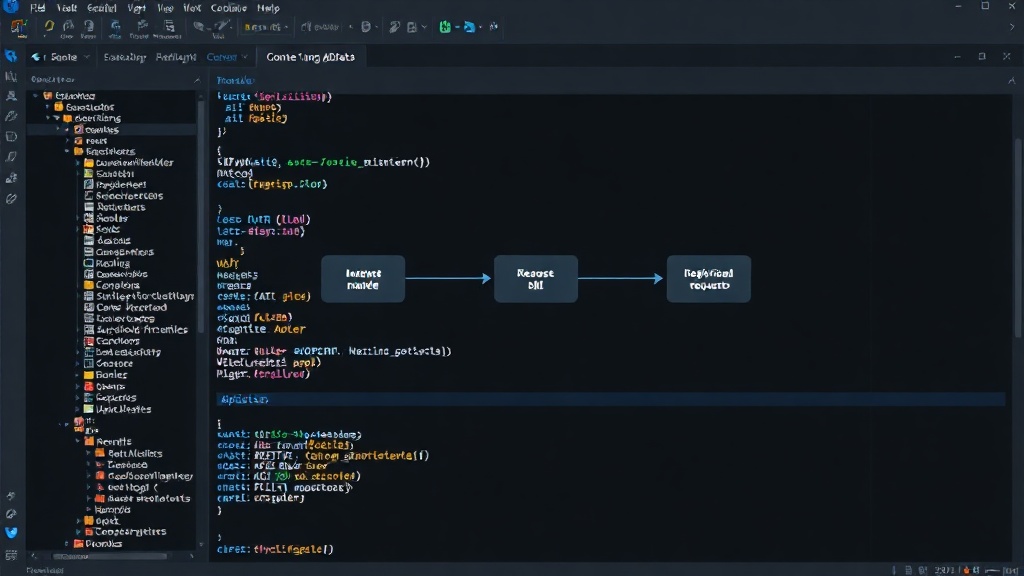
To be effective, AI API request logs must capture a standardized set of information across all integrated models. This includes:
- Model Identifier: Clearly stating which specific AI model processed the request (e.g., `gpt-4o`, `claude-3-opus-20240229`, `gemini-1.5-pro-preview-0514`).
- Input Parameters: Logging all arguments passed to the API, including temperature, top_p, max_tokens, and any model-specific configurations.
- Prompt/Query: Storing the exact text or data fed into the model. For complex chains or RAG systems, this might involve logging intermediate prompts or retrieved documents.
- Response Output: Recording the full response from the model, whether it's text, code, JSON, or embeddings.
- Metadata: Capturing crucial operational metrics like request latency, time to first token, total tokens consumed (prompt and completion), associated costs, and any request identifiers for traceability.
- Error Handling: Logging any errors encountered, including HTTP status codes, error messages, and stack traces, to facilitate rapid debugging.
- Timestamp: Precise start and end times for each request to establish a chronological sequence of events.
This structured data allows for powerful analytics. Teams can analyze performance trends, identify models that are consistently slow or error-prone, and track token usage to optimize costs. Without this level of detail, debugging becomes a guessing game, and performance optimization is left to intuition rather than data.
Operationalizing Multi-Model AI: Beyond Basic Logging
The operationalization of multi-model AI applications extends beyond merely capturing logs. It involves establishing robust systems for log aggregation, analysis, and alerting. Centralized logging platforms are essential to consolidate data from various model providers and internal services. This unified view enables cross-model correlation, which is vital for understanding complex workflows where the output of one model serves as the input for another.
For instance, a RAG system might first use a document retrieval model, then pass the retrieved text to a summarization model, and finally use a language generation model to formulate an answer. If the final answer is nonsensical, logs must allow tracing the issue back through each stage. Was the retrieval inaccurate? Did the summarization model miss key points? Or did the final generation model misunderstand the summary?
Furthermore, setting up automated alerts based on log patterns is critical. Alerts can notify teams of anomalies such as sudden increases in latency, a spike in error rates for a specific model, or exceeding predefined cost thresholds. This proactive approach minimizes downtime and ensures a more stable and reliable user experience. The ability to quickly search, filter, and visualize log data empowers engineering teams to maintain and scale these sophisticated AI systems efficiently. The operational history captured in these logs is as vital to the health of a multi-model AI application as its underlying code.