Introduction
Over-the-air (OTA) updates are essential for modern software, but they introduce significant challenges. Network unreliability, device fragmentation, and difficult rollback procedures create chaos for developers. The rise of AI agents offers a path to architecting more resilient developer workflows by automating complex decision-making within OTA update management. This article explores how AI agents can be integrated to mitigate these issues, ensuring smoother, more robust update processes.
The Chaos of OTA Updates
OTA updates, while necessary, present a trifecta of problems:
- Unreliable Network Context: Devices frequently lose connectivity during updates, leading to incomplete installations and potential bricking. This is particularly acute in mobile environments where users move between Wi-Fi and cellular networks, or experience signal drops.
- Device State Fragmentation: The sheer number of device configurations, operating system versions, and hardware variations makes it incredibly difficult to ensure a consistent update experience. Testing and validating updates across thousands of unique device states is a monumental task.
- Rollback Complexity: When an update fails or introduces critical bugs, rolling back to a previous stable version can be a complex, manual, and time-consuming process. This often requires custom tooling and deep system knowledge, delaying critical fixes and frustrating users.
These challenges combine to create a chaotic environment for developers, demanding significant resources for testing, deployment, and support. The traditional approaches rely heavily on manual oversight and extensive pre-deployment testing, which are often insufficient given the dynamic nature of connected devices.
AI Agents as Orchestrators
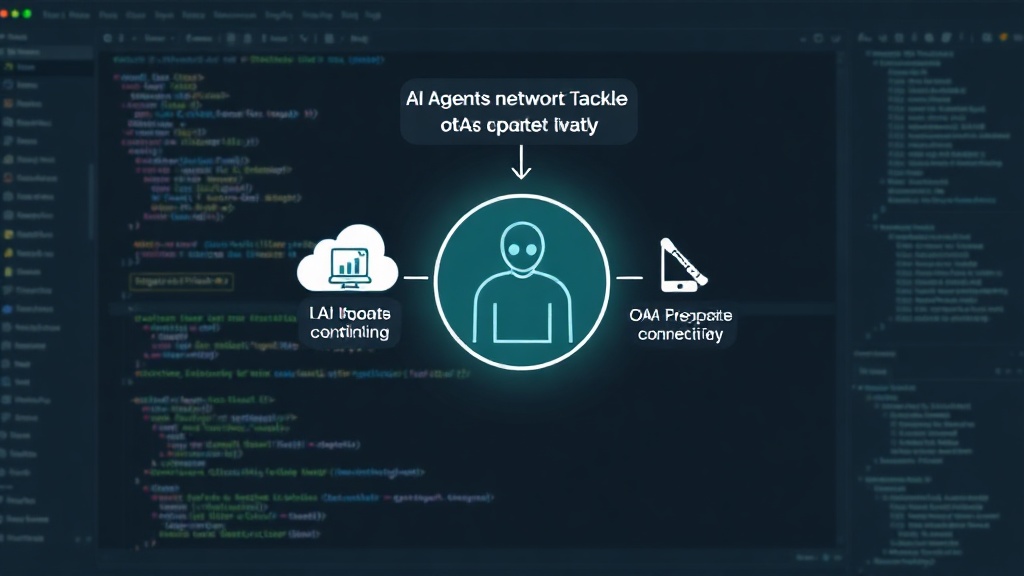
AI agents, capable of autonomous decision-making and workflow orchestration, can fundamentally change how OTA updates are managed. Instead of rigid, pre-scripted deployment plans, AI agents can adapt to real-time conditions, making intelligent choices to optimize the update process.
Intelligent Network Handling
An AI agent can monitor network conditions in real-time. If a device's connection becomes unstable during an update download or installation, the agent can pause the process, queue it for a more stable network, or even switch to a lower-bandwidth download mode to conserve data and ensure completion. This proactive management prevents update failures due to transient network issues.
Consider an analogy: traditional OTA updates are like sending a package via standard mail with no tracking or ability to reroute if a bridge is out. An AI-managed OTA update is like having a smart logistics system that reroutes the package dynamically based on traffic, weather, and delivery truck availability, ensuring it reaches its destination efficiently and safely.
Adaptive Device Compatibility Management
AI agents can learn and adapt to device fragmentation. By analyzing telemetry data from a fleet of devices, an agent can build a dynamic compatibility matrix. It can prioritize rollout to known stable configurations, identify potential issues on specific hardware or OS versions before they affect a large user base, and even suggest targeted compatibility fixes or workarounds. This moves beyond static testing matrices to a living, breathing understanding of device states.
This adaptive approach allows for phased rollouts that are not just based on percentages, but on intelligent groupings of devices deemed most likely to succeed with the update, minimizing the blast radius of any unforeseen issues.
Automated Rollback and Recovery
Perhaps the most powerful application of AI agents is in automated rollback and recovery. An agent can monitor key performance indicators (KPIs) and error logs in real-time post-update. If critical failure thresholds are crossed—for example, a spike in crashes, increased battery drain, or failure of core functionalities—the agent can trigger an automated rollback to the last known stable version for affected devices or groups. This significantly reduces the mean time to recovery (MTTR) and minimizes user impact.
Furthermore, the agent can log the failure conditions, feeding this data back into the development pipeline. This creates a rapid feedback loop, allowing developers to quickly diagnose and fix the root cause of the update failure, leading to more stable future releases.
Architecting Resilient Developer Workflows
Integrating AI agents into OTA update management requires a shift in how developer workflows are designed. Key architectural considerations include:
- Data Ingestion and Monitoring: Robust systems for collecting real-time telemetry, logs, and performance metrics from deployed devices are crucial. This data forms the basis for the AI agent's decision-making.
- Agent Orchestration Layer: A middleware layer is needed to host and manage the AI agents. This layer will receive data, pass it to the agents for analysis, and execute the agents' commands (e.g., pause update, trigger rollback, adjust rollout percentage).
- Feedback Loops: Seamless integration between the AI agent's findings and the CI/CD pipeline is essential. This ensures that failure data is used to improve future builds.
- Human Oversight and Intervention: While AI agents automate many decisions, a clear process for human oversight, manual intervention, and final approval for critical actions remains vital. Developers need to be able to trust and, when necessary, override the AI's decisions.
The surprising detail here is not just the potential for automation, but the shift from a reactive to a proactive and adaptive update strategy. Instead of fixing problems after they arise, AI agents can anticipate and prevent them.
Conclusion
The chaos of OTA updates stems from inherent complexities in network conditions, device diversity, and rollback procedures. By integrating intelligent AI agents into the update management pipeline, developers can move towards more resilient, automated, and adaptive workflows. These agents can intelligently handle network instability, manage device fragmentation proactively, and automate complex rollback scenarios, ultimately leading to more stable software deployments and a better user experience. This marks a significant evolution in how software is delivered and maintained in a connected world.