AI Agents: Memory Layers, Test Automation, and Workflow Orchestration
This week's highlights dive deep into critical aspects of AI agent development, from choosing the right memory layer for TypeScript agents to innovative applications in end-to-end testing and content automation. We explore practical frameworks and methodologies for building robust, intelligent workflows.
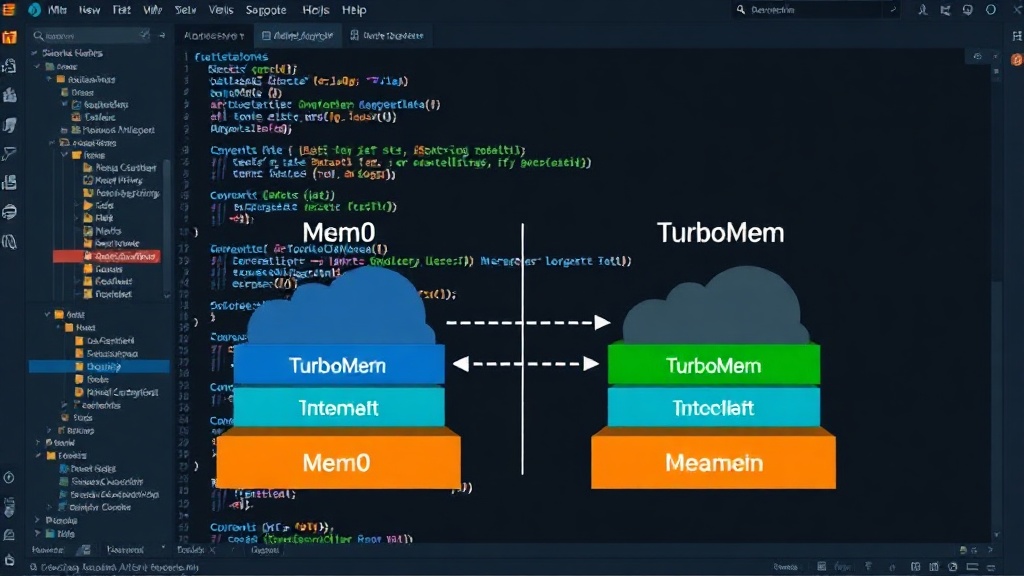
Mem0 vs TurboMem: Which Memory Layer Fits Your TypeScript Agent?
Choosing the correct memory layer is paramount for the performance and scalability of AI agents, particularly those built with TypeScript. Two prominent options, Mem0 and TurboMem, offer distinct approaches to managing an agent's contextual understanding and long-term recall.
Mem0 is a widely recognized memory solution, often implemented as a separate service. Its architecture typically involves vector databases for storing and retrieving information, enabling agents to access relevant past interactions or knowledge bases efficiently. This approach is well-suited for agents that require access to a vast amount of unstructured data or need to maintain a persistent, searchable memory across multiple sessions.
TurboMem, on the other hand, presents a different paradigm. While details on its specific implementation might vary, it's often associated with in-memory caching or more integrated, potentially lighter-weight solutions. These might be optimized for speed and lower latency, making them ideal for agents where immediate recall of recent interactions or a more constrained knowledge set is sufficient. The trade-off often lies in scalability and the depth of historical data that can be managed effectively.
The decision between Mem0 and TurboMem hinges on several factors:
- Data Volume and Complexity: For agents dealing with massive datasets or requiring complex semantic search capabilities, Mem0's vector database approach offers superior scalability and retrieval accuracy.
- Latency Requirements: If near real-time recall of recent events is critical and the memory footprint is manageable, TurboMem's potentially faster in-memory solutions might be preferable.
- Development Overhead: Integrating a separate vector database service like Mem0 can introduce more complex infrastructure management compared to a more self-contained solution like TurboMem might offer.
- Cost: The operational costs associated with maintaining a large-scale vector database versus an in-memory cache can differ significantly.
Developers must carefully evaluate their agent's specific needs regarding data persistence, retrieval speed, and operational complexity to select the memory layer that best aligns with their project goals.
AI Agents Revolutionizing End-to-End Test Automation
The landscape of software testing is undergoing a significant transformation with the integration of AI agents. Traditional end-to-end (E2E) testing often struggles with the complexity of modern applications, the dynamism of user interfaces, and the sheer volume of test cases required for comprehensive coverage.
AI agents bring several key advantages to E2E test automation:
- Intelligent Test Case Generation: Agents can analyze application behavior, user flows, and even requirements documents to automatically generate relevant and effective test cases. This moves beyond static, brittle scripts to dynamic test suites that adapt to application changes.
- Self-Healing Tests: When UI elements change or the application's structure is modified, traditional test scripts often break. AI agents can be trained to identify and adapt to these changes, automatically updating locators or test steps, significantly reducing maintenance overhead.
- Exploratory Testing: Agents can perform autonomous exploratory testing, navigating through an application in ways a human might not consider, uncovering edge cases and unexpected bugs. They can learn from previous test runs and user interactions to guide their exploration.
- Root Cause Analysis: Upon encountering a failure, AI agents can go beyond simply reporting a bug. They can analyze logs, trace execution paths, and correlate events to pinpoint the root cause, accelerating the debugging process.
Frameworks are emerging that leverage AI agents to orchestrate these testing processes. These systems can manage test execution across different environments, analyze results, and provide actionable insights to development teams. The goal is to create a more resilient, efficient, and comprehensive testing pipeline that keeps pace with rapid development cycles.
Streamlining Content Creation with AI Agent Workflows
Beyond technical applications like testing, AI agents are proving to be powerful tools for automating and orchestrating content creation workflows. This is particularly relevant for marketing teams, publishers, and creators who need to produce and distribute content at scale.
An AI agent workflow for content creation might involve several stages:
- Topic Ideation and Research: Agents can analyze trending topics, competitor content, and audience engagement data to suggest relevant content ideas. They can also perform initial research, gathering information from various sources.
- Content Generation: Based on the research and defined parameters, agents can draft articles, social media posts, video scripts, or marketing copy. This can range from generating initial outlines to producing near-final drafts.
- Content Optimization: Agents can analyze generated content for SEO effectiveness, readability, and brand voice adherence. They can suggest improvements or automatically revise content to meet specific criteria.
- Distribution and Scheduling: Once content is finalized, agents can automate its publication across various platforms, schedule social media posts, and even tailor content for different channels.
- Performance Analysis: Agents can monitor the performance of published content, tracking engagement metrics, conversion rates, and audience feedback. This data can then feed back into the ideation and generation stages, creating a continuous improvement loop.
The orchestration of these tasks by AI agents allows for a significant acceleration of the content lifecycle. What previously required multiple individuals and manual handoffs can now be managed more efficiently, freeing up human creators to focus on higher-level strategy, creativity, and refinement. This shifts the paradigm from manual content production to AI-assisted content strategy and execution.
The Unanswered Question: Ethical Boundaries in Agent Orchestration
As AI agents become increasingly capable of orchestrating complex workflows, from software testing to content creation, a critical question emerges that is not yet fully addressed in the development discourse: Where do we draw the ethical boundaries?
Consider the implications of autonomous test generation that could potentially bypass human oversight or content creation agents that might inadvertently perpetuate biases present in their training data, scaled across thousands of pieces of content. The efficiency gains are undeniable, but the potential for unintended consequences—whether in the form of biased outputs, security vulnerabilities introduced by automated test logic, or the erosion of human judgment—requires proactive ethical frameworks. Establishing clear guidelines for accountability, transparency, and human-in-the-loop intervention is not merely a technical challenge but an imperative for responsible AI development and deployment.