The Missing Piece in AI Agent Interoperability
The burgeoning field of AI agents is rapidly developing sophisticated capabilities, yet a critical gap exists in their ability to engage in complex financial transactions like trading. While specifications for AI agents to handle payments and hiring are emerging, the absence of a standardized protocol for trading creates a significant bottleneck. This void prevents agents from autonomously executing sophisticated financial strategies, limiting their potential in areas such as decentralized finance (DeFi), algorithmic trading, and complex market interactions.
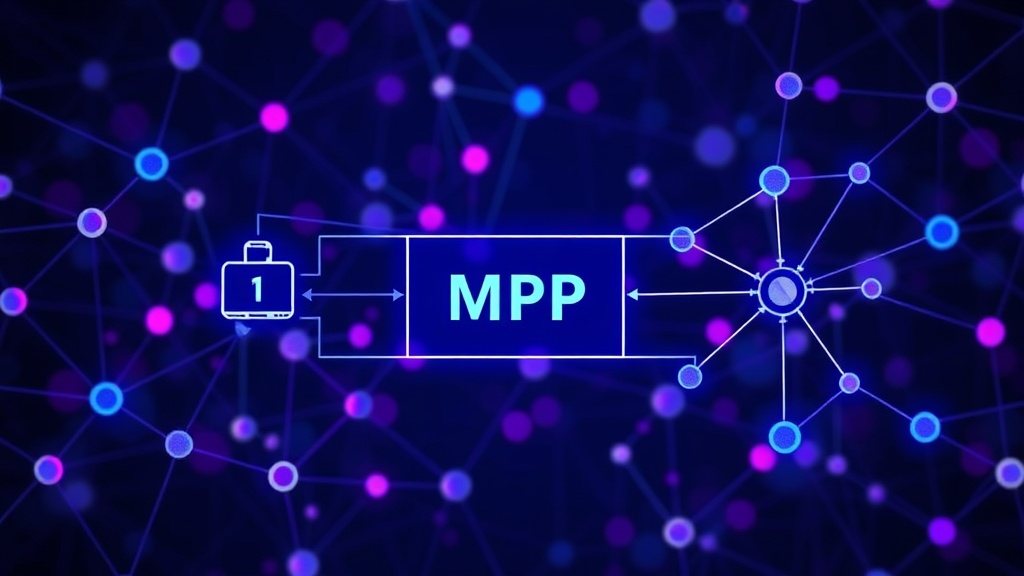
The foundational elements for agent-to-agent communication are coalescing. Circle, a prominent entity in the stablecoin space, has been instrumental in defining these standards. Their recent publication of the official USDC specification for the Machine Payments Protocol (MPP) marks a significant step forward for agent-based payments. This protocol outlines an elegant mechanism: an AI agent initiates a request to an MPP-enabled endpoint. The server responds with an HTTP 402 Payment Required status. The agent then signs an EIP-3009 USDC authorization and retries the request. Circle Gateway verifies this authorization and settles the transaction. A key advantage of MPP is its batched processing, cross-chain compatibility, and the elimination of API keys, ensuring that every transaction is directly attributable to a wallet address. This specification is a core component of the broader Agent Stack Circle has been building since May, and it has already seen its first derivative, USDCx on Stacks, leverage the standard.
Agentic Commerce: A Standard for Hiring
Prior to the MPP specification, another crucial area for agent interaction saw standardization: hiring. ERC-8183, also known as "Agentic Commerce," was proposed by the Virtuals Protocol and the Ethereum Foundation's dAI team. This standard defines a workflow for agents to engage in service-based transactions. In this model, a Client agent first posts a job and locks the required budget into an on-chain escrow. A Provider agent then undertakes the work and submits proof of completion. An Evaluator agent is responsible for verifying the deliverable. If the deliverable meets the criteria, the funds are released to the Provider; otherwise, they are refunded to the Client. The BNB Chain has already deployed the first live implementation of this protocol, demonstrating its practical applicability in facilitating decentralized workforces.
These two specifications—MPP for payments and ERC-8183 for hiring—collectively establish critical infrastructure for AI agents to operate in economic and labor markets. They provide a framework for agents to transact value and to contract for services. The elegance of these protocols lies in their ability to enable autonomous, trust-minimized interactions, removing the need for human intermediaries in many routine tasks. For developers building agent-based systems, these standards offer a clear path to integrate payment and workforce management functionalities, fostering a more robust and interconnected agent ecosystem.
The Unaddressed Frontier: AI Agent Trading
Despite the progress in defining payment and hiring protocols, the domain of AI agent trading remains conspicuously underdeveloped. A standardized specification for how AI agents should interact with financial markets, execute trades, manage risk, and settle positions is notably absent. This is not a trivial oversight. Trading involves a far greater degree of complexity, risk, and regulatory nuance than simple payments or even job contracting. It requires real-time decision-making, sophisticated data analysis, robust risk management frameworks, and reliable execution mechanisms. Without a common language or protocol, agents are confined to operating within bespoke, siloed trading environments, severely limiting their potential for interoperability and large-scale deployment in financial markets.
Consider the implications for decentralized finance (DeFi). DeFi platforms are built on the promise of open, programmable financial systems. For AI agents to truly participate and innovate within DeFi, they need standardized ways to interact with decentralized exchanges (DEXs), lending protocols, and derivatives markets. An agent might need to execute a complex arbitrage strategy, manage a portfolio of staked assets, or participate in yield farming. Each of these activities requires precise, automated execution and settlement. The lack of a trading spec means that developers must build custom integrations for every new protocol or financial instrument, a process that is slow, error-prone, and significantly increases the barrier to entry.
The challenges are multifaceted. A trading specification would need to address:
- Order Execution: How agents submit, modify, and cancel orders across different exchanges and protocols, including considerations for slippage and front-running.
- Risk Management: Standardized methods for agents to monitor and manage portfolio risk, set stop-losses, and adhere to predefined risk parameters.
- Data Feeds: Protocols for accessing reliable, real-time market data, including price feeds, order book information, and other relevant metrics.
- Settlement: Mechanisms for ensuring the secure and timely settlement of trades, especially in cross-chain environments.
- Compliance and Regulation: While challenging, any future spec would eventually need to consider how agents can interact with evolving regulatory frameworks.

Why Now? The Urgency of a Trading Spec
The urgency for a trading specification is amplified by the current trajectory of AI development and financial markets. AI agents are becoming increasingly capable of complex reasoning and autonomous action. Simultaneously, financial markets, particularly in the digital asset space, are becoming more complex and interconnected. The potential for AI agents to identify novel trading opportunities, manage risk more efficiently, and democratize access to sophisticated trading strategies is immense. However, this potential remains largely untapped due to the lack of standardized protocols. Without a common framework, the development of truly autonomous and interoperable AI trading agents will be severely hampered. This leaves a significant void for innovation, akin to having a powerful engine but no standardized way to connect it to a transmission.
The development of such a specification is not a task for a single entity. It will likely require collaboration between AI research labs, blockchain foundations, DeFi protocols, and financial institutions. The lessons learned from the development of MPP and ERC-8183—emphasizing clarity, security, and interoperability—will be invaluable. The absence of a trading specification is not just a technical gap; it's a strategic one. It represents a missed opportunity for AI agents to become fully integrated participants in the global financial system. The question is not if this specification will be developed, but when, and who will lead the charge to define the future of AI-driven finance.