Local-First AI Agents Enhance Privacy
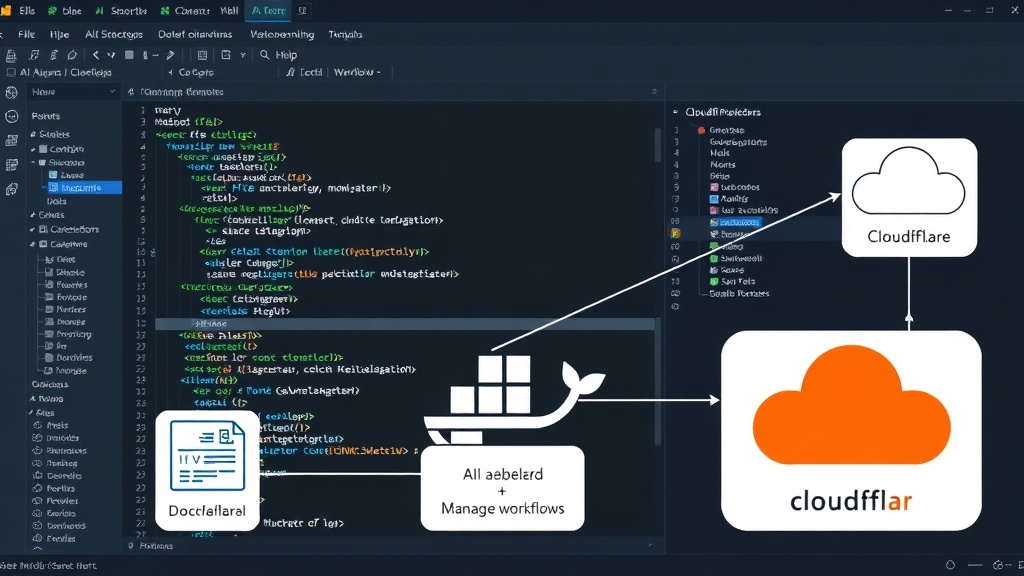
The push for privacy-conscious AI development is driving innovation in local deployment strategies. One notable example is TradingSpy, a local-first AI trading research assistant and backtester. Developed by mrhustlex, this project leverages Docker to encapsulate the entire AI agent environment. This approach ensures that sensitive trading data and research remain on the user's machine, mitigating risks associated with cloud-based processing. The use of Docker provides a consistent and reproducible environment, simplifying setup and maintenance for users while guaranteeing that the AI operates without direct access to external networks unless explicitly configured.
This local-first philosophy extends beyond just data privacy; it also offers greater control over the AI's execution environment. Developers can fine-tune resource allocation, integrate custom data feeds, and ensure compliance with specific regulatory requirements that might prohibit cloud data storage. The TradingSpy project serves as a blueprint for building other privacy-sensitive AI applications, demonstrating that powerful AI capabilities can be delivered without relying on remote servers. This is particularly relevant for financial applications, healthcare, and any domain where data confidentiality is paramount.
Orchestrating AI Workflows with Issue Trackers
Beyond deployment, managing the complex workflows of AI agents is a significant challenge. A novel solution highlighted this week involves using issue tracker labels to orchestrate AI agent tasks. This method treats AI workflow steps as tasks within a project management system, such as GitHub Issues. Each label applied to an issue can trigger specific actions or transitions within an AI agent's pipeline. For example, a label like 'Needs Analysis' might prompt an agent to process data, while a 'Review Complete' label could move the task to a different stage or agent.
This approach offers several advantages. It provides a clear, visual representation of the AI workflow, making it easier to monitor progress and identify bottlenecks. Developers can leverage existing issue tracking tools and their familiar interfaces, reducing the learning curve for managing AI operations. Furthermore, it allows for flexible and dynamic workflow adjustments. Teams can easily reassign tasks, prioritize certain steps, or even pause the workflow by simply manipulating labels on issues. This contrasts with traditional, often rigid, workflow engines, offering a more agile and human-centric way to manage AI agent activities. It’s like using sticky notes on a whiteboard to direct a team of highly specialized robots, where each note tells a robot what to do next and where to put the result.
Cloudflare Enhances Secure Agent Deployment
For AI agents that do require cloud deployment, especially for production environments, secure and temporary access is crucial. Cloudflare has introduced new temporary account capabilities designed to address this need. These temporary accounts allow autonomous agents to access cloud resources for a limited duration and with granular permissions. This significantly reduces the attack surface by minimizing the time sensitive credentials are in use and restricts what the agent can access.
This feature is particularly beneficial for agents that perform transient tasks, such as data ingestion, temporary processing jobs, or short-lived API interactions. By providing time-bound access, organizations can prevent potential misuse or compromise of agent credentials. If an agent’s credentials were to be leaked or exploited, the limited validity of the temporary account would automatically revoke access, thereby containing the damage. This capability is a vital step towards enabling more robust and secure production deployments of AI agents at scale. The ability to grant ephemeral access is akin to giving a contractor a temporary key card that only works during their scheduled shift, rather than a permanent pass.
The Evolving Landscape of AI Agent Operations
The convergence of local deployment for privacy, label-based orchestration for flexibility, and enhanced cloud security for production environments paints a clear picture: the operational side of AI agents is maturing rapidly. Developers are no longer just focused on model training and inference; they are building comprehensive systems that prioritize data security, workflow efficiency, and operational resilience. These advancements suggest a future where AI agents are more deeply integrated into business processes, operating securely and efficiently across diverse environments, from individual workstations to large-scale cloud infrastructures.
The core challenge remains bridging the gap between sophisticated AI capabilities and practical, secure, and manageable deployment. The solutions emerging—local Docker environments, issue tracker orchestration, and temporary cloud credentials—are all steps towards making AI agents more accessible and reliable for a wider range of applications and users. As these tools and methodologies evolve, we can expect to see AI agents become even more ubiquitous, seamlessly integrated into the fabric of our digital tools and workflows.