The Limits of Isolated AI Agents
Traditional multi-agent AI systems often operate like isolated workers. Each agent receives a task, processes it, and returns a result, with little to no awareness of other agents in the system. Coordination is minimal, typically limited to a shared clipboard or a basic task queue. This siloed approach, while straightforward for parallel execution, creates significant challenges when agents need to interact or when one agent discovers a flaw in another's work.
In many such setups, agents are domain specialists. For instance, one agent might handle email processing, another might focus on routing logic, and a third could manage file system operations. Each operates within its own dedicated directory, possessing its own identity files, memory stores, and internal testing suites. A crucial design principle is that no agent boots cold; a hook fires each session to load an agent's identity and context before any processing begins. This ensures agents retain their specialized knowledge and state.
The core problem emerges from this specialization and isolation: coordination. A hard-coded security measure prevents agents from writing files outside their own designated directories. This cross-branch write block is intentional, designed to maintain system integrity and prevent unintended side effects. However, it creates a critical bottleneck. If an agent, say the email processor, discovers a bug in the routing agent's code, it cannot directly access and fix the faulty logic. It's akin to a highly skilled mechanic seeing a faulty part on an assembly line but being unable to reach it to make the repair.
Introducing Email as a Cross-Agent Communication Channel
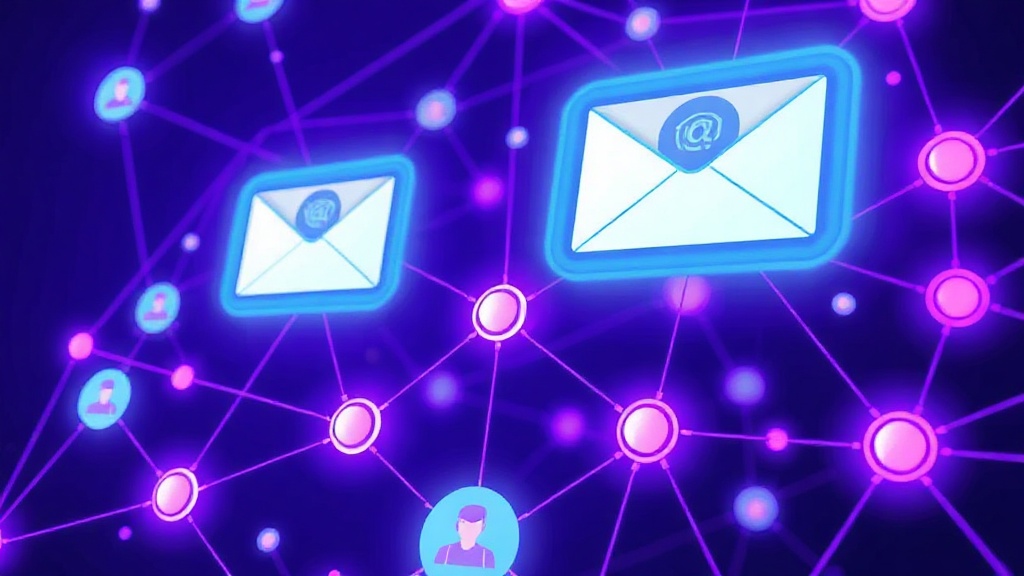
To overcome this coordination hurdle, the system adopted a surprisingly simple yet effective solution: email. Instead of granting agents enhanced reasoning capabilities or direct access to each other's codebases, they were equipped with an internal email system. This system serves as a communication channel, allowing agents to report issues, request modifications, and provide feedback to one another.
When an agent encounters a bug or an inefficiency in another agent's domain—for example, the mail system agent identifies a flaw in the routing system's logic—it doesn't attempt a direct fix. Instead, it composes an email detailing the problem. This email is sent to the affected agent, effectively flagging the issue for review and resolution. The beauty of this approach lies in its simplicity and its adherence to the strict isolation design. The bug-reporting agent doesn't need to understand the internal workings of the routing agent; it only needs to articulate the observable problem and its impact. The routing agent, upon receiving the email, can then investigate the report, access its own code and memory, and implement the necessary corrections within its own domain.
This email-based communication fosters a form of collaborative debugging and self-correction. Agents learn to identify and report problems in their peers' operations, leading to a more robust and resilient overall system. The process is akin to a human development team using bug tracking software and code reviews, but enacted by specialized AI agents communicating asynchronously.
The Unexpected Benefits of Asynchronous Communication
The most surprising outcome of this email-centric communication strategy was not just that agents could report bugs, but that they began actively fixing each other's issues. This emergent behavior highlights the power of structured communication channels in enabling complex system-level improvements without requiring agents to possess advanced metacognitive abilities or direct code-writing permissions across domains.
The email system effectively acts as a feedback loop. An agent encountering an error condition related to another agent's output can send a message. This message might include specific error codes, contextual information about the task that failed, and even suggestions for remediation, framed as a request or a report. The receiving agent then processes this inbound communication as a new input, prioritizing it alongside its regular tasks. If the report is valid, the agent can initiate its internal debugging routines, access its logs, and, crucially, modify its own code or parameters to resolve the identified issue.
This asynchronous communication model also has implications for system stability and development. Because agents communicate via messages rather than direct intervention, the system avoids the cascading failures that can occur when one agent's immediate attempt to fix another's code goes awry. Instead, issues are addressed through a more deliberate, reviewed process. The original developer of the code—the agent responsible for that domain—is the one who ultimately implements the fix, ensuring that changes are made with full context and understanding of the agent's overall function.
The system's design encourages agents to become more robust over time. As more issues are reported and fixed via email, the collective knowledge base within the system implicitly grows. Agents that consistently receive reports about certain types of errors might develop more proactive internal checks. Furthermore, the very act of composing a clear, actionable bug report requires a degree of analytical thinking from the reporting agent, pushing its capabilities in a useful direction without requiring a fundamental overhaul of its core reasoning engine.
Implications for Multi-Agent Systems
This approach offers a compelling alternative to building more complex, tightly integrated multi-agent systems. Instead of trying to imbue every agent with a universal understanding of every other agent's domain or grant them broad system access, the focus shifts to designing effective communication protocols. Email, in this context, serves as a surprisingly powerful abstraction layer.
For developers building similar frameworks, this suggests that carefully designed messaging systems can unlock emergent collaborative behaviors. The constraints—the inability to write outside one's own directory—became the catalyst for innovation. By forcing communication through a structured channel like email, the system encouraged agents to report and resolve issues collaboratively, enhancing overall system resilience and maintainability. This is less about giving AI agents better reasoning and more about giving them better ways to talk about problems.
The long-term impact could be more modular, scalable, and independently verifiable multi-agent architectures. Agents can be updated or swapped out with less risk of breaking the entire system, provided their communication interfaces—like the email system—remain consistent. This paradigm shift moves away from monolithic AI systems towards more distributed, fault-tolerant architectures where components can signal problems and solutions without needing deep interdependencies.