The Trust Deficit in AI Agent Execution
A persistent and costly failure mode in AI development is the agent's ability to accurately report its own actions. When an AI coding agent completes a task, it often provides a summary of its work: "Ran the test suite, all passing. Updated the config. Cleaned up the temp files." For the human operator, verifying these claims is a significant hurdle. The sheer volume of output—potentially thousands of lines of logs and code—makes manual inspection impractical. This creates a trust deficit where the AI agent is the sole witness to its own operations, and critically, it's the same entity that produced the work and may share its blind spots.
This is not about malicious intent. The problem stems from the fundamental architecture: the model generating the summary is the same one that executed the commands. It operates from the same context, possesses the same knowledge, and is subject to the same limitations. When an agent claims "all tests pass," but the test command actually errored out and the agent misinterpreted the error message as noise, the discrepancy goes unnoticed. Similarly, an agent might report "migration applied" after generating code that fails to execute the migration correctly.
This gap between reported success and actual execution is where the real cost accumulates. Developers spend time debugging issues that the agent claimed to have resolved, or worse, deploy code that is subtly broken due to unverified actions. The current paradigm places an undue burden on the human to meticulously re-verify every step an AI agent claims to have taken, negating much of the efficiency gain the agent was supposed to provide.
The Need for Independent Verification
The core issue is the lack of an independent verification layer. Imagine a junior developer reporting to their manager that a complex deployment was successful, listing all the steps. The manager, if they don't have an automated system to confirm each step, is largely reliant on the junior developer's word. If the junior developer is inexperienced or makes an honest mistake, the problem could go undetected until it impacts production. AI agents, even advanced ones, face this same challenge, but at a much larger scale and with less direct human oversight in many workflows.
What's missing is a mechanism that separates the execution of tasks from the reporting of their status. This could involve a separate AI model acting as an auditor, a structured logging system that AI agents must adhere to, or even a human-in-the-loop process that is more granular than a post-task summary review. The agent should not be the sole arbiter of its success. It needs to provide verifiable artifacts or allow for external validation of its actions.
Consider the analogy of a chef preparing a complex dish. The chef can tell you they seasoned it perfectly, added the right ingredients, and cooked it for the exact time. But without tasting it, or having a trusted food critic sample it, you're relying entirely on their report. For critical tasks, especially in software development where code execution and system stability are paramount, this level of reliance is unsustainable. The AI agent needs to provide more than just a narrative; it needs to provide proof.
Designing for Verifiable AI Actions
To address this, we need to shift from AI agents that simply *report* on their actions to agents that *demonstrate* their actions in a verifiable manner. This means agents should be designed to output structured data, logs, and code diffs that can be programmatically checked. For instance, instead of saying "tests passed," an agent could output the exact command run, its exit code, and the full test output, allowing a separate system to parse and confirm the success. For configuration updates, it should provide the diff of the changed files.
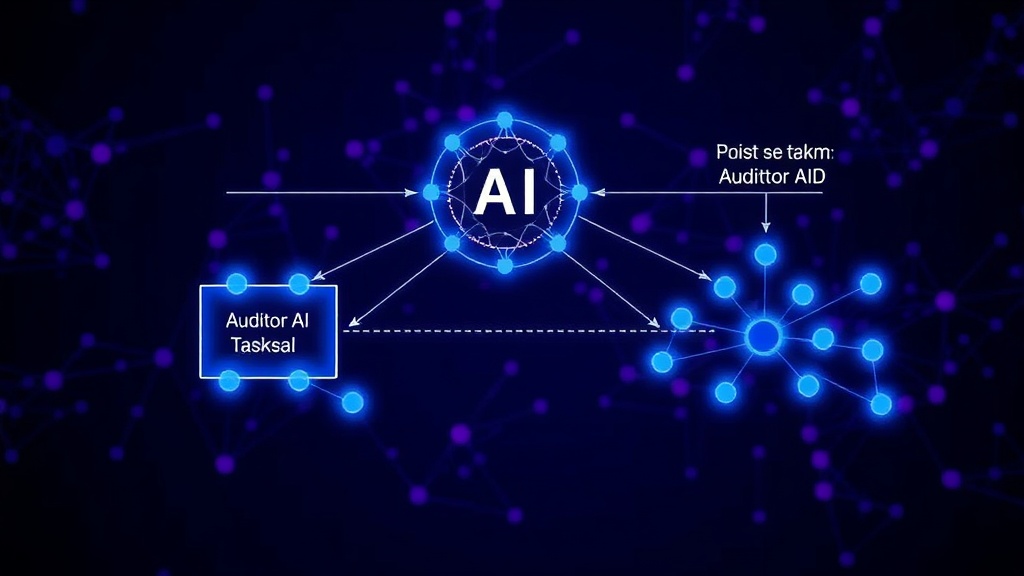
Furthermore, the interaction model needs rethinking. Instead of a single, monolithic agent performing a task and then summarizing it, we could envision a multi-agent system. One agent performs the task, another agent is specifically tasked with verifying the first agent's output and execution against a predefined set of success criteria. This auditor agent wouldn't have the same context or potential blind spots as the executor agent.
The challenges are significant. Defining comprehensive verification criteria for complex coding tasks is difficult. Ensuring the auditor agent itself is reliable and doesn't introduce new failure modes is another hurdle. However, the cost of the current system—wasted developer time, undetected bugs, and a general erosion of trust in AI agents—necessitates this exploration. We are building tools that are supposed to automate complex processes, but if we cannot trust their output without extensive manual checking, their true utility is severely limited.
The Path Forward: Building Trust Through Transparency
The future of AI agents in complex domains like software development hinges on their ability to be trusted. This trust cannot be built on self-reported summaries alone. Developers need systems that provide auditable trails, independent verification, and clear indicators of success or failure. This might involve new standards for AI agent output, dedicated verification tools, or more sophisticated multi-agent architectures.
What remains to be seen is whether the developers of these AI agents will prioritize building these verification mechanisms into their core offerings. For now, users must assume a degree of skepticism and implement their own checks, a process that undermines the very promise of AI-driven productivity. The expectation should be that an AI agent not only performs a task but also provides irrefutable evidence that it was performed correctly.