The Peril of Unfettered AI Deployment
AI coding agents have rapidly advanced, demonstrating impressive capabilities in generating complex code. However, their ability to run and deploy that code safely remains a significant hurdle. When you ask an AI like Cursor or Claude to 'deploy this and check the logs,' you confront a critical security question: what exactly is the agent permitted to access and modify on your systems?
The common, yet dangerous, approach involves providing an AI agent with an SSH key or a cloud administrator token directly. This method, while seemingly convenient, opens the door to catastrophic errors. An agent, misinterpreting a stack trace or making a slight logical error, could inadvertently execute commands like rm -rf on a production volume, leading to irreversible data loss and system downtime.
This vulnerability highlights a fundamental disconnect: AI agents are proficient at writing code, but not inherently equipped with the nuanced understanding of operational security required for deployment. Handing over broad access is akin to giving a brilliant but inexperienced intern the keys to your entire data center. The potential for accidental damage is immense.
Introducing the Model Context Protocol (MCP)
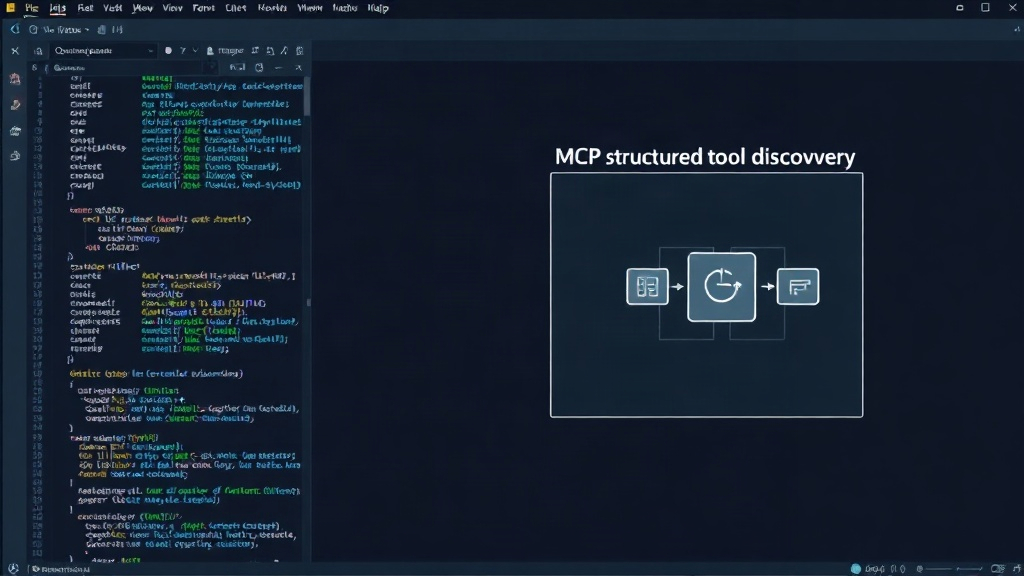
A more secure and controlled pattern for self-hosted infrastructure is now emerging with the Model Context Protocol (MCP). MCP offers a standardized method for AI clients to discover and invoke specific tools available on a server. Instead of agents improvising arbitrary shell commands, they interact with a structured, typed catalog of operations. This catalog includes essential functions such as list_services, deploy, get_logs, and set_env.
MCP fundamentally shifts the paradigm from granting broad permissions to enabling granular, role-based access control (RBAC). The same RBAC policies that govern your human team's access to infrastructure can now be extended to AI agents. This means an agent can be granted permission to deploy a specific service or view logs for a particular application, but not to modify core system configurations or access sensitive data it doesn't need.
Think of MCP less like handing over a master key and more like providing a curated menu of precisely specified tasks. The AI agent doesn't need to know how to open every door; it only needs to know how to order from the menu of services you've made available to it. This structured interaction significantly reduces the attack surface and the potential for accidental damage.
How MCP Enhances Security and Control
The core innovation of MCP lies in its ability to enforce security policies at the operational level. When an AI agent needs to perform an action, it queries the MCP endpoint for available tools. The server, acting as the MCP provider, presents a list of callable functions along with their required parameters and expected return types. Crucially, before executing any command, the MCP system verifies that the requesting agent has the necessary permissions according to the established RBAC framework.
This is a stark contrast to the traditional approach of using generic credentials. With MCP, the agent doesn't possess a secret key that grants it wide-ranging power. Instead, it operates under a defined policy, making its actions auditable and predictable. If an agent attempts an unauthorized operation, the MCP system can simply deny the request without exposing any sensitive credentials or system vulnerabilities.
Furthermore, MCP facilitates better observability. By interacting through a defined protocol, all agent actions become logged and traceable. This provides a clear audit trail of what the AI attempted to do, what it successfully executed, and any errors encountered. This level of transparency is invaluable for debugging, security monitoring, and ensuring accountability for AI-driven operations.
Implementing MCP for Self-Hosted AI Agents
Adopting MCP requires setting up an MCP provider on your server infrastructure. This provider acts as the gateway between the AI agent and your operational tools. It exposes a set of predefined functions (e.g., deploy, get_logs) and enforces access control policies for each.
The process typically involves:
- Defining Available Tools: Cataloging the specific operations you want AI agents to be able to perform. This could include deploying specific applications, restarting services, retrieving metrics, or updating environment variables.
- Implementing RBAC Policies: Mapping AI agent identities or roles to the allowed tools and operations. For instance, a 'testing agent' might be allowed to deploy to staging environments and view logs, while a 'production agent' might only be allowed to deploy approved builds and monitor performance.
- Integrating with AI Clients: Ensuring your AI agent framework supports the MCP standard, allowing it to discover and call these tools securely.
This structured approach ensures that even as AI agents become more autonomous, their operational impact remains firmly within defined security boundaries. It allows organizations to leverage the efficiency of AI for deployment and management tasks without sacrificing the integrity and security of their infrastructure.
The Road Ahead for AI Operations
The development and adoption of standards like MCP are critical steps toward enabling more sophisticated and autonomous AI operations. As AI agents evolve, the need for robust security and control mechanisms will only intensify. MCP provides a blueprint for how to integrate AI into critical infrastructure workflows safely, ensuring that these powerful tools augment, rather than endanger, our systems.
The question is no longer whether AI agents can manage infrastructure, but how we can build systems that allow them to do so responsibly. MCP offers a compelling answer, enabling granular control and security that was previously out of reach. This shift is vital for any organization looking to embrace the future of AI-assisted operations without compromising their security posture.