AI Agents Are Outpacing Human Users for Product Information
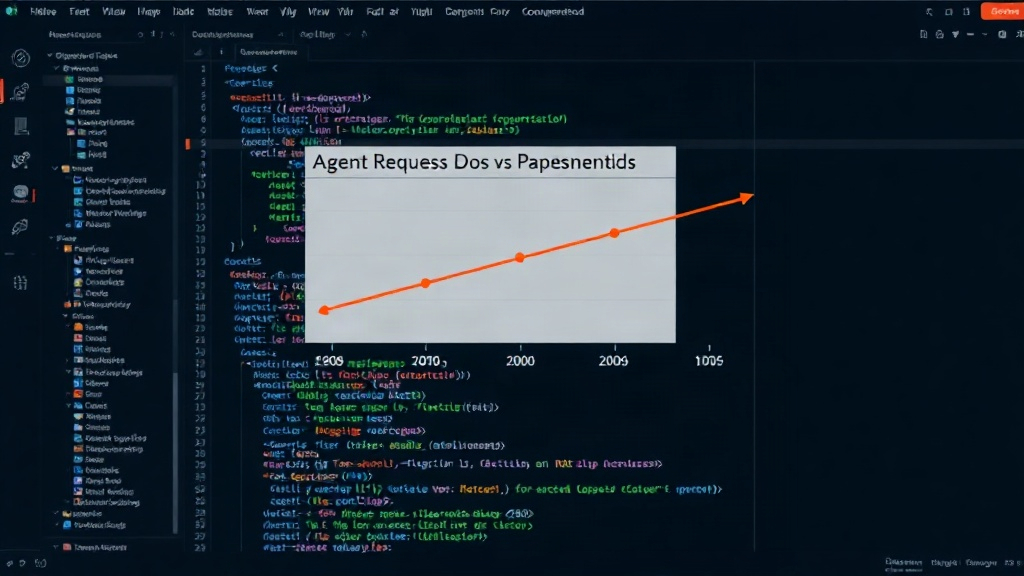
Your next customer might integrate your product without ever visiting your documentation site. Their coding assistant will read it for them, choose an approach, and generate the code. This isn't a distant future; it's happening now. Mintlify’s 2026 State of Knowledge Report highlights this dramatic shift: in August, their sites recorded 257 million agent requests compared to 131 million human page loads. This means AI assistants are actively consuming and interpreting product documentation at a rate nearly double that of human users.
The implications are profound. If the knowledge served to these agents is outdated or inaccurate, the mistakes are not just read, they are coded and deployed. An outdated example in Markdown or a poorly structured knowledge base can teach the wrong approach, and making that wrong information easier to retrieve via an AI agent only amplifies the problem. Consider an API authentication flow change. When engineering ships this update, it must be reflected immediately in documentation that AI agents can parse. If it's not, the agent will generate code based on the old, deprecated flow, leading to integration failures and user frustration.
The Challenge of Maintaining Agent-Readable Knowledge
The core challenge lies in the gap between the current state of product documentation and the requirements of AI agents. While 257 million agent requests signify a massive adoption of AI in product integration, only 7% of surveyed companies had made every knowledge surface readable by agents. This leaves a vast majority of companies unprepared for this new paradigm. The report indicates that while companies are aware of the shift, their efforts to adapt are lagging significantly. This isn't just about creating content; it's about structuring, formatting, and ensuring the accuracy of information in a way that AI can reliably consume and act upon.
What happens when an AI agent is fed incorrect or obsolete information about an API endpoint, a configuration setting, or a security protocol? The result is code that breaks, integrations that fail, and a degraded user experience. The responsibility for accuracy shifts from a human reviewing a website to ensuring the underlying data structures and content formats are machine-interpretable and, critically, up-to-date. This requires a fundamental re-evaluation of documentation workflows and tooling. It’s no longer sufficient to simply write clear prose for humans; documentation must also be a reliable source of truth for intelligent agents.
Adapting Documentation Workflows for the AI Era
To bridge this gap, companies must prioritize making their knowledge bases agent-readable. This involves several key steps:
- Structured Data Formats: Moving beyond simple Markdown to more structured formats like JSON, YAML, or OpenAPI specifications where applicable. This allows AI agents to parse and understand relationships between different pieces of information.
- Semantic Markup: Implementing semantic markup that clearly defines the meaning and context of information. This helps agents understand not just the text, but its purpose and relation to other concepts.
- Automated Validation: Developing systems to automatically validate documentation against live product changes. This could involve CI/CD pipelines that check documentation for accuracy whenever code is updated.
- Version Control for Knowledge: Treating documentation like code, with robust version control, clear deprecation strategies, and rollback capabilities.
- Agent-Specific Content: Potentially creating or curating content specifically tailored for AI agents, focusing on code generation, API usage, and configuration examples.
The Mintlify report emphasizes that the companies leading this transition are those that treat their knowledge base not as a static repository but as a dynamic, living system. They are investing in tooling and processes that ensure consistency, accuracy, and machine-readability. This proactive approach will be crucial for maintaining competitive advantage and providing a seamless developer experience in an AI-driven world.
The surprise here is not that AI is consuming documentation, but the sheer speed and scale at which it's happening, coupled with the significant lag in corporate readiness. Most organizations are still operating under the assumption that documentation is primarily for human consumption, failing to recognize that their most frequent users are rapidly becoming non-human.
What This Means for the Future
The future of product documentation is inextricably linked to the rise of AI agents. Companies that fail to adapt risk becoming irrelevant. Their products will be harder to integrate, their developer experience will suffer, and their growth will stagnate. The ability to provide accurate, machine-readable knowledge will become a key differentiator. This shift demands investment in new technologies, workflows, and a change in mindset from documentation teams and product leaders alike. It’s a call to action: make your knowledge work for AI, or risk being left behind.