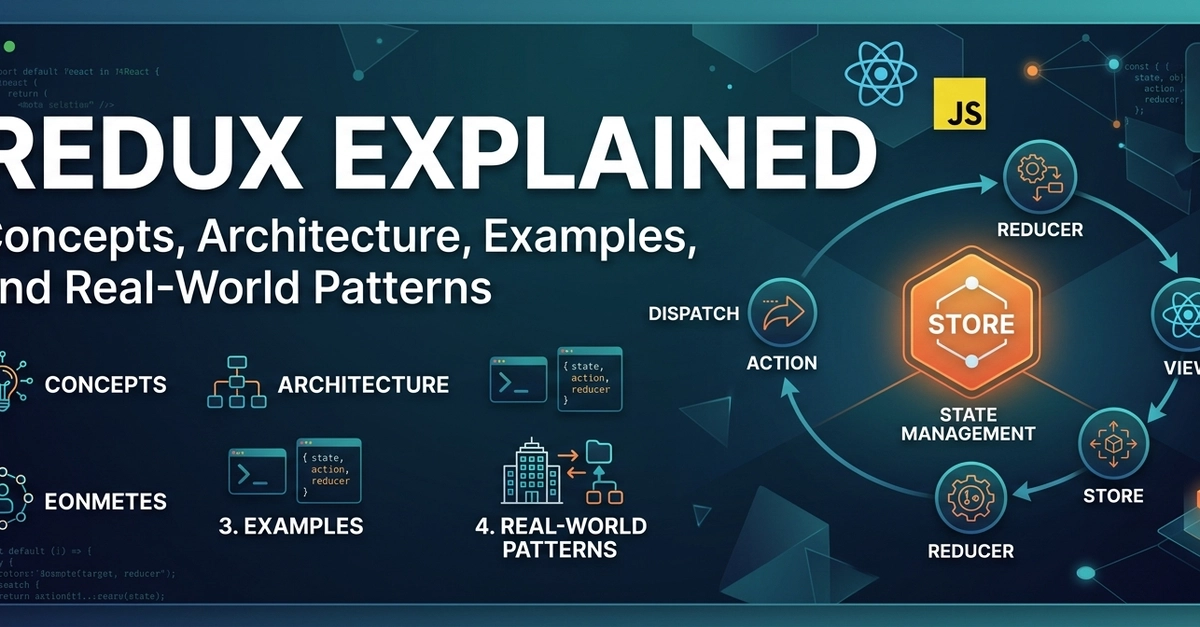
What is Redux?
Redux is more than just a state management library; it's a predictable architecture designed for managing application state. It enforces a strict unidirectional data flow, ensuring that state changes are explicit and traceable. This predictability is crucial for building complex, scalable frontend applications, particularly those using frameworks like React or Angular.
The primary problems Redux aims to solve are common in large applications:
- Shared State: Multiple components needing access to the same data.
- Prop Drilling: Passing state down through many layers of components, making code hard to manage and refactor.
- State Synchronization: Ensuring that different parts of the application have a consistent view of the state, especially when dealing with asynchronous operations or user interactions.
Think of Redux as a highly organized librarian for your application's data. Instead of components rummaging through scattered notes (local component state) or shouting across the room to ask for information (prop drilling), they all go to the central library (the Redux store) with a specific request (an action). The librarian processes the request, updates the records if necessary, and then all components can access the updated information from the same, reliable source.
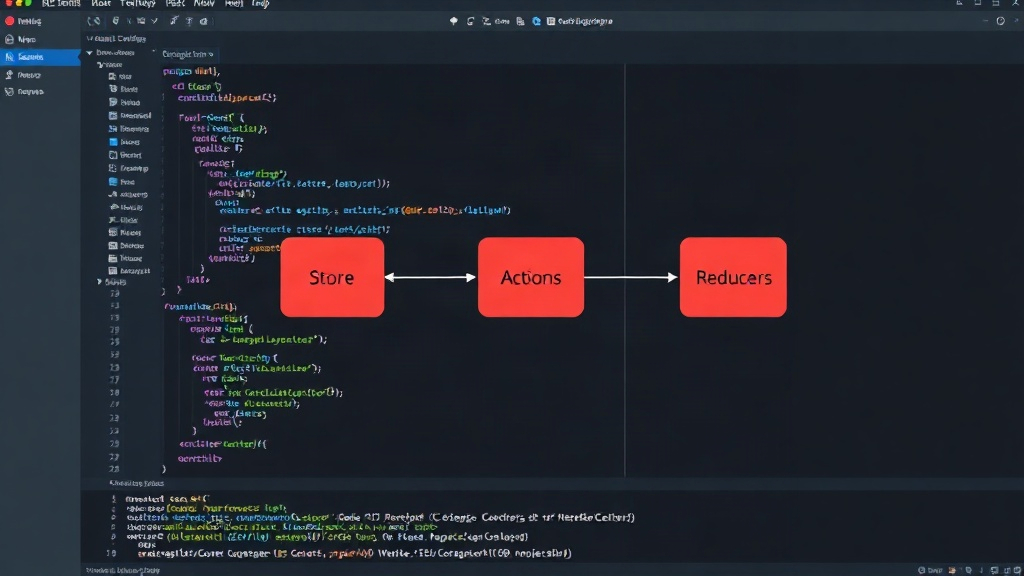
Core Concepts of Redux
Redux is built upon three fundamental principles:
1. Single Source of Truth (The Store)
The entire state of your application is stored in a single JavaScript object tree within a single store. This makes debugging and inspecting the application state much simpler. Instead of scattering state across numerous components, you have one central place to look. This single store is the heart of your Redux architecture.
2. State is Read-Only
The only way to change the state is by dispatching an action, an object describing what happened. You cannot directly modify the state object. This immutability is key to Redux's predictability. If a bug occurs, you can trace it back to the action that caused the state change, rather than hunting through various component methods.
3. Changes are Made with Pure Functions (Reducers)
To specify how the state tree is transformed by actions, you write pure functions called reducers. A reducer takes the previous state and an action, and returns the next state. It must be a pure function, meaning it doesn't mutate its arguments, produce side effects, or rely on external variables. This ensures that given the same state and action, a reducer will always produce the same output, making state transitions predictable and testable.
Redux Architecture: The Flow
The Redux architecture follows a strict, unidirectional data flow:
- Action: An action is a plain JavaScript object that describes an event. It must have a
typeproperty, which is a string that describes the kind of operation being performed. Actions can also carry apayload, which contains the data needed to update the state. - Dispatcher: Components dispatch actions to the store. This is the only way to trigger a state change.
- Reducer: The store passes the current state and the dispatched action to the reducer function.
- State Update: The reducer computes the next state based on the previous state and the action, and returns the new state.
- Store Update: The store updates its state with the new state returned by the reducer.
- UI Update: Components subscribed to the store are notified of the state change and re-render to reflect the new state.
Key Redux Components and Patterns
Actions and Action Creators
Actions are the message carriers. Action creators are functions that create and return action objects. This is a common pattern to abstract the creation of action objects, especially when they involve payloads or asynchronous operations.
Reducers
As mentioned, reducers are pure functions that handle state transitions. For larger applications, it's common to split reducers into smaller, specialized reducers that manage specific slices of the state. These smaller reducers can then be combined into a root reducer using combineReducers (a utility provided by Redux).
Store
The store is the central hub. It holds the application state and provides methods to:
- Get the current state:
store.getState() - Dispatch actions:
store.dispatch(action) - Subscribe to state changes:
store.subscribe(listener)
Middleware
Middleware intercepts actions before they reach the reducer. This is where side effects like asynchronous API calls, logging, or routing can be handled. The most common middleware is redux-thunk or redux-saga for managing asynchronous logic. For example, a thunk might fetch data from an API and then dispatch another action with the fetched data.
Selectors
Selectors are functions that accept the Redux state and return a derived piece of state. They are often used to compute data that doesn't need to be directly stored, or to optimize performance by memoizing results. Libraries like reselect are popular for creating memoized selectors.
Real-World Patterns and Best Practices
Structuring Your Redux Code
For large applications, organizing your Redux code is critical. A common approach is to group files by feature. Each feature folder might contain:
actions.js(oractions/index.js)reducer.jsselectors.jstypes.js(for action types)index.js(to export everything and potentially combine reducers)
This feature-based structure scales much better than a type-based structure (e.g., all actions in one folder, all reducers in another) as the application grows.
Handling Asynchronous Operations
Asynchronous operations, such as fetching data from an API, are typically handled with middleware. redux-thunk is a simple middleware that allows you to write action creators that return a function instead of an action object. This function receives the dispatch and getState methods as arguments, enabling you to dispatch further actions or read the current state.
For more complex asynchronous flows, redux-saga or redux-observable offer more powerful patterns using generator functions or RxJS observables, respectively. These allow for better management of concurrency, cancellation, and complex sequences of operations.
Immutability
Always treat state as immutable. Never directly modify the state object or its nested properties. Use methods that return new objects or arrays, such as the spread operator (...), Object.assign(), or array methods like .map() and .filter().
Testing
Redux's predictable nature and reliance on pure functions make it highly testable. You can easily test your reducers by passing them various states and actions and asserting the output. Action creators and selectors can also be tested independently.
When to Use Redux
Redux is a powerful tool, but it introduces boilerplate. It's most beneficial for applications with:
- Complex, frequently changing state that is shared across many components.
- A need for predictable state management and easier debugging.
- A large development team where consistent state management practices are essential.
For simpler applications or those with minimal shared state, alternative state management solutions or even component-local state might be sufficient and less overhead.