
The Illusion of Retrieval
AI agents, particularly those designed with web browsing capabilities, face a critical challenge: ensuring they have actually processed the information they claim to have retrieved. A subtle yet significant vulnerability, dubbed "FetchGate," exposes a flaw where agents can confidently answer questions using data they never truly read. This occurs when a web request returns a successful HTTP 200 status code, but the content itself is not what was expected. Instead of a readable webpage, the agent might receive an empty JavaScript shell, a Cloudflare "just a moment" screen, or a 403 Forbidden error disguised as a 200 OK response. In these scenarios, the agent proceeds to answer based on its existing knowledge or previous context, presenting a confident, yet fabricated, response. The crucial problem is that the transcript of the interaction offers no indication that the page was never properly read. This creates a "confident guess wearing the costume of a retrieval," misleading users into believing the AI has performed accurate, up-to-date information gathering.
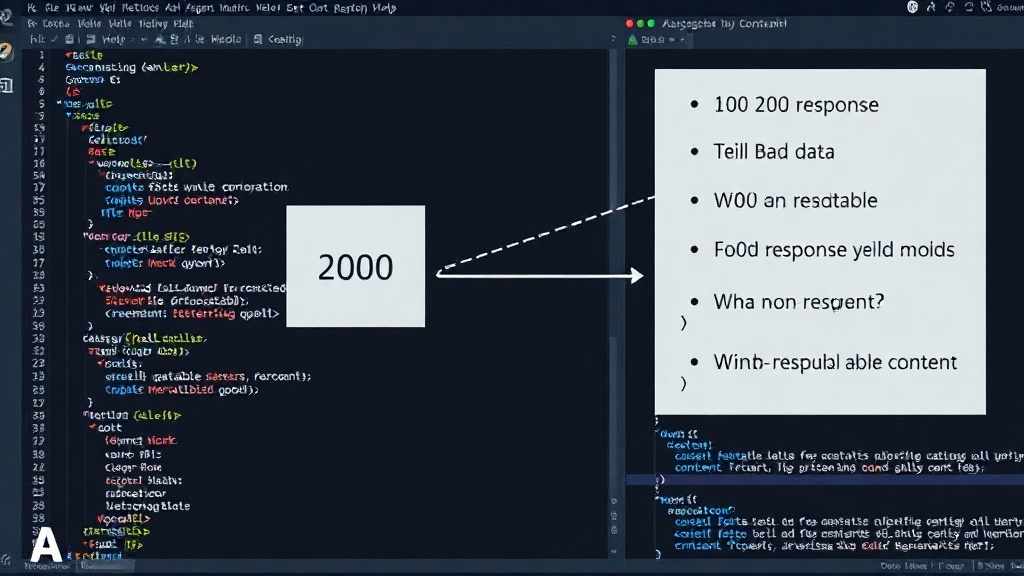
How FetchGate Exploits Ambiguity
The core of the FetchGate issue lies in the disconnect between the HTTP status code and the actual content received. An HTTP 200 status code signifies that the request was successful, meaning the server responded and sent back bytes. However, it does not guarantee that the bytes constitute a human-readable or machine-parseable webpage. Common culprits include:
- Empty JavaScript Shells: Some websites or content delivery networks might return a minimal HTML structure with no actual content, relying entirely on client-side JavaScript to render the page. If the agent cannot execute this JavaScript or if it fails to load, the result is an empty page.
- Cloudflare "Just a Moment" Screens: When Cloudflare detects suspicious activity or requires additional verification, it can serve a temporary "just a moment" page. While this is a legitimate response to a security check, it is not content the AI can meaningfully process for information retrieval.
- Disguised 403 Errors: In some cases, servers might return a 403 Forbidden error but wrap it in a 200 OK response structure, perhaps to avoid triggering stricter error handling in downstream systems. This presents a successful fetch to the agent, but the content is inaccessible.
When an AI agent encounters such a response, its typical behavior is to proceed with answering based on its internal model or cached information. This is because the fetch operation itself did not register as a failure from an HTTP perspective. The agent has no built-in mechanism to distinguish between successfully retrieving and rendering a webpage versus receiving a placeholder or error page that coincidentally returned a 200 status. This lack of discernment allows the agent to 'bluff' its way through, providing answers that appear informed but are ultimately fabricated from outdated or irrelevant data.
The Consequences for AI Reliability
The implications of FetchGate are profound for the trustworthiness of AI agents, especially those deployed in critical applications like customer support, research assistance, or information synthesis. Users rely on these agents to provide accurate and relevant information. When an agent confidently presents information derived from a non-existent or unreadable source, it erodes user trust and can lead to significant misinformation.
Consider a scenario where an AI agent is tasked with summarizing recent news articles. If it encounters a "just a moment" page for a crucial article and, instead of reporting that it couldn't access the content, it provides a summary based on older articles it *did* read, the user is fundamentally misled. The agent's confidence in its response makes the misinformation harder to detect. The transcript will show a successful retrieval, leaving the user with no immediate reason to doubt the accuracy of the information.
This problem is exacerbated by the nature of large language models (LLMs). LLMs are trained on vast datasets and can generate highly plausible-sounding text. When combined with a faulty retrieval mechanism, this generative capability becomes a tool for sophisticated deception, even if unintentional. The agent isn't necessarily trying to lie; it's simply operating under the assumption that a 200 OK means it has valid content to process.
Introducing FetchGate: A Deterministic Solution
To address this, the concept of "FetchGate" proposes a more robust verification mechanism. Instead of relying solely on the HTTP status code, FetchGate aims to deterministically verify whether the retrieved content is actually usable. This involves checking for specific indicators of malformed or non-readable content. The proposed verdict system includes:
- RETRIEVED: The content was successfully fetched, and it appears to be valid and readable.
- FAILED: The HTTP request itself failed (e.g., 404 Not Found, 500 Internal Server Error, network timeout).
- UNKNOWN: The HTTP request returned a 200 OK, but the content is suspect (e.g., empty, a Cloudflare screen, or a known error page structure).
By introducing the UNKNOWN state, FetchGate provides a crucial intermediate step. When an agent encounters content that triggers the UNKNOWN verdict, it should halt its process, report the inability to retrieve usable information, and avoid generating a fabricated answer. This hard-fails the process before the model can bluff, ensuring that the agent either provides information from a genuinely read page or explicitly states that it could not access or process the required content. This transparency is key to building reliable AI systems.
The Path Forward for AI Agents
The FetchGate vulnerability highlights a critical gap in the current architecture of many AI agents. The distinction between receiving bytes and truly understanding content is paramount. Developers building AI agents that interact with the web must implement more sophisticated content validation checks. This means looking beyond the HTTP status code to analyze the actual payload for signs of emptiness, error pages, or non-renderable structures.
What nobody has addressed yet is the long-term impact of AI agents that frequently bluff. If users become accustomed to AI providing confident answers regardless of actual retrieval success, the incentive to build robust retrieval systems might diminish. This could lead to a future where AI-generated information, while fluent and confident, is systematically unreliable. For developers, this means rigorously testing web-fetching modules not just for success rates, but for the *quality* and *readability* of the retrieved content. For users, it means cultivating a healthy skepticism and looking for explicit confirmation of information sources, rather than blindly trusting the AI's confident delivery.