The 'Zombie Interface' Problem
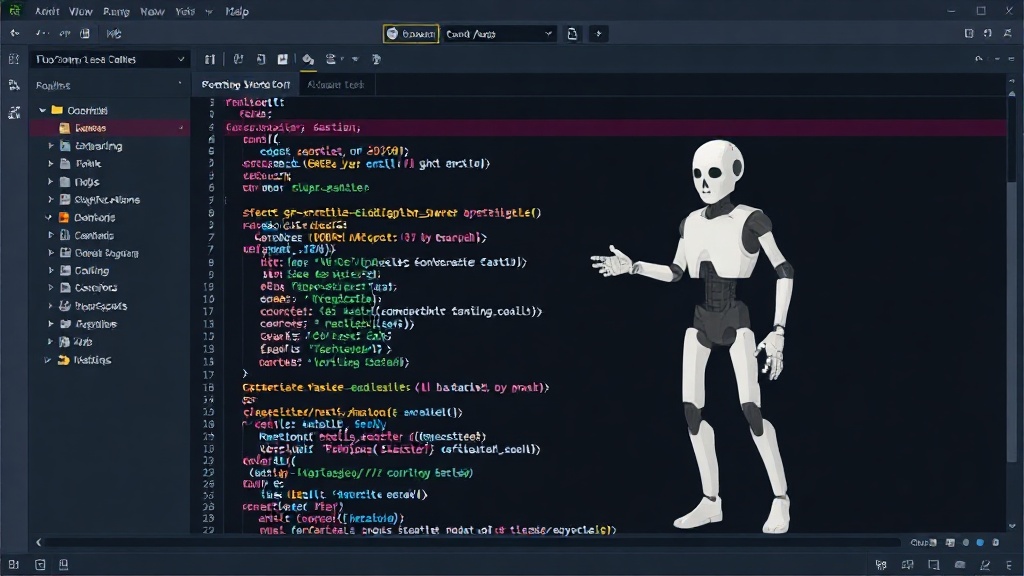
If you've spent time with AI agents like Claude or Cursor over the past year, you've likely seen the pattern: clean code, sound logic, but interfaces that feel like relics from 2015. These AI-generated UIs often feature generic rounded corners, arbitrary shadows that don't convey depth, and robotic, linear animations. While AI can generate functional HTML and CSS, it fundamentally lacks design intent. It knows how to make a button blue, but not why a specific spring-based animation or elevation change would enhance user interaction.
This results in what can only be described as 'zombie interfaces'—technically functional but devoid of life, usability, and user agency. This isn't merely an aesthetic issue; it touches upon critical aspects of accessibility, usability, and the user's ability to effectively control and interact with the system. The core problem lies in the AI's inability to grasp the 'why' behind design choices, focusing instead on the 'how' of code generation.
Bridging the Gap: Design Intent and AI
The challenge for AI agents is translating raw functionality into a user experience that feels intuitive and engaging. Design intent encompasses understanding user psychology, visual hierarchy, emotional response to animations, and the subtle cues that guide interaction. AI, in its current form, operates on pattern recognition and learned code structures, not on aesthetic principles or human-centered design philosophy. It can replicate existing design patterns but struggles to innovate or apply them with nuance.
Consider the difference between a button that simply changes color when hovered and one that subtly scales up with a slight shadow lift, accompanied by a gentle haptic feedback simulation. The former is a functional response; the latter is an intentional design choice aimed at providing clearer affordance and a more satisfying user experience. AI agents can generate the code for both, but they don't inherently understand the qualitative difference or when to apply which.
The Role of Human Oversight and Fine-Tuning
Fixing this requires a multi-pronged approach. Firstly, AI models need to be trained on richer datasets that include not just code, but also design principles, user feedback on UI/UX, and examples of well-crafted interfaces with clear design intent. This could involve training on curated design systems, usability studies, and even principles of animation and motion design.
Secondly, there's a critical need for human-in-the-loop processes. Developers and designers must act as curators and editors of AI-generated UI code. This means reviewing the output, identifying areas where design intent is lacking, and manually refining animations, spacing, typography, and interaction patterns. This oversight is not just about aesthetics; it's about ensuring accessibility standards are met, cognitive load is minimized, and the overall usability is high.
The current trend of AI agents producing code that requires significant manual UI/UX refinement highlights a gap in their capabilities. While they can accelerate the development of core logic and functionality, the user-facing elements still demand human expertise. Think of it less like AI writing the entire blueprint for a house, and more like it's generating the raw materials and basic structure, leaving the interior design, landscaping, and finishing touches to a human architect and interior designer.
Future Directions: Towards Intent-Aware AI
The ultimate goal is AI agents that can generate not just functional code, but code that reflects a conscious design intent. This would involve AI models that can:
- Understand and apply principles of visual hierarchy and information architecture.
- Generate context-aware animations that provide feedback and guide user flow.
- Adhere to accessibility guidelines (WCAG) by default.
- Adapt UI elements based on user preferences and device contexts.
- Communicate design rationale, explaining why certain choices were made.
While we're not there yet, the path forward involves a symbiotic relationship between AI's generative power and human design expertise. Developers leveraging AI tools today must actively compensate for this 'design intent' deficit. This means being prepared to iterate on the UI, inject personality, and ensure the final product is not just functional, but also a pleasure to use.
The 'UI/UX Excellence' movement mentioned in the source material, though not fully detailed, points towards a growing recognition of this problem. As AI becomes more integrated into the development workflow, the distinction between functional code generation and thoughtful, user-centered design will become increasingly important. Ignoring this gap leads to the proliferation of mediocre, lifeless interfaces that fail to meet the standards of modern digital products.