The Data Sensitivity of AI Agent Traces
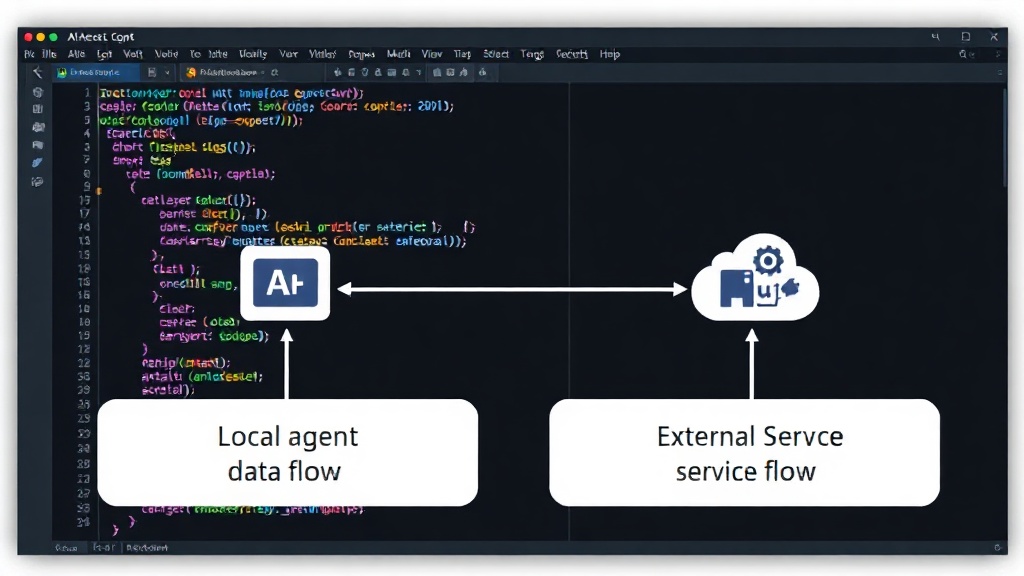
Integrating tracing into AI agents fundamentally alters their operational data flow. Beyond simple debugging, these traces can encompass a wealth of sensitive information, including user messages, system instructions, retrieved documents, tool arguments and their results, model outputs, internal identifiers, and proprietary business logic. When this data is dispatched to an external service, it effectively means exporting the core application data itself.
This reality shifts the critical question from merely evaluating the dashboard capabilities of an SDK to a more profound inquiry: “What exactly does it capture, where does that data transit, and who ultimately maintains control over it?” The implications for data privacy and intellectual property are substantial. Developers must treat AI agent traces not as ephemeral logs but as a direct window into their application’s most sensitive operations.
A local-first tracing design offers a pragmatic solution. It provides developers with essential visibility into their agent’s execution without immediately exposing that data externally. Decisions regarding export and sharing remain explicit and controlled by the developer. This approach is not an outright rejection of hosted observability platforms, which serve vital roles in production environments. Instead, it establishes a safer, more secure default for the development lifecycle and creates a clear boundary for handling sensitive information.
Why Agent Traces Demand a Dedicated Data Policy
While traditional telemetry systems have always carried the risk of exposing sensitive information, AI agent traces present a more acute and concentrated vulnerability. The sheer volume and nature of the data captured—ranging from user prompts that might contain PII to internal prompts that reveal proprietary AI strategies—necessitate a specific data governance strategy. Relying on generic telemetry policies is insufficient.
Consider an AI agent designed to assist with legal document review. Its traces might contain client names, case details, sensitive legal strategies, and even portions of confidential documents. If this trace data is sent to a third-party tracing service without careful consideration, it could lead to inadvertent data breaches, compliance violations (like GDPR or CCPA), or the exposure of trade secrets. The agent’s internal reasoning process, its understanding of complex instructions, and its interactions with external tools all become visible.
The local-first paradigm addresses this by ensuring that this critical data remains within the developer's controlled environment during the development and testing phases. This allows for thorough inspection and validation of what data is being captured and how it is being processed before any decision is made to share it. It’s akin to keeping your personal diary locked in your desk drawer rather than leaving it open on a public library table.
Implementing a Local-First Tracing Strategy
Adopting a local-first approach doesn't require reinventing the wheel. Many modern tracing libraries and frameworks already support local data storage or can be configured to do so. The key is to prioritize this local storage as the default behavior.
For developers building AI agents, this means:
- Selecting Tracing Tools Wisely: Choose libraries that explicitly offer local storage options or can be easily configured for local-only data capture during development. Look for tools that allow granular control over what data points are logged.
- Configuring Local Storage: Set up tracing SDKs to write trace data to local files, databases, or in-memory buffers on the developer’s machine. This data can then be analyzed using local tools or exported manually for specific debugging sessions.
- Implementing Explicit Export Mechanisms: When data needs to be shared or sent to a centralized observability platform (e.g., for team collaboration or production monitoring), this should be an intentional, explicit action. This could involve a manual upload process, a scheduled export, or a configuration change that triggers external sending.
- Defining Data Retention Policies: Even for local traces, establish clear policies on how long data is kept and how it is securely deleted. This prevents local storage from becoming a repository of outdated, sensitive information.
This deliberate process ensures that data privacy is baked into the development workflow from the outset. It empowers developers to understand and control their data, a critical step in building secure and trustworthy AI applications.
Beyond Development: The Production Dilemma
The local-first approach is primarily a strategy for the development and testing phases. In production, the need for centralized observability, performance monitoring, and incident response often necessitates sending trace data to external systems. However, the principles established during development should inform production strategies.
Before enabling external trace data submission in production, consider:
- Anonymization and PII Scrubbing: Implement robust mechanisms to anonymize or remove Personally Identifiable Information (PII) and other sensitive data before it leaves the application’s controlled environment.
- Data Minimization: Only export the data that is strictly necessary for production monitoring and debugging. Avoid sending the entire trace if only specific metrics or error logs are required.
- Secure Transmission and Storage: Ensure that any data transmitted to external services uses secure protocols (e.g., TLS) and that the external storage solutions meet stringent security and compliance standards.
- Access Control: Implement strict access controls on any hosted observability platform to ensure only authorized personnel can view the trace data.
The transition from local-first development to production observability should be a well-orchestrated process, guided by a clear understanding of the data's sensitivity and the associated risks. It’s about building a secure foundation locally before extending visibility outwards.
The Future of AI Agent Observability
As AI agents become more integrated into critical business processes, the demand for robust, secure, and privacy-conscious observability will only grow. The local-first approach represents a necessary evolution in how we think about tracing AI systems. It acknowledges that the data generated by these agents is not just diagnostic information but often represents the intellectual property and sensitive operational details of an application.
By prioritizing local control during development, teams can build confidence in their AI agents’ behavior and data handling practices. This proactive stance on data privacy is essential for fostering trust, ensuring compliance, and ultimately building more resilient and secure AI applications. What remains to be seen is how quickly tracing tool providers will adopt and promote truly robust local-first capabilities as a core feature, rather than an afterthought.