The Uncomfortable Truth About Agentic AI
Building AI features that interact with the real world – writing to databases, sending emails, or executing financial transactions – comes with inherent risks. While prompts can guide an AI agent toward safe behavior, they lack the enforcement power to guarantee it. This is the critical gap that an AI agent runtime policy system addresses. Without such a layer, even a non-malicious agent can cause significant damage through a single incorrect tool call, a misplaced data entry, or an unchecked, confident execution step.
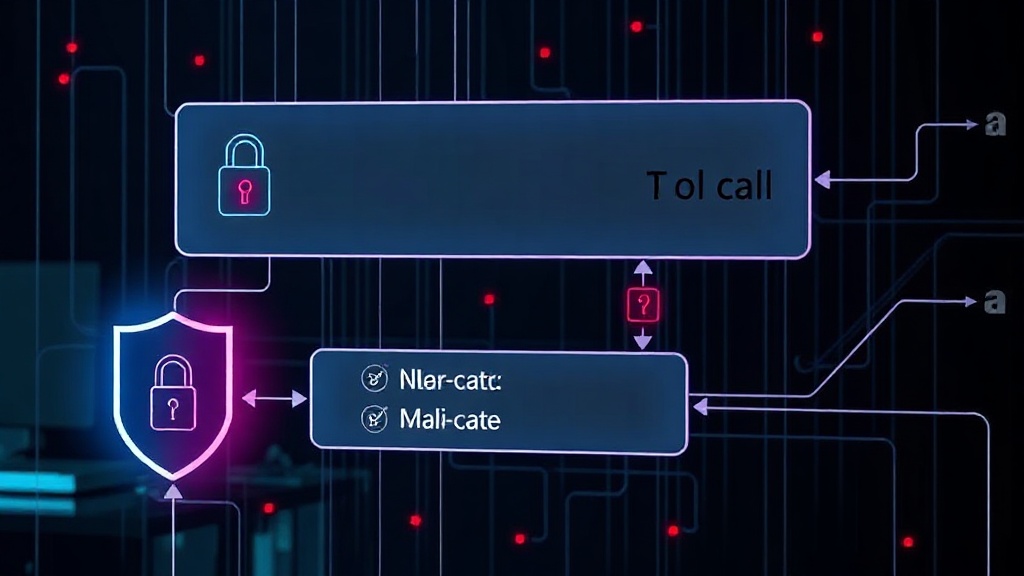
This system acts as a deterministic gatekeeper, sitting between the AI model's proposed action and its actual execution. It's analogous to a security checkpoint where every proposed action is scrutinized. The policy layer evaluates whether the action is permissible, should be denied, modified, deferred for human approval, or simply logged for auditing. This guide focuses on the architectural considerations and potential pitfalls for developers shipping AI features with tangible customer impact, steering clear of vendor-specific pitches.
Why Runtime Policy is Essential Now
The rapid proliferation of AI agents into production environments amplifies the need for robust safety mechanisms. As AI models become more capable and integrated into business-critical workflows, the potential for unintended consequences grows proportionally. A model that can access and manipulate production systems, customer data, or financial accounts requires more than just well-crafted prompts for safety. It demands a structural safeguard that operates independently of the model's probabilistic output.
Consider the analogy of a pilot in an aircraft. While the autopilot can suggest and execute complex maneuvers, there's always a human pilot ready to intervene, override, or approve critical actions. An AI agent runtime policy serves a similar function, providing an essential layer of oversight and control for AI-driven operations. This layer ensures that actions align with predefined security, compliance, and business logic, preventing potentially catastrophic errors before they occur.
Core Components of a Runtime Policy System
A robust AI agent runtime policy system typically comprises several key components, each playing a crucial role in ensuring safe and controlled execution of AI-driven actions:
1. Action Interception and Analysis
The first step is the ability to intercept every proposed tool call or action initiated by the AI agent. This interception should happen before the action reaches its target system. Once intercepted, the system must parse and understand the proposed action, including the specific tool being invoked, the parameters provided, and the intended target or data involved. This deep understanding is fundamental to applying any policy effectively.
2. Policy Definition and Management
Policies are the rules that govern which actions are permitted. These rules can be defined using various mechanisms, such as declarative schemas, configuration files, or even natural language descriptions that are then translated into executable logic. Policies should be granular, allowing for specific rules based on the tool, the parameters, the user context, the time of day, or even the output of a risk assessment model. A centralized policy management system is crucial for maintaining consistency and enabling updates without redeploying the AI agent itself.
3. Execution Enforcement
Based on the analysis of the proposed action and the active policies, the enforcement engine makes a decision. This decision can manifest in several ways:
- Allow: The action is deemed safe and is permitted to execute.
- Deny: The action violates a policy and is blocked. A clear reason for denial should be provided.
- Modify: The action is permitted but with altered parameters. For example, sensitive data might be masked, or a hardcoded value replaced with a safe default.
- Approve (Human-in-the-loop): The action requires explicit human authorization before execution. This is critical for high-risk operations.
- Log/Audit: The action is permitted but recorded for later review, especially for actions that are borderline or require monitoring.
4. Monitoring and Auditing
Continuous monitoring of all intercepted actions, policy decisions, and executed operations is vital. This provides visibility into the AI agent's behavior, helps identify emerging risks, and supports compliance requirements. Audit logs should be immutable and comprehensive, detailing the proposed action, the policy applied, the decision made, and the outcome.
Common Pitfalls to Avoid
Building effective runtime policies requires careful consideration to avoid common missteps:
- Over-reliance on Prompt Engineering: Prompts are not a substitute for enforcement. They can guide, but not guarantee, safety.
- Lack of Granularity: Broad, permissive policies leave too much room for error. Specific, context-aware rules are necessary.
- Insufficient Testing: Policies must be rigorously tested against a wide range of potential AI outputs, including adversarial inputs designed to bypass controls.
- Slow or Manual Approval Processes: For real-time applications, human approval loops must be efficient and integrated seamlessly. Delays can cripple usability.
- Ignoring Data Sensitivity: Policies must account for the sensitivity of data being accessed or modified by the AI agent.
- Inadequate Logging: Without comprehensive audit trails, it's impossible to investigate incidents or prove compliance.
The Future of AI Agent Security
As AI agents become more autonomous and integrated into critical systems, the runtime policy layer will evolve from a best practice to an absolute necessity. Future iterations may involve more sophisticated risk assessment models, dynamic policy adaptation based on real-time threat intelligence, and tighter integration with existing security frameworks. The development of standardized policy languages and enforcement mechanisms will also be crucial for interoperability and widespread adoption. The goal is to enable powerful AI capabilities without compromising the safety and integrity of the systems and data they interact with.