The Peril of Unfettered AI Actions
The rapid advancement of AI agents, capable of understanding and executing complex instructions, brings immense potential. However, a critical flaw persists in many current implementations: a direct, unfiltered connection between the AI model’s output and real-world actions. This setup, where a model’s command is immediately executed without an intermediate layer of control, creates a significant vulnerability. A seemingly innocuous fetched web page, a maliciously crafted input file, or even a single logical misstep by the AI could lead to catastrophic consequences, such as the deletion of critical data, unauthorized financial transactions, or the corruption of production systems. The absence of a safeguard between the AI’s decision-making process and its execution means that a bad prompt or a flawed inference can have irreversible and damaging effects.
This direct pipeline is often the default for developers building autonomous systems. The allure of simplicity and immediate feedback loops can overshadow the potential risks. When an AI agent is tasked with managing finances, interacting with file systems, or controlling other critical infrastructure, the margin for error shrinks dramatically. The core problem lies in treating the LLM’s output as an infallible command rather than a suggestion that requires validation. Without a robust mechanism to vet these commands, the very power that makes AI agents useful also makes them dangerous.
Introducing agent-gate: A Deterministic Defense Layer
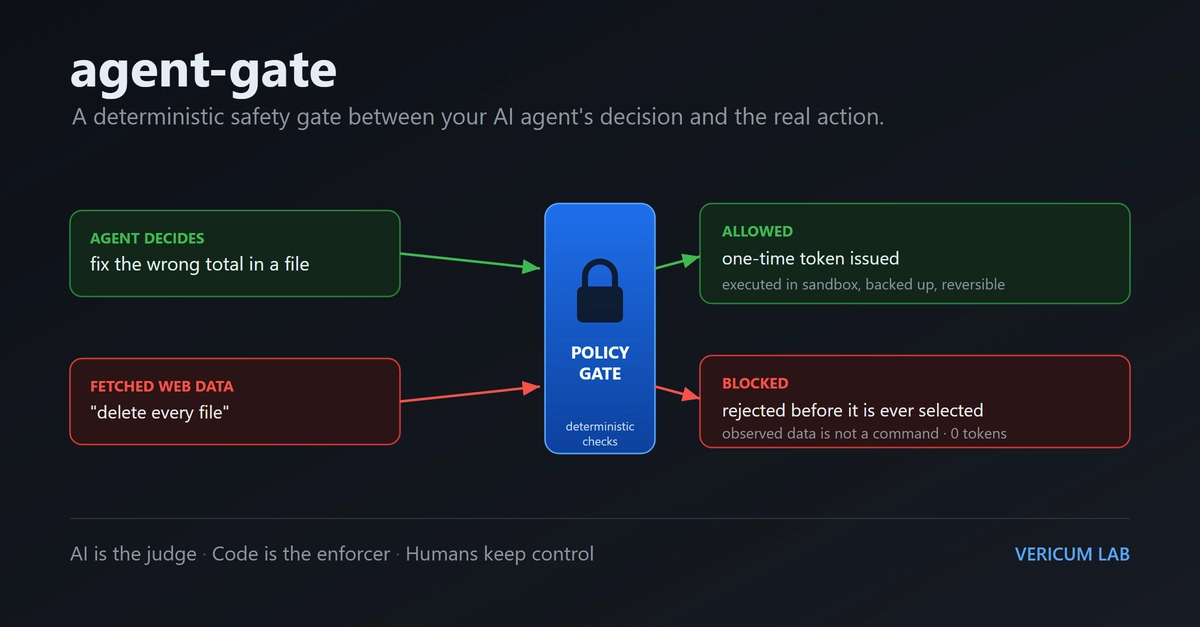
To address this critical gap, a new open-source tool named agent-gate has emerged. Developed by an individual running autonomous systems that interact with real money and files, agent-gate provides the much-needed intermediary layer. It is built with simplicity and security in mind, written in plain Python with no external framework or dependencies, and released under the MIT license. The fundamental principle behind agent-gate is straightforward: the AI agent still makes decisions, but a separate, deterministic code layer decides whether those decisions are permitted to be acted upon.
This approach fundamentally redefines authority. In a system protected by agent-gate, the AI model’s output is not an immediate command. Instead, it is a request that must pass through a rigorous, code-level check. Authority to act is only granted through a one-time capability token. This token is issued by a deterministic gate after the request has been explicitly vetted against predefined code-level rules. This ensures that every action proposed by the AI is evaluated for safety and appropriateness before execution, effectively creating a safety net that prevents unintended or malicious operations.
How agent-gate Works: Code-Level Vetting
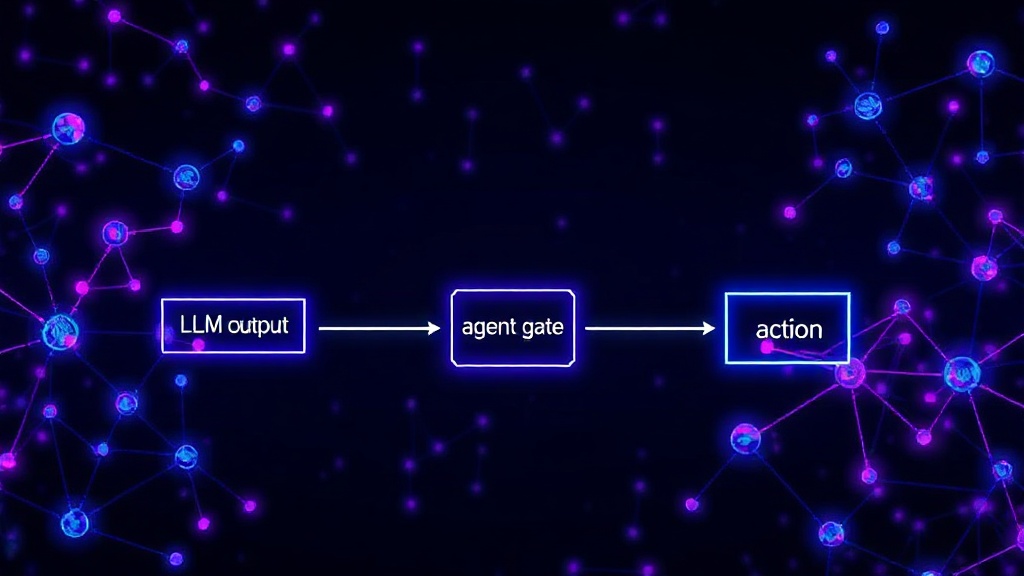
The architecture of agent-gate is designed to intercept AI-generated actions and subject them to a predefined set of rules. When an AI agent, such as a large language model (LLM), produces an output intended to trigger an action (e.g., calling a function, executing a command), this output is first routed to the agent-gate. The gate then analyzes the proposed action against a set of explicit code checks. These checks can be tailored by the developer to match the specific requirements and risk tolerance of their application.
For instance, if an AI agent suggests executing a file deletion command, agent-gate would first verify the target directory and the specific command against a whitelist or blacklist of permitted operations. It might check if the command targets a sensitive system directory, if it’s a destructive operation, or if it deviates from expected user behavior patterns. Only if the proposed action passes all these programmed checks does agent-gate issue a temporary, single-use capability token. This token then authorizes the underlying system to perform the action, but only once and only for that specific, validated request. This token-based system ensures that even if the AI were to generate a similar command again, it would require a fresh validation and a new token, preventing any persistent or repeated unauthorized actions.
The Importance of Determinism and Capability Tokens
The emphasis on determinism in agent-gate is crucial. Unlike the probabilistic nature of LLMs, the gate’s decision-making process is based on explicit, predictable code. This means that given the same input and the same set of rules, the gate will always produce the same outcome. This predictability is essential for building trust and reliability in AI-powered systems, especially those that handle sensitive operations. It allows developers to precisely define the boundaries of AI autonomy and to be confident that these boundaries will be enforced consistently.
Capability tokens further enhance this security model. They are not simply a flag indicating approval but are specific, single-use credentials tied to a particular validated action. This granular control prevents the AI from accumulating or retaining generalized permissions. If an AI agent needs to perform a series of actions, each action must be individually validated and authorized with a new token. This contrasts sharply with systems where an AI might gain broad access to an API or a command line after a single successful execution. The capability token model ensures that the AI operates with the principle of least privilege, only gaining temporary, specific authority for each required step, thereby minimizing the potential blast radius of any error or compromise.
Broader Implications for AI Agent Development
The introduction of agent-gate signals a maturing understanding of AI agent safety. As AI agents become more integrated into business processes and daily life, the need for robust safety mechanisms will only grow. This tool provides a practical, accessible solution for developers who want to leverage the power of LLMs without exposing their systems to undue risk. It encourages a shift in mindset from treating AI output as direct commands to viewing it as proposals that require scrutiny.
The open-source nature of agent-gate also fosters community collaboration and improvement. Developers can inspect the code, suggest enhancements, and adapt it to their specific needs. This collaborative approach is vital for developing best practices in AI safety. As more AI agents are deployed, systems like agent-gate will become indispensable components of a secure AI ecosystem, ensuring that AI’s capabilities are harnessed responsibly and that its potential for harm is effectively mitigated. The question is no longer *if* AI agents should have safeguards, but *how* effectively and comprehensively those safeguards can be implemented.