The Dual Nature of AI Agent Memory
The question of whether AI agent engrams are open source or proprietary has a nuanced answer: both. Major AI memory engines like Mem0, Letta, Cognee, Graphiti, LangMem, and PLUR all sport open-source licenses such as Apache-2.0 or MIT on GitHub. This means the underlying code is freely available for inspection, modification, and distribution. However, the availability of open-source software does not automatically equate to an open format for the data it stores – specifically, the AI's memories, or "engrams." A project can be open source while still encasing user memories in opaque vector blobs, rendering them unreadable, uneditable, or unexportable by the user.
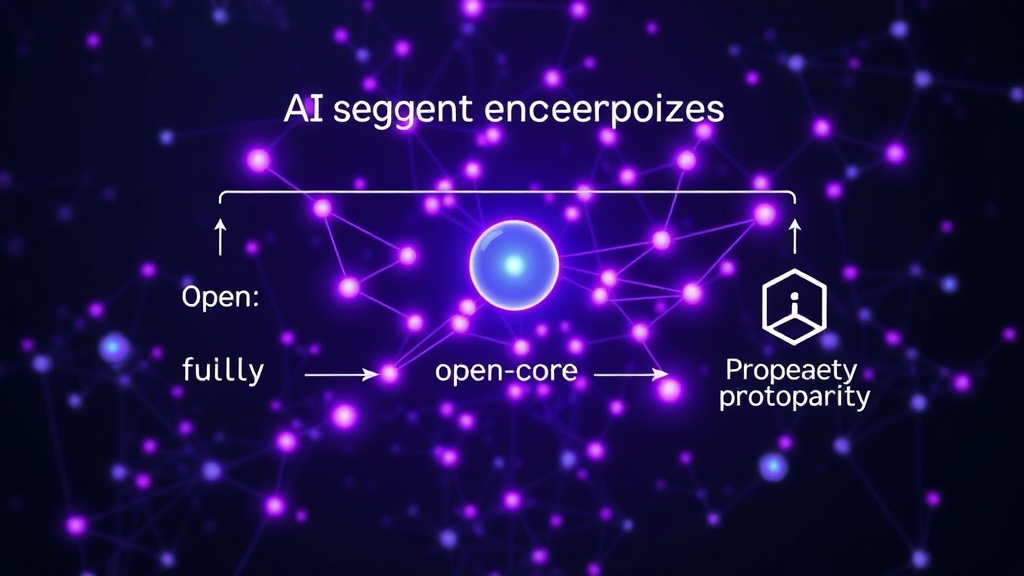
This critical distinction separates the field into three tiers, revealing the true nature of data ownership and portability: fully open, open-core, and fully proprietary. The real determinant of user control is not the license of the software, but the accessibility and interoperability of the stored memory data itself.
Understanding the Tiers of Memory Storage
Fully Open: In this ideal scenario, both the AI agent's memory engine software and the format in which memories are stored are open and accessible. Users have complete control, able to read, edit, and export their data freely. This offers maximum transparency and user agency.
Open-Core: This model features open-source software for the agent memory engine, but the stored memory data is not fully portable. While developers can inspect and modify the code, exporting memories into a universally usable format might be restricted or impossible. This often means the most valuable aspects of the memory system are locked behind proprietary services or formats.
Fully Proprietary: Here, the AI agent's memory is deeply integrated into a specific provider's infrastructure. Neither the software nor the memory format is open. Users have no ability to export their memories, effectively tethering their AI's knowledge base to a single vendor. This offers the least control and transparency.
The Problem of AI Forgetting
The very existence of this debate stems from a fundamental challenge facing AI agents: their inherent tendency to forget. Without persistent memory mechanisms, each new interaction or session begins from a blank slate. Every context window has a finite capacity, and information beyond that limit is lost. AI agent engrams are the solution to this problem, providing a way for agents to retain, recall, and build upon past experiences and learned information. The method by which these engrams are stored and managed directly impacts the agent's utility, personalization, and the user's ongoing relationship with the AI.
Why Data Portability is Paramount
The distinction between open-source software and open data formats is crucial for developers and users alike. If an AI agent stores its memories in a proprietary format, users are beholden to that specific platform. Migrating to a different AI agent or service becomes a significant hurdle, potentially involving the loss of valuable learned information. This vendor lock-in is precisely what open-source principles aim to prevent in software development.
For developers building AI agents, choosing an open format for engrams ensures that their users are not trapped. It fosters a more dynamic ecosystem where agents can potentially share or transfer knowledge, and users can leverage their AI's accumulated experience across different tools or platforms. This openness encourages innovation and allows for greater customization and integration.
The Landscape of Open-Source Memory Engines
Several projects are pushing the boundaries of open-source AI memory. LangChain, a popular framework for developing applications powered by language models, offers modules for memory management. While its core components are open source, the actual storage of memory often relies on integrations with vector databases or other storage solutions, where the format's openness can vary. Projects like Mem0, Letta, Cognee, Graphiti, and PLUR are explicitly aiming to provide open-source solutions for agent memory. However, a deep dive into their GitHub repositories and documentation is necessary to ascertain the openness of their data formats.
The critical question for anyone adopting these tools is: Can I get my data out in a format I can use elsewhere? If the answer is no, then despite the Apache-2.0 license, the memory system is effectively proprietary in its data handling. This is where the definition of "open" becomes critically important.
The Future of AI Agent Memory
As AI agents become more sophisticated and integrated into daily workflows, the management of their memories will become increasingly important. The tension between proprietary, closed systems and open, user-controlled data formats will continue to define the landscape. Developers who prioritize data portability and open formats will likely build more trust and foster more robust ecosystems. Users, in turn, should scrutinize the data storage practices of any AI agent they rely on, asking not just if the software is open, but if their memories truly are.
What remains to be seen is the emergence of industry-wide standards for AI engram storage. Without them, interoperability will remain a significant challenge, and users will continue to face the risk of vendor lock-in, even when using seemingly open-source tools. The path forward requires a commitment to truly open data formats, not just open code.