Project Overview: Zoya the AI Voice Agent
Deploying an AI agent into a live production environment is a critical step. For Mobile One Media, this meant integrating Zoya, an AI voice agent built on Google AI, to handle client inquiries for their 4K video production, audio engineering, and app development services. The initial 48 hours were a testament to the agent's capabilities, with Zoya performing flawlessly. However, on the third day, a live production fire erupted: the agent stopped responding entirely, causing complete hang-ups for users attempting to navigate the service menu. This was not a localized glitch; it was a critical failure demanding immediate attention.
The Root Cause: Resource Exhaustion
The problem wasn't immediately obvious. Zoya, running on a Docker container, appeared stable. Local testing yielded no errors. Yet, in production, after approximately 48 hours of continuous uptime, the agent would cease to function. The core issue stemmed from the AI model's memory management. Specifically, the Google AI model used within the agent experienced a memory leak. Over time, this leak would consume all available memory, leading to the agent's unresponsive state and eventual crash. The Docker container, while isolating the application, did not inherently prevent the underlying memory exhaustion within the AI model itself.
Leveraging Sentry for Error Monitoring
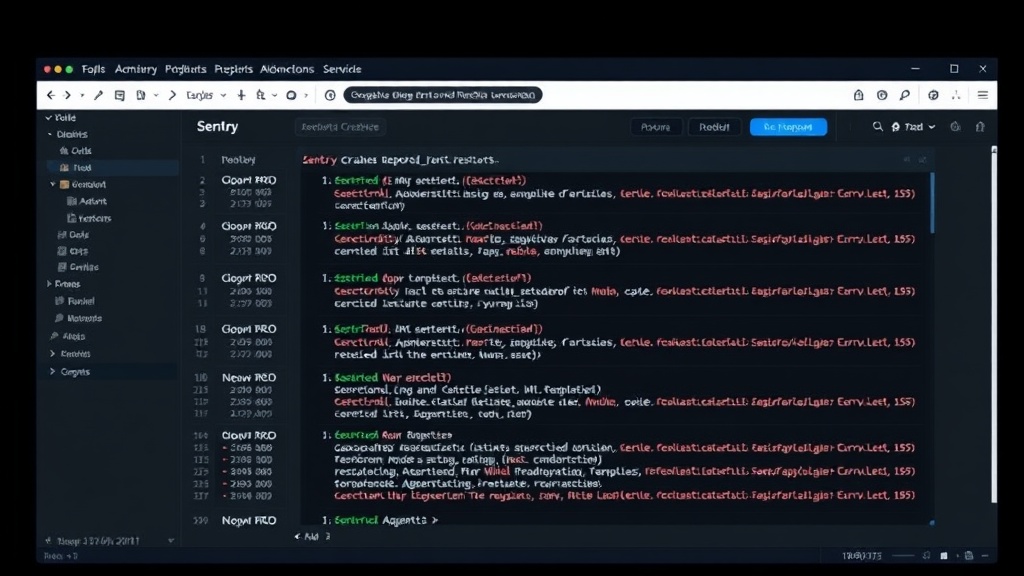
The first step in tackling this live production issue was robust error monitoring. The team integrated Sentry, a popular error tracking platform, into the Zoya agent. Sentry's strength lies in its ability to capture and aggregate errors from applications in real-time, providing detailed stack traces and context. When Zoya began failing, Sentry was instrumental in pinpointing the general area of the problem. It logged exceptions related to memory allocation failures and unresponsiveness, confirming that the issue was systemic and not isolated to specific user interactions. However, Sentry alone could not reveal the precise nature of the memory leak within the Google AI model. It indicated a symptom, not the root cause.
Docker's Role in Containment and Reproducibility
Docker played a crucial, albeit indirect, role in the debugging process. While the memory leak occurred within the AI model itself, running Zoya within a Docker container provided a consistent and isolated environment. This meant that the behavior observed in production was reproducible within the containerized setup, albeit over a longer timeframe. Developers could spin up the Docker container locally or on a staging environment, simulate the ~48-hour uptime, and observe the memory consumption patterns. This isolation prevented the memory leak from affecting other services on the host machine and allowed for controlled experimentation. Without Docker, debugging a persistent, time-based memory leak in a complex AI system would have been significantly more challenging and risky.
Diagnosing the Google AI Memory Leak
The critical breakthrough came from analyzing the behavior of the underlying Google AI model. The memory leak was traced to the model's inference process. Each time Zoya processed a user query, it loaded the AI model into memory. Although the model was designed to be stateful and retain context for conversational flow, a flaw in its implementation or usage pattern caused certain data structures within the model to never be garbage collected. This led to a continuous, unchecked increase in memory usage. The issue was exacerbated by the continuous uptime requirement for a live production agent. Unlike a typical web application that might restart periodically, Zoya needed to remain active to provide instant responses to users.
Implementing the Fix: Model Optimization and Restart Strategy
The fix involved a two-pronged approach. First, the team investigated potential optimizations within the Google AI model's usage. This included reviewing how the model was initialized, how data was passed to it for inference, and ensuring that any temporary data structures were properly cleared after each query. While deep-diving into the proprietary Google AI model's internals was not feasible, the team focused on their integration points. They implemented stricter memory profiling around each AI inference call to detect early signs of abnormal memory growth.
Second, a pragmatic restart strategy was implemented. Given the difficulty in completely eliminating the memory leak without modifying the core AI model, a scheduled restart mechanism was introduced. The Docker container running Zoya was configured to periodically restart, typically every 24 hours, before critical memory thresholds were reached. This ensured that the memory footprint was reset, preventing the catastrophic failure. This approach, while not a perfect solution, provided a stable and reliable service for users. The restart was orchestrated to be as seamless as possible, minimizing user disruption.
The Outcome: A Resilient AI Agent
By combining the diagnostic power of Sentry, the environmental consistency of Docker, and a deep understanding of the Google AI model's behavior, the team successfully identified and mitigated the critical memory leak. The scheduled restart strategy, coupled with ongoing memory monitoring, has restored Zoya's reliability on the production website. This incident underscores the importance of comprehensive monitoring, robust containerization, and proactive performance management when deploying complex AI systems in live production environments. The agent is now stable, and client inquiries are being handled effectively, ensuring a positive user experience.
This experience highlights that even sophisticated AI models require careful management in production. The challenge was not just about coding but about understanding the lifecycle and resource consumption of a complex, third-party model within a dynamic production system.