The Autonomy Dilemma: Why Global Settings Fail
AI agents promise to automate complex tasks, but their autonomy presents a significant control challenge. The common approach of setting a single autonomy level for an entire AI agent is fundamentally flawed. This is akin to giving a self-driving car one setting: either it drives everywhere with no human intervention, or it requires a human to approve every single steering adjustment. Neither extreme is practical or safe. The reality is that different actions carry vastly different risks and require different levels of human oversight. A system that can draft an email might operate at a higher autonomy level than one that can initiate a financial transaction. This article introduces the LoopRails autonomy ladder, a structured framework designed to address this nuanced control problem by enabling granular autonomy settings on a per-action basis.
The LoopRails framework, developed by practitioners for practitioners, emphasizes human-in-the-loop oversight. Its core methodology, Grade · Guard · Show · Prove, provides a systematic way to manage AI agent behavior. This framework is not a rigid set of rules but a flexible dial, allowing teams to tune autonomy precisely for each specific capability an AI agent possesses. The mistake many make is treating autonomy as a monolithic switch. Instead, it should be a spectrum, carefully calibrated based on the potential impact of an action and the feasibility of timely human intervention.
Introducing the LoopRails Autonomy Ladder (L0-L6)
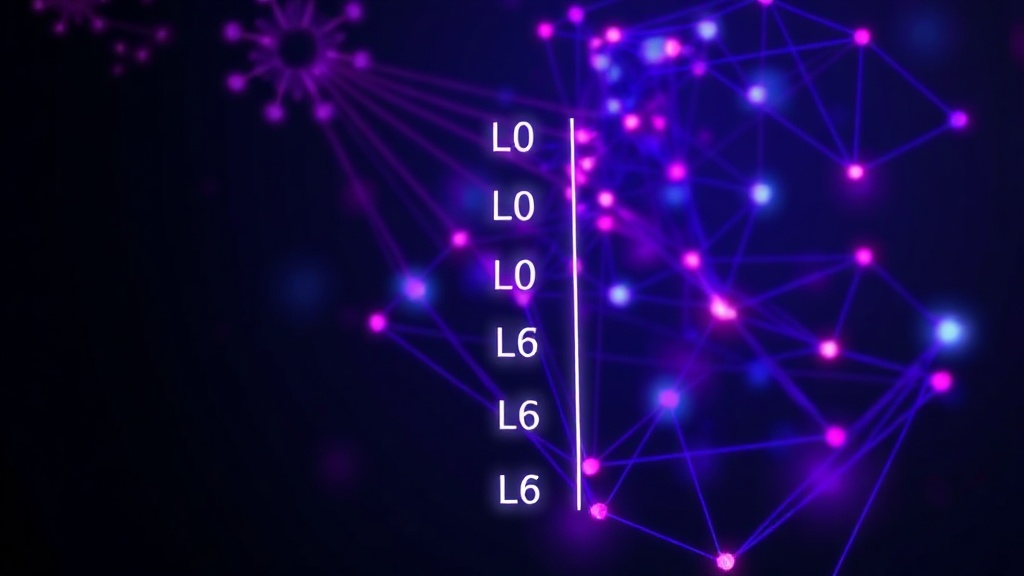
The LoopRails autonomy ladder defines seven distinct levels of agent autonomy, ranging from complete human control to full agent independence, with varying degrees of notification, supervision, and human involvement in between. Each rung represents a specific control point, allowing developers and operators to select the most appropriate level for each individual action an AI agent might perform.
L0: Human Driven
At the lowest rung (L0), the AI agent is entirely human-driven. It acts only on explicit, step-by-step commands from a human. The agent itself has no independent decision-making capability beyond executing a given instruction. Think of this as a sophisticated command-line interface where every command is typed by a human operator.
L1: Human Approved
In L1, the agent can propose actions, but each action requires explicit human approval before execution. The agent might suggest a course of action based on its analysis, but the human must give the final go-ahead. This level is suitable for tasks where the consequences of an error are significant, but the agent can reliably identify potential actions.
L2: Human Notified
L2 introduces a higher degree of autonomy. The agent can execute actions independently but must notify the human after the action is completed. This is useful for tasks where the risk is moderate, and a human can review the outcome retrospectively. The notification serves as an alert for potential issues and provides a record of the agent's activity.
L3: Human Monitored
At L3, the agent operates with more freedom, executing actions and providing periodic summaries or logs to the human. The human is monitoring the agent's progress and performance rather than approving individual actions. This level is appropriate for tasks where continuous oversight is beneficial but real-time intervention is less critical.
L4: Logged Actions
L4 signifies a significant increase in autonomy. The agent can perform actions with minimal human awareness during execution. All actions are logged for later auditing and review. This level is for well-understood tasks where errors are rare or have minimal impact, and the primary concern is maintaining a verifiable record.
L5: Agent Defined, Human Verified
In L5, the agent can define its own tasks and execute them, but a human must verify the results or the overall strategy periodically. This is a step towards more proactive AI decision-making, where the agent can identify opportunities or problems and propose solutions, with human validation serving as a crucial safeguard.
L6: Fully Autonomous
The highest level, L6, represents full autonomy. The agent operates independently, making decisions and taking actions without any human intervention or explicit approval. This level is reserved for tasks where the agent's objectives are clearly defined, the operating environment is stable and predictable, and the risks are thoroughly understood and deemed acceptable.
Implementing Granular Autonomy: The Per-Action Approach
The critical insight of the LoopRails framework is that autonomy should not be a one-size-fits-all setting. Instead, each specific capability or action an AI agent can perform should be assigned its own autonomy level. This requires a systematic process:
- Grade the Risk: For each action the agent can take, assess the potential negative consequences of an error. Is it a minor inconvenience, a financial loss, or a critical system failure?
- Guard the Action: Based on the risk assessment, choose the appropriate autonomy level (L0-L6) that provides sufficient control and oversight. High-risk actions might require L0 or L1, while low-risk actions could be set at L2 or L3.
- Show the Work: Ensure the agent logs its actions and provides appropriate notifications or summaries according to its assigned autonomy level. Transparency is key.
- Prove the Safety: Implement mechanisms for auditing and reviewing the agent's performance, especially for actions at higher autonomy levels. This feedback loop is essential for refining autonomy settings and improving agent reliability.
This granular approach allows for a more sophisticated and safer deployment of AI agents. For example, an agent tasked with managing cloud infrastructure might have the action 'scale up servers' set at L2 (notify after action) due to its moderate risk, while the action 'delete all production databases' would be strictly L0 (human driven), requiring explicit, multi-factor confirmation before any execution.
The Future of AI Agent Control
As AI agents become more integrated into our workflows and systems, robust control mechanisms are paramount. The LoopRails autonomy ladder offers a practical, actionable framework for developers and organizations to implement fine-grained control over AI agent behavior. By moving away from monolithic autonomy settings and embracing a per-action, risk-based approach, teams can unlock the full potential of AI agents while maintaining essential human oversight and mitigating risks effectively. This structured methodology is not just about preventing mistakes; it's about building trust and ensuring that AI systems operate reliably and align with human intent.