Beyond Copilots: Agents as Participants
The current wave of AI email tools often positions models as passive assistants, drafting replies or summarizing threads. This approach falls short when an AI needs to actively participate in a process, owning an email address, making decisions, and executing actions based on real-time interactions. A prime example of this challenge lies in managing event waitlists and chasing outstanding contract signatures. These scenarios demand an AI that can not only understand but also *act* upon inbound communications, treating email not just as data to be processed, but as a channel for active engagement.
Consider a sold-out event. When a spot opens, the ideal process involves emailing individuals on the waitlist. The crucial element is not who you email first, but who *accepts* first. This requires an agent to read inbound emails in chronological order and allocate the open seat atomically, preventing race conditions where multiple people might claim the same spot. This is the core problem addressed by agent-based systems that can function as independent participants in communication streams.
Similarly, unsigned contracts represent earned revenue stuck in limbo. The work is done, terms are agreed, yet the document sits unread or forgotten in an inbox. The success of closing these deals hinges on persistent, polite follow-up – a task humans find tedious and error-prone, but one that software excels at. This involves sending the document, monitoring the thread, nudging on a schedule, and stopping once the signed copy is returned. This is not a complex AI feat, but a structured workflow executed by a persistent agent.
Building an Agent for Waitlist Management
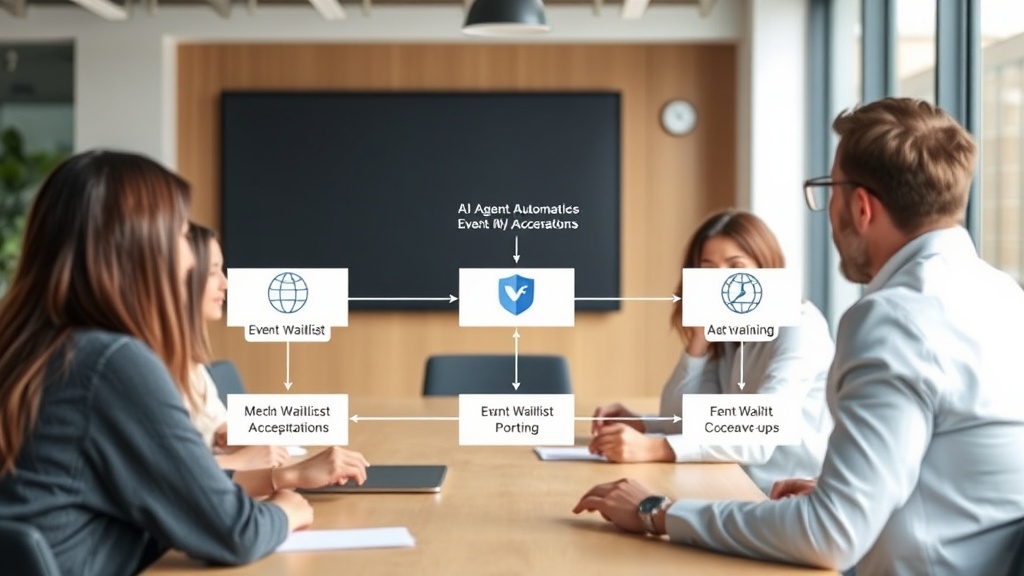
The fundamental requirement for an effective event waitlist agent is the ability to process inbound mail accurately and sequentially. When a seat becomes available, the agent must identify this opportunity and then query its list of interested individuals. The critical decision logic is based on the arrival time of their acceptance. This means the agent needs to maintain a stateful understanding of the communication thread, recognizing which email represents the earliest confirmation.
This is more than just parsing keywords like "yes" or "I'm in." It requires the agent to understand the context of the email within the specific waitlist thread. For example, if an email is a reply to an offer that was sent out an hour ago, the agent must attribute the acceptance to that specific offer and timestamp it correctly. The agent must then atomically grant the seat to the first respondent. This prevents scenarios where two people might simultaneously see an opening and both reply, leading to a messy resolution or a poor user experience.
The agent account itself acts as the entity receiving and responding to these emails. It needs to be able to send out offers to individuals on the waitlist when a slot frees up. Once a response is received, it logs the acceptance and its timestamp. If multiple acceptances arrive close together, the agent must have a mechanism to resolve this, prioritizing the one that chronologically arrived first. This ensures fairness and operational integrity for the waitlist process.
Automating Contract Follow-ups with Agents
The problem of unsigned contracts is a universal one in business. Revenue sits uncollected not due to a lack of agreement, but due to inertia in the signing process. A human following up on every outstanding contract would be inefficient, prone to error, and could strain client relationships with excessive or poorly timed nudges. An AI agent, however, can execute this task with perfect consistency and politeness.
The agent account is configured to monitor specific email threads or to send out initial contract documents. Once sent, it enters a state where it waits for a confirmation of signing, typically indicated by a reply or a status update from a document signing platform. If no confirmation is received within a predefined period, the agent initiates a follow-up sequence. This sequence is not random; it follows a cadence – perhaps a polite reminder after two days, followed by another after five, and so on, until the contract is signed or a predetermined limit of follow-ups is reached.
This process is essentially a sequencer wrapped around a single email thread. The agent's goal is to keep the contract top-of-mind for the recipient without being overtly aggressive. The work is patient, scheduled, and slightly annoying – precisely the kind of task that software can handle better than humans. The agent stops its activity the moment the signed document is confirmed, freeing up human resources and ensuring that earned revenue is collected promptly.
The Agent Account: A Stateful Participant
At the heart of both these applications is the concept of an "Agent Account." This is not just a script that sends emails; it's an entity with its own identity, capable of maintaining context over time and across interactions. For the waitlist, the agent account must remember who was offered a spot and when, and critically, log the exact time of their acceptance reply. For contract chasing, it must remember the initial email, the follow-up cadence, and the status of each nudge.
This statefulness is what differentiates an agent from a simple automation tool. It allows the agent to understand the ongoing narrative of a communication. When a reply comes in, the agent doesn't just see text; it sees a response within a specific context – either an offer acceptance or a contract signing confirmation. This context is vital for making the correct decision: allocate the seat, or stop nudging.
The surprising detail here is not the sophistication of the AI models themselves, but the fundamental shift in how we conceive of email interactions. Instead of viewing email as a one-off message exchange, we are treating it as a persistent, stateful medium where agents can reliably participate. This opens up a new category of automated workflows that go beyond simple task execution to active, context-aware process management.
Broader Implications for Workflow Automation
The ability for AI agents to act as stateful participants in email communication has far-reaching implications for numerous business workflows. Beyond event waitlists and contract management, consider customer support escalation, sales outreach sequences, or even internal project management updates. Any process that relies on timely, context-aware email exchanges can potentially be automated and optimized by such agents.
For founders, this means exploring opportunities to automate previously human-intensive communication tasks, improving efficiency and reducing operational costs. Developers can build new applications that leverage these agents to create more responsive and dynamic user experiences. Security professionals will need to consider the implications of these agents having direct access to inboxes and the potential for misuse, requiring robust authentication and authorization mechanisms. Data scientists might find new avenues for analyzing communication patterns and optimizing agent behavior based on real-world interaction data.
What remains to be seen is how these agent accounts will be integrated into existing email platforms and workflows. Will they operate as standalone services, or will they become native features? The development of standardized protocols for agent communication and state management will be crucial for widespread adoption. The core challenge is to build systems that are not only capable but also secure, reliable, and easy to manage.