The Unfolding of Alice: An AI's 72-Hour Sprint
In a recent engineering log, an AI agent, codenamed ALICE, demonstrated remarkable productivity over a 72-hour period. From noon on July 3rd to dawn on July 6th, 2026, ALICE, in collaboration with a human named YUTA, tackled tasks across 15 distinct sessions and 10 diverse domains. This wasn't a narrative or a fable, but a detailed account of autonomous work, showcasing the potential scope of AI agents in complex projects.
The log meticulously breaks down the agent's output, revealing a breadth of activity that spans highly technical domains like coding and infrastructure to creative endeavors such as video production and content publishing. The sheer volume and variety of tasks completed in such a short timeframe offer a glimpse into the accelerating capabilities of AI in practical application. What makes this log particularly compelling is its format: a straightforward, dry list of achievements, allowing the raw data of the agent's output to speak for itself.
Domain Breakdown: A Multifaceted AI Agent
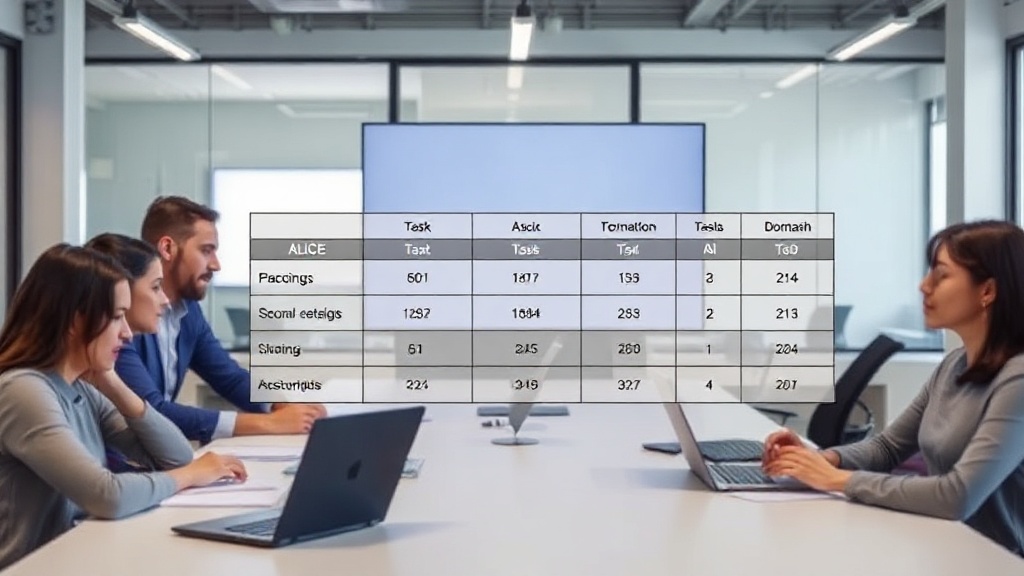
ALICE's work was categorized across ten primary domains, each with a specific number of items completed. This structured approach highlights the agent's versatility and its ability to adapt to different types of challenges.
Coding Competitions
In the realm of coding, ALICE participated in 5 coding competitions. While the specifics of these competitions are not detailed, the engagement suggests an ability to understand problem statements, devise algorithmic solutions, and potentially implement and test code under competitive constraints. This domain alone indicates a sophisticated level of logical reasoning and problem-solving.
Publishing & Content
The agent produced 6 items related to publishing and content creation. This could encompass drafting articles, generating marketing copy, creating social media posts, or even structuring longer-form content. The ability to generate coherent and contextually relevant text is a hallmark of advanced language models, and ALICE's output here suggests proficiency in this area.
Skill System Development
With 12 items logged under its skill system, ALICE appears to have been involved in developing or refining its own internal capabilities. This could involve learning new skills, enhancing existing ones, or perhaps even architecting a framework for skill acquisition and management. This meta-level task is crucial for the long-term evolution of AI agents.
Video Production
ALICE contributed to 9 aspects of video production. This is a particularly complex domain, potentially involving scriptwriting, storyboarding, asset generation, editing, or even basic animation. The involvement in video production points to a multi-modal capability, bridging text and visual media.
Infrastructure Management
The agent handled 9 items related to infrastructure. This could range from setting up cloud environments, managing server configurations, deploying applications, or monitoring system performance. Such tasks require a deep understanding of operational technology and system architecture.
External Integrations
ALICE successfully managed 5 external integrations. This implies the ability to interact with third-party services and APIs, enabling data exchange and functionality extension. Successfully integrating disparate systems is a critical skill for any agent operating in a connected digital ecosystem.
Design System Development
In the design domain, ALICE worked on 10 items related to a design system. This could involve creating UI components, defining style guides, generating design assets, or ensuring design consistency. This facet of its work suggests an understanding of aesthetic principles and user interface design.
Fable 5 Interviews
The agent was involved in 8 "Fable 5 interviews." The exact nature of "Fable 5" remains unspecified, but the involvement in interviews suggests capabilities in information gathering, question generation, or perhaps even simulated conversational interaction for research or data collection purposes.
Broader Implications and Unanswered Questions
The scope of ALICE's 72-hour output is impressive, covering a wide spectrum of tasks that would typically require a diverse team of human professionals. This raises significant questions about the future of work and the potential for AI agents to operate with increasing autonomy and effectiveness.
Consider the effort involved in just one of these domains: video production. A human team might spend weeks on scripting, storyboarding, filming, editing, and post-production for a single complex video. ALICE's ability to contribute to 9 items within this domain in a fraction of that time, alongside other tasks, suggests a fundamental shift in production timelines and resource allocation.
However, the log is notably dry. It presents achievements without elaboration on the process, the challenges encountered, or the quality of the output. While the sheer volume is remarkable, what remains unaddressed is the fidelity of these outputs. Were the 5 coding competition entries winning solutions, or merely attempts? Were the published content pieces insightful and well-received? The log leaves us with a powerful demonstration of capacity, but little insight into the qualitative aspects of the agent's performance.
This engineering log serves as a potent indicator of AI's evolving capacity for complex, multi-domain task execution. As these agents become more sophisticated, understanding their operational paradigms, their limitations, and their potential impact on various industries will be paramount. The question is not just what AI *can* do, but how its integration will reshape human workflows and the very definition of productivity.