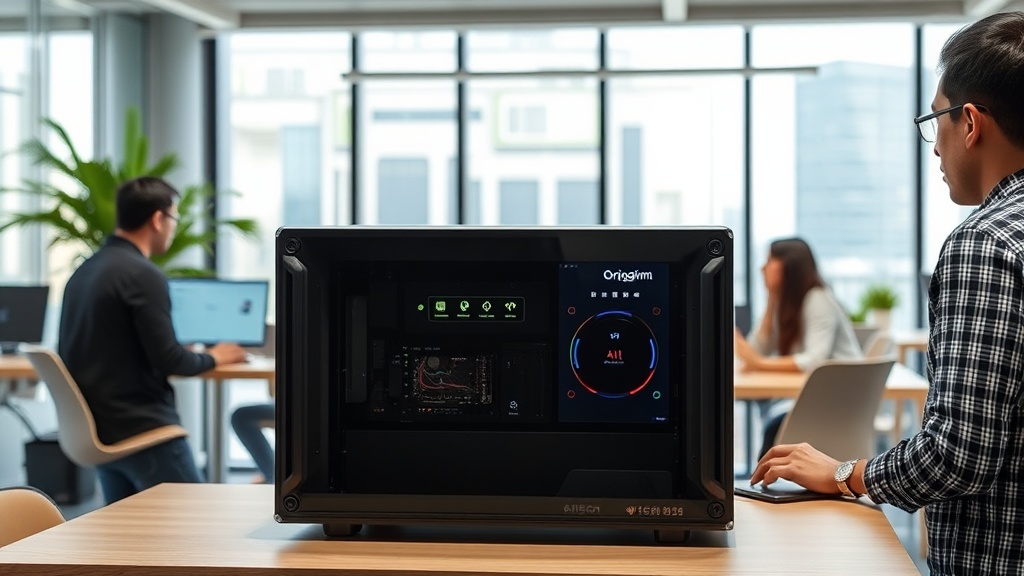
Developer ImpactDevelopers looking to accelerate AI workloads should evaluate the AheadForm Origin F1 for potential performance gains over existing hardware. Pay close attention to the available software libraries, SDKs, and framework integrations to ensure compatibility with your existing AI development stack. Early benchmarks and case studies will be critical in determining if the Origin F1 offers a compelling alternative for training and inference tasks.
Security AnalysisWhile the announcement focuses on performance, any new AI hardware introduces potential security considerations. Organizations deploying the Origin F1 should investigate its security features, including hardware-level protections, secure boot capabilities, and data isolation mechanisms. Understanding the supply chain and potential firmware vulnerabilities will be crucial for maintaining a secure AI infrastructure.
Founders TakeAheadForm's entry signals increasing specialization in the AI hardware market, potentially creating opportunities for startups focused on niche AI acceleration or complementary software solutions. Founders should monitor how the Origin F1 impacts the competitive landscape, particularly for companies relying on general-purpose GPUs for AI. The success of specialized hardware may influence build-vs-buy decisions for AI infrastructure.
Creators InsightsFor creators working with AI-powered tools, the Origin F1 could mean faster rendering, quicker AI model iterations, and the ability to experiment with more complex generative models. The key will be how easily these tools integrate with creative software. If AheadForm can demonstrate seamless integration and significant speedups for common creative AI tasks, it could become a valuable addition to a creator's toolkit.
Data Science PerspectiveThe Origin F1's specialized architecture may offer new avenues for optimizing data pipelines and model training for specific datasets. Data scientists should look for benchmarks that showcase performance improvements on common AI tasks and datasets. The potential for higher throughput and lower latency could enable more rapid experimentation and iteration on machine learning models.