Automating AI Agent Iterations
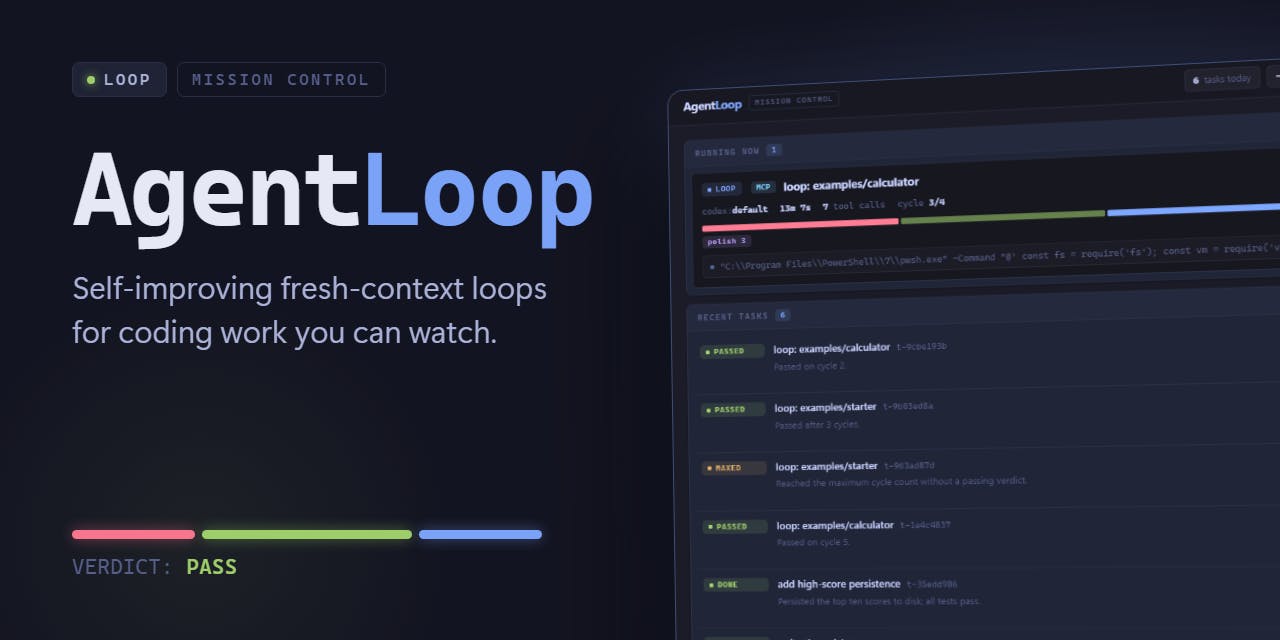
AgentLoop has launched, introducing a novel approach to developing and managing AI agents. The platform focuses on automating the cyclical nature of agent work, particularly for tasks involving complex reasoning and iteration. At its core, AgentLoop manages the creation and execution of 'Codex workers' and 'critics' in a continuous loop, aiming to improve the efficiency and effectiveness of AI-driven problem-solving.
The traditional development of AI agents often involves a series of trial-and-error steps. An agent performs a task, its output is evaluated, and then it's refined based on that evaluation. This process can be manual, time-consuming, and prone to human oversight errors. AgentLoop seeks to abstract away much of this complexity by orchestrating these cycles programmatically.
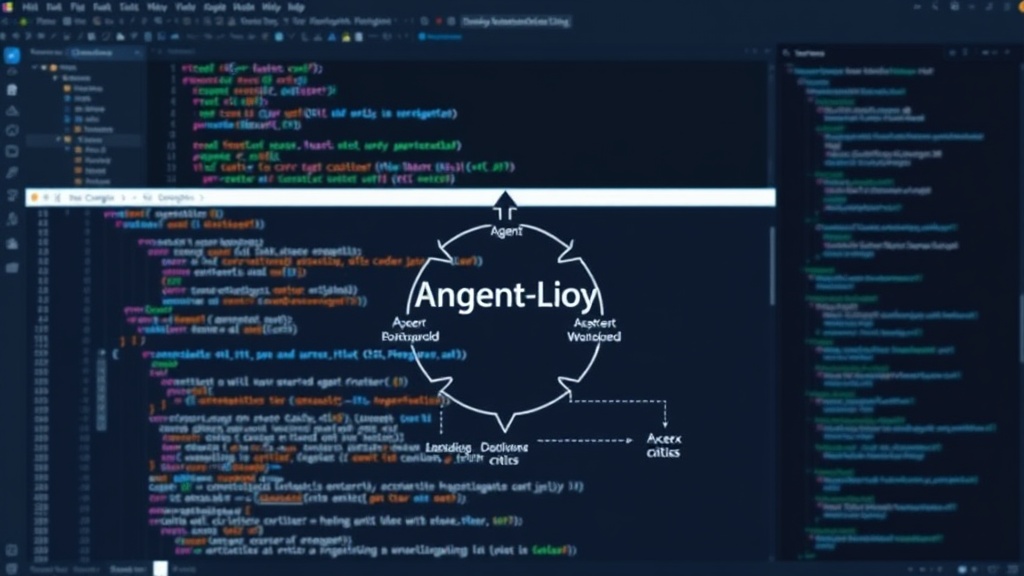
The platform's design centers around the concept of a 'cycle.' In each cycle, AgentLoop initiates a fresh Codex worker. This worker is responsible for executing a specific part of a larger task or a complete micro-task. Once the worker completes its assigned action, a 'critic' is deployed. The critic's role is to evaluate the worker's output. This evaluation can range from simple correctness checks to more nuanced assessments of quality, adherence to guidelines, or problem-solving efficacy. Based on the critic's feedback, the system can then decide on the next steps: either to refine the agent's approach, re-prompt the worker, or move on to the next stage of the overall process.
The Role of Codex Workers and Critics
The 'Codex worker' is, in essence, the execution engine. It's designed to perform actions, generate content, or make decisions based on its programming and the current state of the task. The term 'Codex' suggests an underlying model or framework capable of understanding and generating code or complex instructions, likely leveraging large language models (LLMs). The key innovation here is that AgentLoop starts a *fresh* worker for each cycle. This prevents the accumulation of state that might lead to unintended biases or errors carrying over from previous, potentially flawed, iterations. It ensures a clean slate for each task segment.
Complementing the worker is the 'critic.' This component acts as an automated quality assurance or validation layer. It's crucial for any iterative process to have a feedback mechanism. Without effective critique, an agent might repeatedly make the same mistakes or fail to improve. The critic analyzes the worker's output, providing structured feedback that AgentLoop can use to guide subsequent actions. This feedback loop is the engine of improvement, allowing agents to learn and adapt within their operational cycles.
Managing Complexity and Iteration
AgentLoop's primary value proposition lies in its ability to manage this iterative process at scale. For developers building AI agents, especially those intended for complex, multi-step tasks, the overhead of managing these feedback loops and worker lifecycles can be substantial. AgentLoop abstracts this management layer, allowing developers to focus on defining the tasks, the objectives, and the criteria for success, rather than the intricate mechanics of iteration.
Consider an agent tasked with writing a complex piece of software documentation. A Codex worker might generate a draft section. A critic would then review it for accuracy, clarity, and completeness. If the critic identifies errors or areas for improvement, AgentLoop could prompt the worker to revise the section, or it might even spin up a new worker with specific instructions based on the critique. This cycle repeats until the critic is satisfied, or a predefined number of iterations is reached.
The platform aims to be particularly useful for applications where AI agents need to perform tasks that benefit from refinement, such as content generation, code writing, data analysis, or even strategic planning simulations. By providing a structured framework for iterative improvement, AgentLoop can potentially lead to more robust, accurate, and reliable AI agent performance.
Implications for AI Agent Development
The launch of AgentLoop signals a growing trend towards more sophisticated tooling for AI agent development. As AI models become more capable, the focus is shifting from simply prompting an LLM to building complex systems that leverage these models in structured, repeatable, and self-improving ways. AgentLoop positions itself as a key enabler of this shift, offering a specialized solution for managing the inherent complexity of iterative AI workflows.
The ability to start a fresh worker and critic every cycle is a critical design choice. It offers a form of operational hygiene, preventing the 'drift' that can occur in long-running AI processes. This disciplined approach to iteration can lead to more predictable outcomes and easier debugging. For teams working on advanced AI applications, AgentLoop could represent a significant step forward in building and deploying agents that can tackle increasingly challenging problems with greater reliability.