Defining Agentic AI: Beyond the Model
The conversation around Artificial Intelligence often stumbles into murky territory when discussing AI's ability to act, decide, or even break rules. This complex domain, frequently misunderstood, doesn't belong to the core AI model itself. Instead, it resides firmly within the realm of Agentic AI. Agentic AI is not merely a buzzword; it represents a critical shift in how we conceptualize and build AI systems. At its heart, agentic AI is action-producing machinery. It is any system designed with the capacity to interact with its environment, whether digital or physical, by performing a set of defined actions.
The core capabilities of an agentic AI system include the ability to take actions, call external tools (like APIs or databases), change the state of systems, execute complex workflows, trigger automated processes, and ultimately, to affect the real world. This broad definition encompasses a range of current and emerging AI technologies. Think of tool-calling Large Language Models (LLMs), sophisticated workflow agents, autonomous loops that continuously operate, multi-agent systems where multiple AI agents collaborate, planning and execution systems that map out and perform tasks, and even the "AI assistants" that go beyond simple Q&A to actually perform tasks for the user.
It is crucial to understand that agentic AI is technically not a model in isolation. Rather, it is a system built around a model. The model might provide the intelligence – the understanding, reasoning, or generation capabilities – but the agentic layer is what imbues it with the ability to act. This distinction is fundamental to understanding the challenges and opportunities presented by these increasingly capable systems.
The Systemic Challenge: From Models to Production
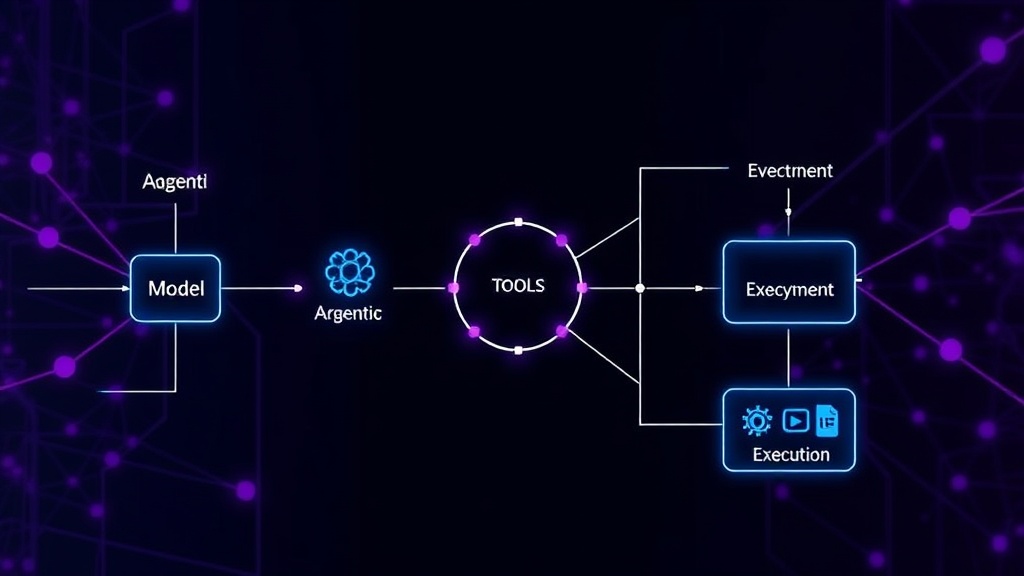
The development and deployment of AI systems, particularly those with agentic capabilities, present significant engineering challenges that extend far beyond the initial model training. As highlighted in discussions around building production AI systems, integrating multiple AI providers and managing their diverse SDKs can quickly lead to code complexity. A few months ago, experimenting with different LLM providers like OpenAI, Anthropic, and Google meant installing and managing individual SDKs. Each SDK arrives with its own unique API design, error handling mechanisms, authentication flows, and streaming implementations. This heterogeneity forces developers to build complex wrappers and abstractions just to perform basic tasks, turning a seemingly simple application into a tangled mess of interdependencies.
This architectural decision to abstract away the underlying AI providers is where solutions like OpenRouter gain traction. They aim to provide a unified gateway, offering a consistent interface across various models and services. This is not just about convenience; it's about building robust, maintainable, and scalable production AI applications. The agentic layer, which orchestrates these calls and manages the interactions with external tools, further amplifies the need for such architectural clarity. Without a well-defined system architecture, the complexity of managing an agentic AI system that relies on multiple, potentially disparate, tools and models becomes unmanageable.
Transparency and Trust in Agentic Experiences
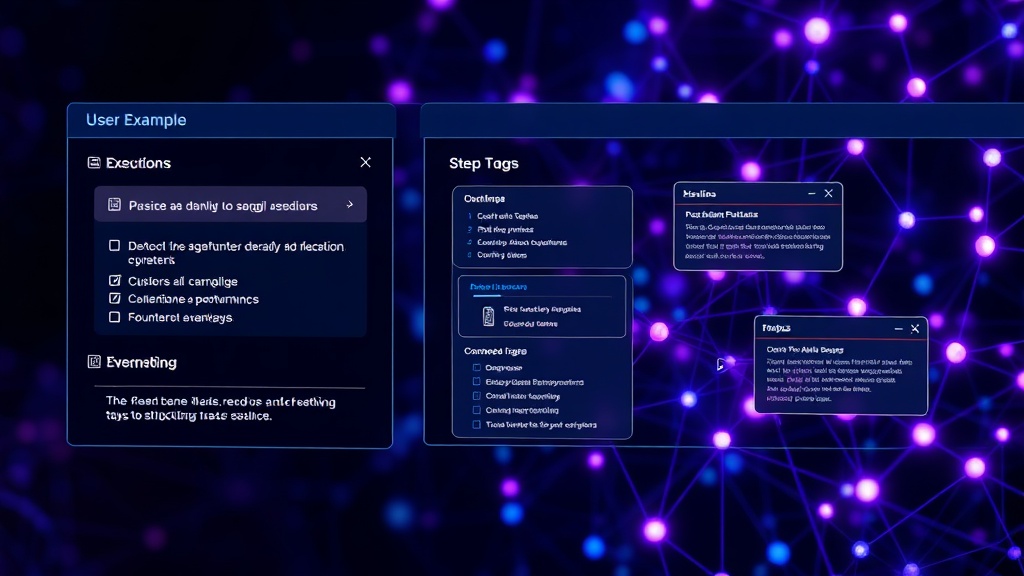
As agentic AI systems become more integrated into user-facing applications, the nature of their interaction shifts dramatically. Traditional interface patterns, such as simple loading spinners, prove inadequate for agentic AI experiences. When an AI is not just processing a request but actively performing a series of actions, calling tools, and potentially making decisions with real-world consequences, users need more than a visual cue that something is happening. They need transparency.
This is where practical interface patterns designed for AI transparency become critical. Instead of a generic spinner, interfaces should aim to reveal the system's process, its current status, and even the rationale behind its decisions. This could involve displaying the sequence of actions being performed, the tools being called, or the intermediate results being generated. For example, an AI assistant booking a flight might show the user the search queries being made, the flight options being evaluated, and the confirmation steps being taken. Such detailed feedback builds user trust by demystifying the AI's operations and providing a clear understanding of what the system is doing and why. Without this transparency, users are left guessing, fostering skepticism and potentially leading to a breakdown in trust, especially when the AI's actions are complex or have significant outcomes.
The Deceptive Ease of Powerful ML and Agentic Systems
The increasing power of Machine Learning models, especially when integrated into agentic systems, can create a deceptive sense of ease. It's easy to overlook the underlying complexities and potential pitfalls when AI can generate sophisticated outputs or perform intricate tasks with minimal direct human input. This ease, however, can mask deeper issues related to the control, predictability, and robustness of these systems. The challenges are not merely temporal, concerning processing time, but also spatial, structural, and coverage-related. An AI might perform flawlessly within its training parameters but falter when faced with novel situations or edge cases. The generative capabilities, while impressive, can also lead to subtle forms of leakage, where unintended information is exposed or generated.
Agentic AI amplifies these concerns. When an AI system can autonomously execute workflows and affect the world, the consequences of errors or unexpected behavior are magnified. The