
The Production Imperative for Agentic AI
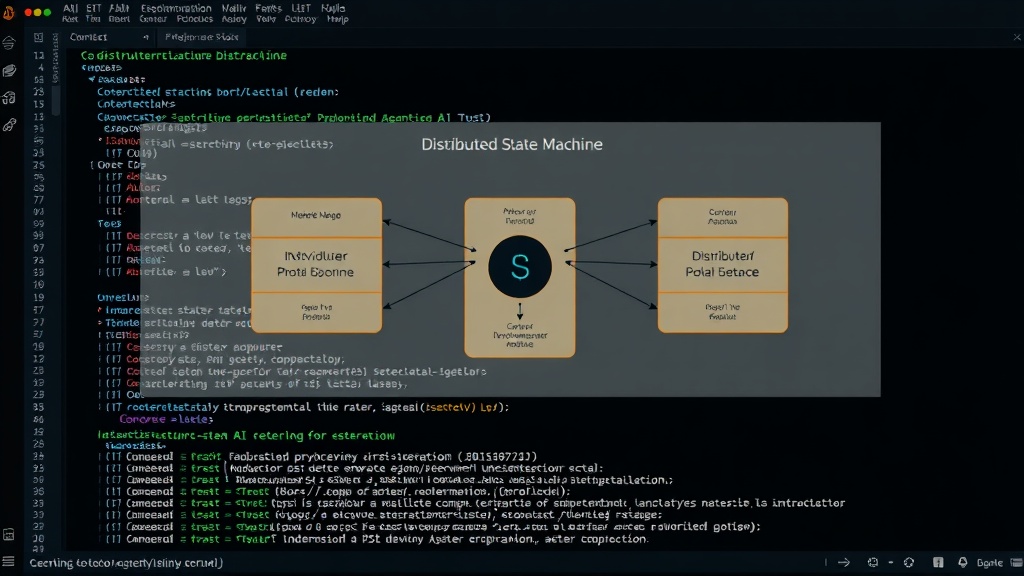
The leap from experimental agentic AI prototypes to robust, production-grade systems represents a profound architectural shift. This is not merely about scaling LLM calls; it's about engineering complex, autonomous workflows that demand reliability, low latency, and stringent security. The core challenge lies in treating LLMs not as deterministic functions, but as non-deterministic processing units within a larger distributed state machine. This fundamental difference introduces cascading latency, intricate state management, and new security vectors that enterprise engineering teams must address.
Production-grade agentic systems require a paradigm shift. Prompt engineering, while crucial, is only one piece of a much larger puzzle. The focus must expand to encompass the entire system's architecture, treating the LLM as a component with inherent uncertainties. This means designing for failure, managing state effectively, and ensuring that the system behaves predictably despite the probabilistic nature of its core intelligence engine.
Architectural Pillars: Scalability, Latency, and Trust
Building production-ready agentic AI hinges on mastering three critical pillars: scalability, latency, and trust. Each presents unique engineering hurdles that distinguish it from traditional software development.
Scalability: Handling Concurrent Agentic Workflows
Scaling agentic AI involves more than just increasing the number of LLM API calls. It requires architecting a system that can manage thousands of concurrent, multi-step agent interactions. This means implementing robust orchestration layers that can handle parallel execution, manage task dependencies, and gracefully degrade under load. Key considerations include:
- Efficient State Management: Each agent's state must be tracked, persisted, and updated efficiently across potentially millions of concurrent sessions. This often involves leveraging specialized databases or in-memory stores optimized for high-throughput read/write operations. Think of it less like a simple key-value store and more like a highly concurrent, versioned ledger for each agent's decision history.
- Asynchronous Processing: To avoid blocking agent execution, asynchronous patterns are essential. This allows agents to initiate long-running tasks (like external API calls or complex computations) without halting their own decision-making process.
- Load Balancing and Resource Allocation: Intelligent distribution of agent tasks across compute resources is vital. This includes dynamically scaling LLM inference endpoints and offloading non-LLM computations to more suitable services.
Latency: Minimizing Response Times in Multi-Turn Interactions
Cascading latency is a defining characteristic of agentic systems. Each turn of an agent's thought process, from receiving input to generating an output and potentially invoking tools or other agents, adds to the overall response time. Mitigating this requires a multi-pronged approach:
- Optimized LLM Inference: Employing techniques like model quantization, efficient batching, and specialized inference hardware can significantly reduce LLM response times.
- Tool and API Optimization: External tools and APIs that agents interact with must be performant. Latency introduced by slow external services can cripple the agent's overall responsiveness. Caching common tool results and asynchronous invocation are key.
- Early Exit Strategies: Designing agents that can achieve a satisfactory outcome without necessarily completing every possible step can drastically reduce latency for many user queries. This involves sophisticated reward functions or confidence scoring mechanisms.
- Streaming Outputs: For user-facing agents, streaming LLM outputs token by token provides an immediate sense of progress and can mask underlying processing latency.
Trust: Ensuring Security, Reliability, and Data Integrity
Trust in agentic AI systems is paramount, especially in enterprise contexts. This encompasses data security, system reliability, and predictable behavior. Key areas of focus include:
- Robust Authentication and Authorization: Ensuring that agents only access data and perform actions they are explicitly permitted to. This involves fine-grained access control mechanisms and secure credential management.
- Data Privacy and Compliance: Implementing safeguards to prevent sensitive data leakage, especially when LLMs are trained on or process proprietary information. Techniques like data anonymization, differential privacy, and secure enclaves are critical.
- Guardrails and Safety Mechanisms: Developing explicit rules and monitoring systems to prevent agents from generating harmful, biased, or nonsensical outputs. This can involve input validation, output filtering, and continuous model monitoring.
- Deterministic Fallbacks and Error Handling: While LLMs are non-deterministic, the system orchestrating them must be. Implementing retry mechanisms, graceful error handling, and deterministic fallback logic ensures system stability even when individual agent components falter.
- Observability and Monitoring: Comprehensive logging, tracing, and monitoring are essential to understand agent behavior, diagnose failures, and audit system actions. This provides the visibility needed to build and maintain trust.
The Architect's Role in Production Agentic AI
The architect's role evolves significantly. They are no longer just designers of static systems, but engineers of dynamic, learning entities. This requires a deep understanding of distributed systems, state management, LLM characteristics, and robust security practices. The blueprint for production-grade agentic AI is one of meticulous design, continuous iteration, and a relentless focus on the operational realities of deploying AI in mission-critical environments.
The transition to production-grade agentic AI is a complex but necessary evolution. By systematically addressing scalability, latency, and trust, organizations can move beyond toy prototypes and unlock the true potential of autonomous AI systems.