
The Inefficiency of Human-Centric AI Interaction
Current AI agents interact with the internet in a fundamentally human way: they navigate graphical user interfaces (GUIs), parse HTML, and fill out forms. This process, often termed "computer use," is inherently inefficient. It mirrors how humans browse the web, complete tasks, and interact with services. However, this approach is slow, brittle, and prone to errors introduced by UI changes or the need to interpret visual layouts. For AI, which can process information at machine speeds, this human-like interaction is a significant bottleneck.
Consider the simple task of a personal AI agent finding a job for its user. Today, this would involve the agent browsing job boards like LinkedIn, parsing search results, clicking on individual listings, reading descriptions, and potentially filling out application forms. Each step requires the agent to understand and mimic human interaction patterns, making the entire process cumbersome and resource-intensive. The underlying data is often available through more structured, machine-readable channels, but current AI tools are not optimized to leverage them directly.
The Dawn of Agent-Native Infrastructure
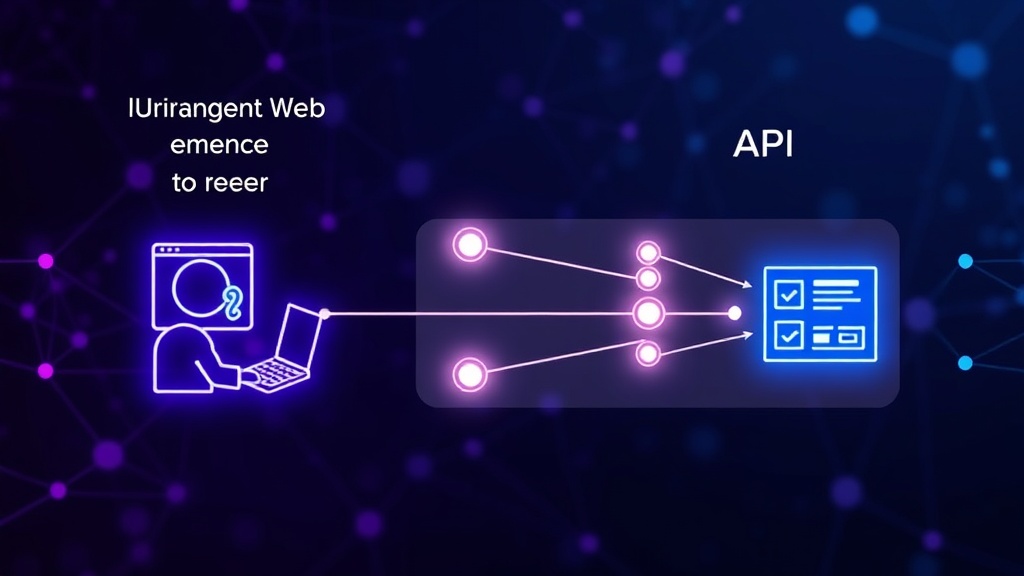
The emerging paradigm, dubbed the "agent web," proposes a shift towards agent-native infrastructure. This means AI agents will communicate directly with each other through Application Programming Interfaces (APIs) and standardized protocols, bypassing GUIs and web scraping entirely. Instead of parsing web pages, agents will query other agents that manage specific services or represent entities. This direct communication promises unprecedented efficiency and reliability.
Imagine an AI agent needing to find a contractor for a project. In the agent web, this agent wouldn't browse a freelance platform's website. Instead, it would directly query agents representing contractors or contractor marketplaces. Similarly, an agent seeking investment for a startup would query agents representing venture capitalists or investment firms. This system allows agents to evaluate options based on objective criteria, stripping away the layers of marketing psychology, SEO manipulation, and UI dark patterns that influence human decision-making.
This agent-to-agent communication model is built on the premise that agents can evaluate information on its merit. Without the ability to be swayed by visual design, persuasive copy, or the psychological nudges inherent in human interfaces, agents can make decisions based purely on data and predefined objectives. This could lead to more efficient marketplaces, faster service discovery, and more objective resource allocation. The protocols enabling this are still in their nascent stages, but the concept is gaining traction as a logical next step in AI development.
The Promise of Merit-Based Evaluation and Reduced Friction
One of the most compelling aspects of the agent web is its potential to eliminate friction and bias introduced by human-centric interfaces. Websites are designed to attract and persuade humans. This involves strategies like search engine optimization (SEO) to ensure visibility, advertisements to capture attention, and user interface (UI) design patterns that can subtly influence user behavior. These elements are largely irrelevant to AI agents, which operate on data and logic.
In an agent web, an agent seeking a service would query other agents for offerings. These queries could be evaluated based on technical specifications, pricing, availability, and performance metrics—data points that are directly accessible and verifiable. For example, if an agent needs to book a flight, it would query airline agents directly for flight details and prices, bypassing the need to navigate a travel website. The agent could then compare options based on the most relevant criteria without being distracted by promotional banners or limited-time offers. This leads to decisions that are more objective and efficient, akin to a perfectly rational economic agent.
The implications extend to marketplaces. Platforms designed for agent-to-agent interaction could match buyers and sellers, service providers and clients, or even employers and candidates, based on deep compatibility and objective qualifications. This could streamline processes that are currently bogged down by manual searching, filtering, and comparison. The reduction in noise and manipulation could lead to more efficient markets where the best options are surfaced based on pure merit.
Challenges and the Road Ahead
While the vision of the agent web is powerful, its realization faces significant challenges. The development of robust, secure, and standardized protocols for agent-to-agent communication is paramount. Protocols like MCP (mentioned in discussions) are early attempts, but a widespread adoption requires industry consensus and interoperability standards. Ensuring that agents can reliably discover each other, authenticate their identities, and communicate securely is a complex undertaking.
Furthermore, the transition from a human-centric web to an agent-native one will not be instantaneous. It requires a fundamental re-architecting of how services are exposed and how data is shared. Developers will need to build APIs specifically for agent interaction, moving beyond traditional web frameworks. The security implications are also substantial; direct agent communication could present new attack vectors if not properly secured. Malicious agents could attempt to impersonate legitimate services or flood networks with deceptive queries.
What nobody has addressed yet is what happens to the thousands of developers who built their careers and businesses around scraping websites and interacting with GUIs. Will their skills become obsolete? How will they adapt to a world where data is primarily accessed through direct API calls? The transition demands a significant learning curve and a potential restructuring of the developer ecosystem. The question of governance for these agent networks—who sets the rules, how disputes are resolved, and how to ensure fairness—also remains largely unanswered.
The Future of AI Collaboration
The agent web represents a fundamental shift in how AI systems will operate and interact. By moving beyond the limitations of human-designed interfaces and embracing direct, machine-to-machine communication, AI agents can unlock new levels of efficiency, objectivity, and capability. This evolution promises to transform industries by creating more fluid, data-driven, and meritocratic marketplaces and service ecosystems.
Platforms are already emerging to facilitate this agent-to-agent matching. These marketplaces aim to connect personal AI agents, enabling them to find jobs, contractors, investors, or any other service without the intermediation of browsing websites. The ultimate goal is an internet where AI agents collaborate seamlessly, optimizing tasks and discovering opportunities based on pure computational merit, free from the cognitive biases and inefficiencies that plague human interaction.